




 English
 Español
 عربى
عربىWhat Is an Open Frame Diesel Generator? Pros, Cons, and Buying Guide
Jul 29, 2026
Content
- 1 What an Open Frame Diesel Generator Set Actually Is
- 2 Open Frame vs. Canopied (Silent) Sets: The Decision That Matters Most
- 3 Where Open Frame Sets Are the Clear Winner
- 4 Power Ratings: Choosing Between Prime and Standby Duty
- 5 Sizing for Motor Starting Loads
- 6 Fuel Consumption and Efficiency Benchmarks
- 7 Emissions Compliance and Regional Standards
- 8 Installation and Site Preparation Requirements
- 9 Common Sizing Mistakes That Cost the Most
- 10 Frequently Asked Questions
- 10.1 How much louder is an open frame set than an enclosed one?
- 10.2 What power range do open frame diesel generators typically cover?
- 10.3 Do open frame generators need more frequent maintenance checks than enclosed units?
- 10.4 Can an open frame set be used indoors without a generator room?
- 10.5 Specify the Right Diesel Generator for Your Site
An open frame diesel generator set is the correct choice whenever the installation site already provides — or can economically provide — its own weather shelter and noise control, such as a generator room, industrial building, or remote site with no nearby noise-sensitive neighbors. In that scenario, an open frame set delivers the same electrical output as a canopied unit at a lower purchase price, with faster access for maintenance and better natural cooling.
The trade-off is unavoidable and non-negotiable: open frame sets run at 95–110 dB(A) at 1 meter versus 65–75 dB(A) for an equivalent enclosed unit, and they have zero built-in weather protection. If the deployment site is urban, residential, or lacks a dedicated shelter, that noise and exposure gap — not the price tag — should decide the purchase.
What an Open Frame Diesel Generator Set Actually Is
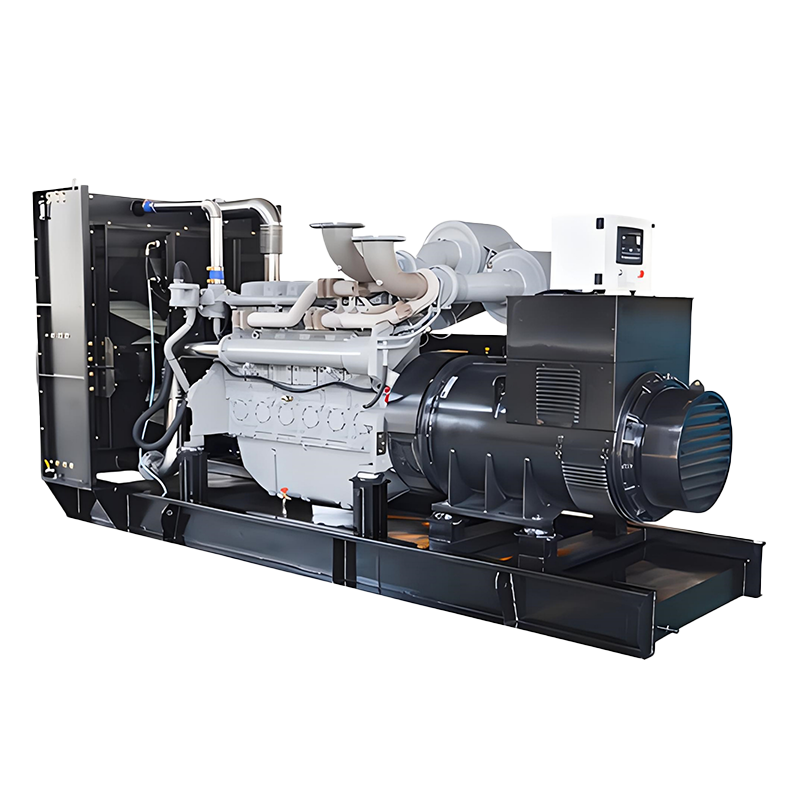
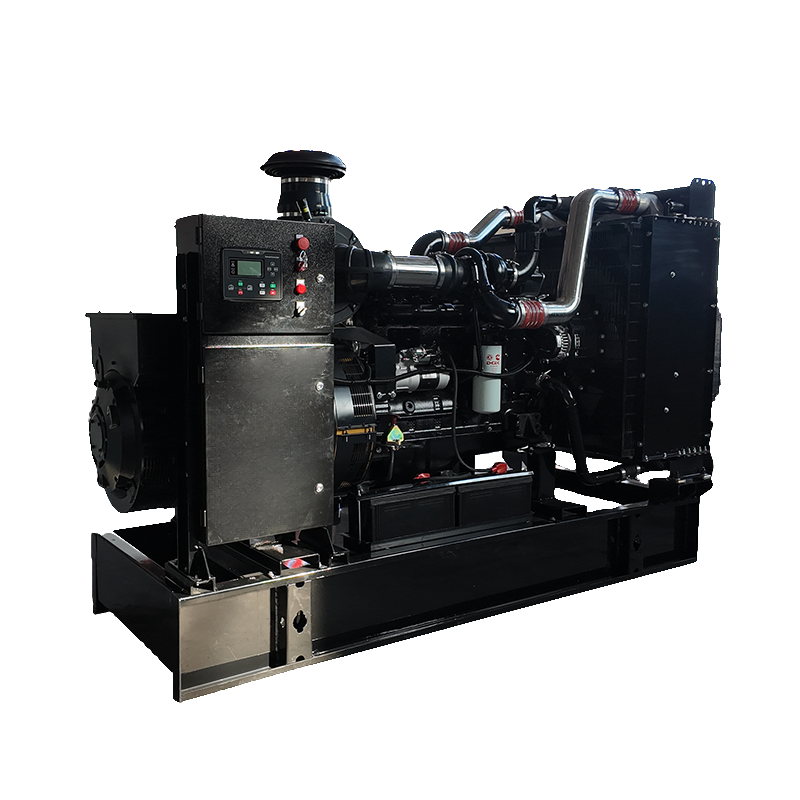
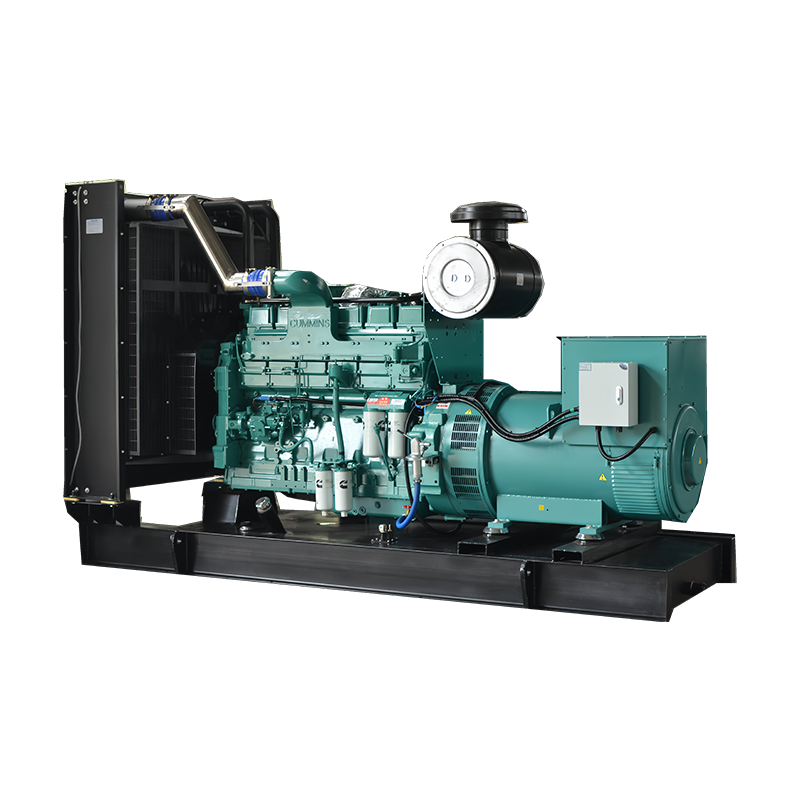
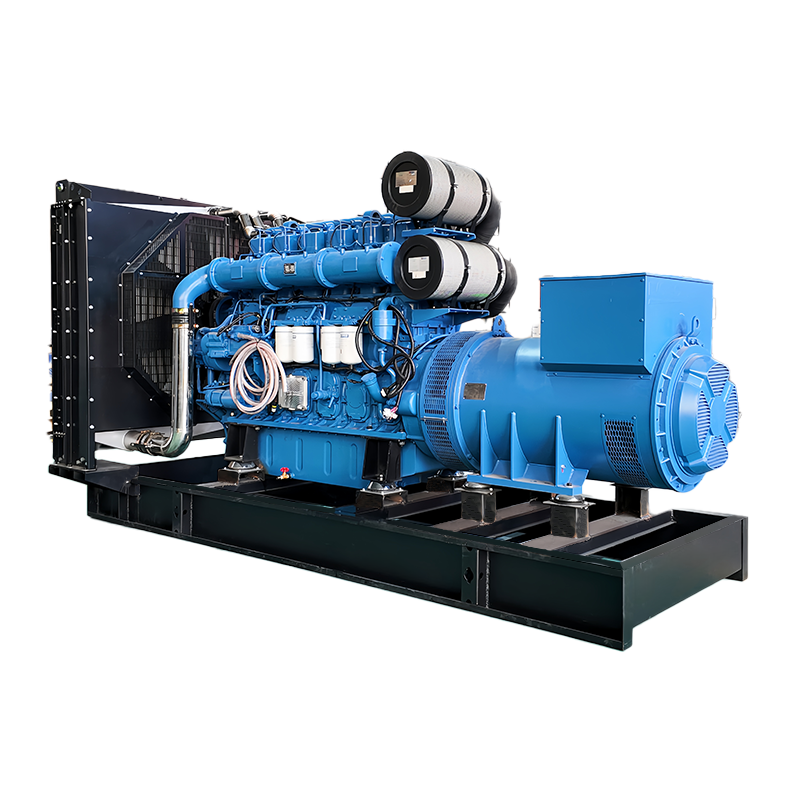
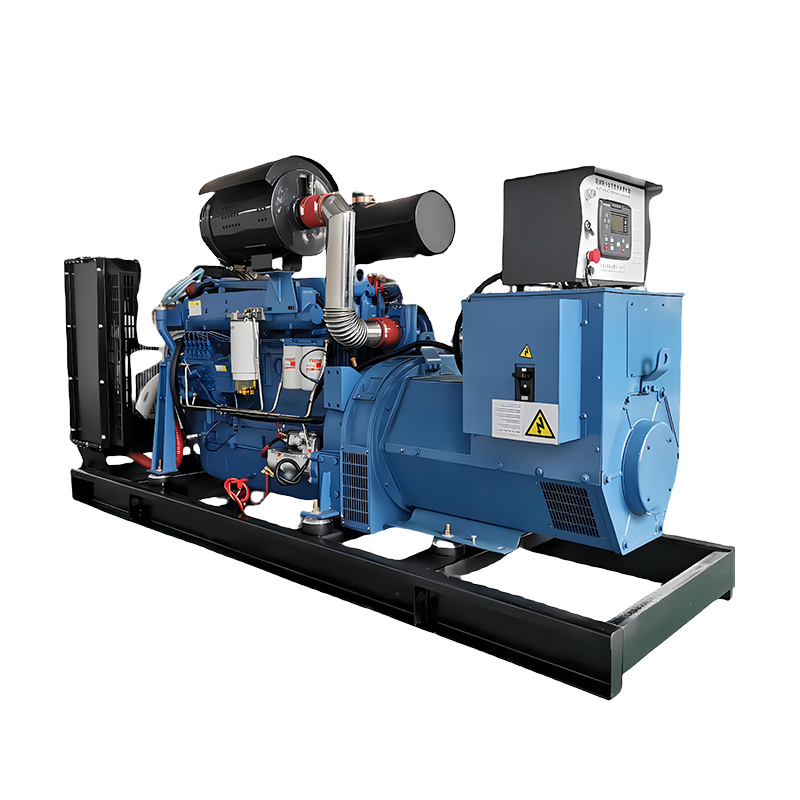
Open type diesel generator sets are large power systems that include a diesel engine, an alternator, and a control panel, and unlike enclosed models, they do not have soundproof boxes, focusing instead on durability and ease of maintenance. Every unit on the market, regardless of brand or power rating, shares the same core architecture.
The engine burns diesel to produce mechanical power, which the alternator then converts into electricity, while the control panel monitors voltage levels and overall system health. Open frame diesel generator sets are commonly used in small power diesel generator sets and are composed of a diesel engine assembly, motor assembly, and base.
Beyond a certain size, the engine technology itself changes. For sets above 30 kW, turbocharged engines are standard, and above 200 kW, turbocharged-aftercooled (TCAC) engines deliver better thermal efficiency and lower emissions. Most modern diesel engines on open frame sets comply with EPA Tier 4 Final or EU Stage V emissions standards, which require low-sulfur diesel fuel of 15 ppm sulfur or less.
Brushless, self-excited alternators paired with an Automatic Voltage Regulator (AVR) maintain output voltage within ±1% of nominal under varying load conditions. Class H insulation, rated to 180°C, is the industry standard for industrial gensets, providing thermal margin for continuous duty in high ambient temperatures, while most open frame alternators carry IP21 or IP23 protection — adequate for indoor use but requiring shelter from direct water ingress.
Open Frame vs. Canopied (Silent) Sets: The Decision That Matters Most
Every other spec sheet comparison is secondary to this one. The presence or absence of an acoustic enclosure changes cost, noise, weather resistance, and maintenance access all at once.
Open Frame Set
- Lower purchase price, since eliminating the canopy, acoustic lining, and internal ducting removes significant manufacturing cost.
- Faster, simpler servicing — technicians access oil filters, fuel filters, belts, injectors, and terminals without removing panels or working inside a confined enclosure.
- Typically produces 95–110 dB(A) at 1 meter, limiting use in noise-sensitive environments.
- No weather protection — must be installed under a roof, inside a building, or within a purpose-built generator room.
Canopied / Silent Set
- Costs more due to additional housing elements, acoustic lining, and ventilation systems.
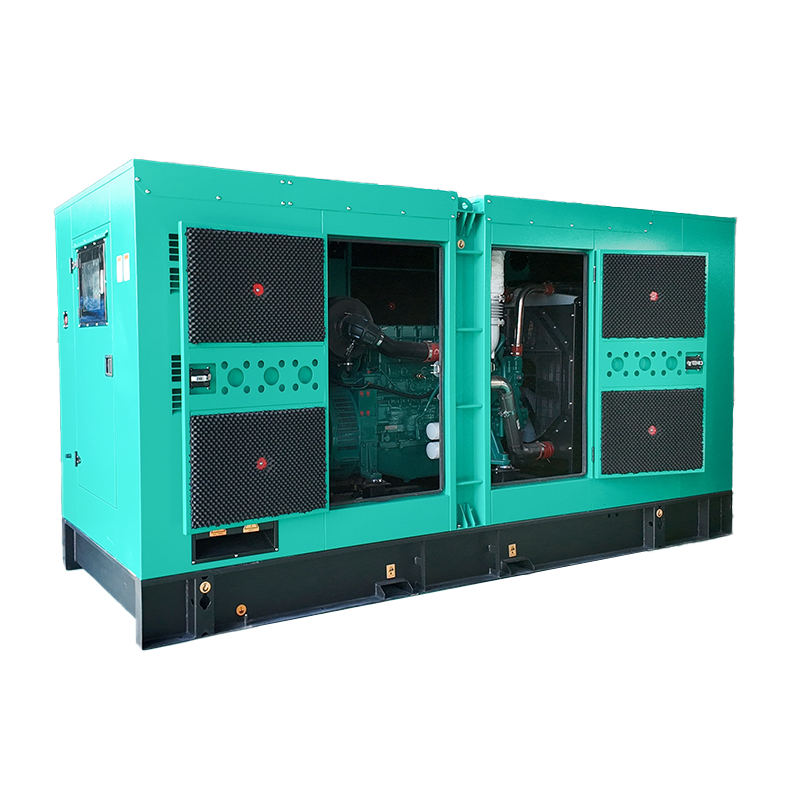
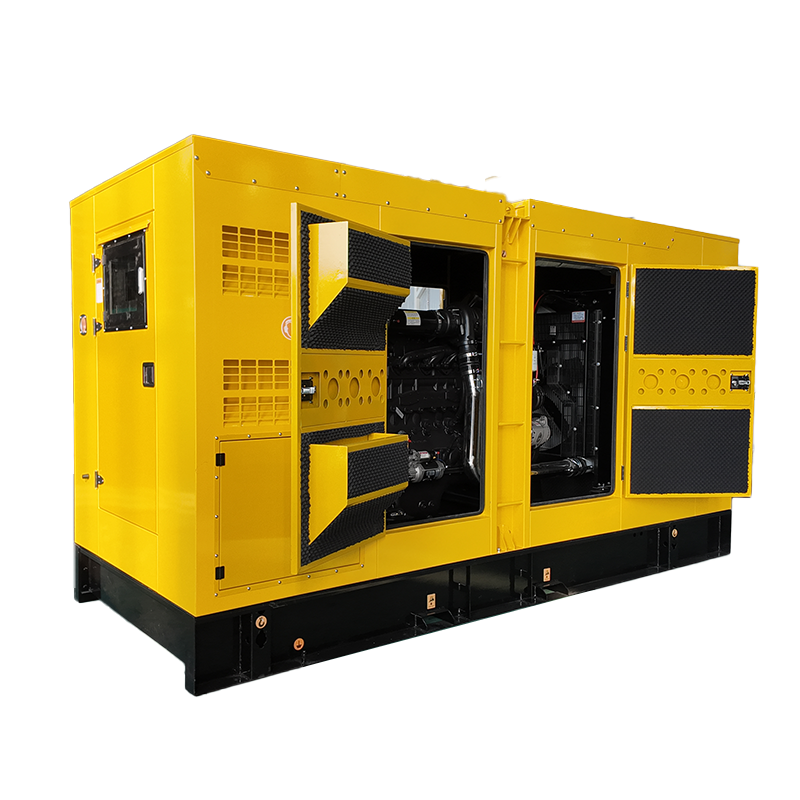
- Uses multi-layer acoustic foam, sound-trapping baffles, and supercritical mufflers to bring noise down to a 65dB–75dB range measured at 7 meters.
- Enclosure protects against rain, wind, and dust, and is designed to handle all kinds of weather.
- Harder to repair due to the enclosed body, and the drawback of higher cost remains a consistent trade-off.
While an open frame unit has a lower sticker price, the hidden costs of building a soundproof, ventilated room often make a silent-type set the more economical all-in-one solution for projects in residential, urban, or public areas such as hospitals, schools, and offices. Factor in shelter construction cost before comparing sticker prices alone.
Where Open Frame Sets Are the Clear Winner
Industry usage patterns are consistent across sources: open frame sets dominate specific site types where their trade-offs simply don't matter.
- Industrial buildings with dedicated generator rooms: For large industrial installations where a generator room is standard infrastructure, open frame sets consistently offer better value, since the acoustic and weather protection is built into the building rather than into each genset unit.
- Remote and harsh environments: Open frame gensets are typically less expensive, provide better cooling, and allow quicker access for maintenance, making them ideal for harsh environments and situations where budget and repair time are critical.
- Events, film, and emergency logistics: Film productions, outdoor festivals, emergency relief operations, and military deployments use open frame sets for their low cost per kilowatt-hour and ease of logistics, staging units inside sound-dampening enclosures or at a distance from event areas as needed.
- Construction sites without night work: Some construction sites require low-cost, easy-to-maintain, and movable engines, so open-frame diesel generators work best in that context, provided noise regulations for the surrounding area allow it.
Power Ratings: Choosing Between Prime and Standby Duty
Misclassifying duty type is one of the most common and costly specification errors in genset procurement.
| Duty Classification | When to Specify | Key Requirement |
|---|---|---|
| Prime Power (PRP) | The genset is the primary power source with no grid connection | Rated for continuous variable load with no fixed run-time limit |
| Standby (ESP) | The set serves as backup to mains supply | Rated for higher peak output but limited annual run hours |
Apply a 20–25% capacity margin so the expected load runs at 70–80% of rated output. This isn't a conservative buffer for its own sake — it's an operational requirement, not a suggestion.
Running a diesel genset below 30% load causes wet stacking — unburned fuel accumulation in the exhaust — along with carbon buildup and accelerated engine wear. An oversized set isn't just wasted capital; it actively shortens the engine's service life.
Sizing for Motor Starting Loads
Nameplate kW ratings only tell part of the story. Motors, compressors, and pumps draw dramatically more current at the instant of startup than during normal running — and undersizing for this moment is the single most common cause of premature genset failure or voltage collapse on a job site.
- Identify every motor-driven load. Electric motors draw 5–7× their running current at startup.
- Calculate peak starting demand. If the largest motor is 15 kW running, it may demand 75–105 kW of starting capacity from the genset momentarily.
- Confirm voltage dip stays within tolerance. The genset must handle this starting surge without excessive voltage dip — under 15% is the standard requirement.
- Add the capacity margin. Size the set so the expected load runs at 70–80% of rated output, giving headroom for these starting events without chronic overload.
Fuel Consumption and Efficiency Benchmarks
Fuel is the largest ongoing cost for any diesel genset in continuous or frequent use, which makes efficiency figures directly comparable to a purchase-price decision.
| Metric | Reported Figure | Context |
|---|---|---|
| Modern efficiency benchmark | 0.28–0.35 L/kWh | Applies to modern open type generators meeting current efficiency tiers |
| 20 kW unit, full load | 2.3 GPH (gallons per hour) | Documented spec for a 20 kW open diesel generator |
| 20 kW unit, half load | 1.2 GPH | Shows near-linear fuel scaling with load on the same unit |
| Diesel vs. gasoline efficiency | 30% less fuel consumed | Diesel-powered generators compared to equivalent gasoline units |
| Cooling airflow requirement | 0.1–0.15 m³/sec per 10 kW of output | Minimum airflow needed for engine cooling in enclosed generator rooms |
Emissions Compliance and Regional Standards
Emissions requirements are no longer optional paperwork — they can determine whether a set is legally permitted on a given job site.
- EPA Tier 4-compliant models reduce particulate matter by 90% compared to older units, yet urban projects still face strict NOx emission caps, such as California's 0.30 g/kWh limit.
- Compliance with EPA Tier 4 Final or EU Stage V standards requires low-sulfur diesel fuel with sulfur content of 15 ppm or less — using the wrong fuel grade can void engine compliance even on a certified unit.
- Hybrid systems combining solar arrays with diesel generators help construction firms cut runtime by 35% while meeting city air quality standards, offering a practical compliance path where pure diesel operation would fail local limits.
Installation and Site Preparation Requirements
Because open frame sets carry no built-in shelter, the site itself becomes part of the specification.
| Requirement | Specification |
|---|---|
| Ventilation airflow | Minimum 0.1–0.15 m³/sec per 10 kW of output for engine cooling |
| Room design | Inlet and outlet vents must be sized to the required flow rate |
| Exhaust handling | Hot exhaust air must be directed outside — recirculating hot air back into the intake reduces cooling performance |
| Weather exposure | Requires installation under a roof, inside a building, or within a purpose-built generator room; rain or dust exposure requires separate shelter |
| Site environment protection | Site-specific protection extends service life — a 2022 Arctic drilling project reduced corrosion-related downtime by 40% using heated enclosures and triple-layer air filtration |
Common Sizing Mistakes That Cost the Most
Over 40% of industrial energy waste stems from mismatched generator sizing, according to Diesel Power International's 2023 data, and the pattern of errors is remarkably consistent across projects.
- Oversizing "to be safe": A set that never runs above 30% load suffers wet stacking and accelerated wear, per the load-range requirement above, while also wasting capital on unused capacity.
- Ignoring motor starting surge: Sizing to running load alone, without the 5–7× startup multiplier, leads to voltage collapse the moment a large motor starts.
- Skipping the capacity margin: Running a set at 95–100% of rated output with zero headroom leaves no buffer for load growth or starting transients.
- Underestimating ventilation needs: Undersized inlet/outlet vents starve the engine of cooling airflow, leading to derating or overheating shutdowns in enclosed generator rooms.
Frequently Asked Questions
How much louder is an open frame set than an enclosed one?
Significantly louder. Open frame sets typically produce 95–110 dB(A) at 1 meter, compared to 65–75 dB(A) for an equivalent canopied unit — since decibels are measured on a logarithmic scale, this is a substantial, not marginal, difference in perceived loudness.
What power range do open frame diesel generators typically cover?
The category spans a wide range depending on application. Many open frame units provide between 5 kW and 30 kW, suiting both home and commercial needs, while industrial open frame sets scale well beyond that into hundreds of kW for facility-level backup power.
Do open frame generators need more frequent maintenance checks than enclosed units?
They need different checks, not necessarily more frequent ones. The open structure exposes the generator to weather, so operators must inspect for rust, corrosion, dust, oil leaks, and loose bolts on a regular basis — access is easier, but weather exposure adds inspection items an enclosed unit doesn't face.
Can an open frame set be used indoors without a generator room?
Only with proper ventilation engineering. A minimum airflow of approximately 0.1–0.15 m³/sec per 10 kW of output is required for engine cooling, with inlet and outlet vents sized to that flow rate — an open frame set cannot simply be placed in an unventilated indoor space.
Specify the Right Diesel Generator for Your Site
We supply diesel generators engineered to documented prime and standby power ratings, with alternator specifications, emissions compliance, and fuel efficiency data provided upfront — so your sizing calculations are based on verified numbers, not marketing estimates.
Related Products
Related News

-
Xiaoji Town, Jiangdu District, Yangzhou City, Jiangsu Province, China
-
8618944498005
-
+86-18652407919
-
+86-0514-86593686
Copyright © Jiangsu Ford Generator Co., Ltd.
