




 English
 Español
 عربى
عربىMovable Type Diesel Generator: The Ultimate Mobile Power Guide
Jun 17, 2026
Content
- 1 What Makes a Diesel Generator "Movable"
- 2 Primary Applications of Movable Diesel Generators
- 3 Key Technical Specifications Explained
- 4 How to Size a Movable Diesel Generator Correctly
- 5 Fuel Efficiency: What to Expect from a Movable Diesel Generator
- 6 Emission Standards and Regulatory Compliance
- 7 Maintenance Schedule for Movable Diesel Generators
- 8 Buy vs. Rent: Making the Right Decision for Your Project
A movable type diesel generator — also called a mobile or portable diesel generator set — is a self-contained, trailer-mounted or skid-mounted power unit designed to be transported to any location and deployed rapidly. Unlike stationary standby generators fixed to a building's foundation, movable diesel generators provide flexible, on-demand power for construction sites, mining operations, emergency response, outdoor events, and remote infrastructure projects. If your power needs are temporary, location-variable, or off-grid, a movable diesel generator is almost always the most practical and cost-effective solution.
What Makes a Diesel Generator "Movable"
The term "movable type" in generator context refers to the physical configuration and mounting system that enables transportation and rapid relocation. It is distinct from portable consumer generators in one critical way: movable diesel generators are engineered for continuous-duty industrial use while still being relocatable.
Key structural characteristics that define a movable diesel generator include:
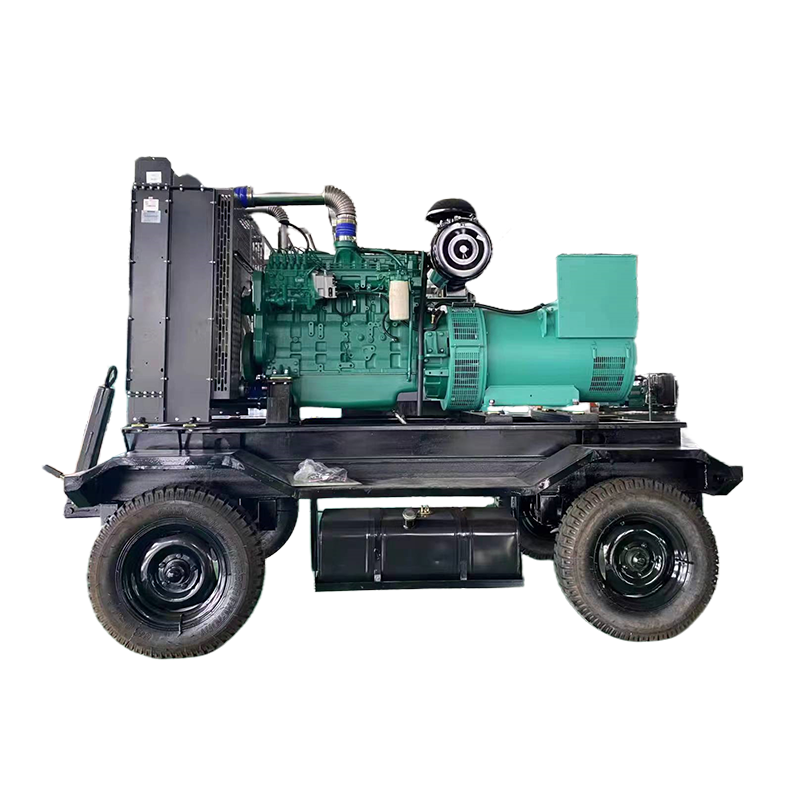
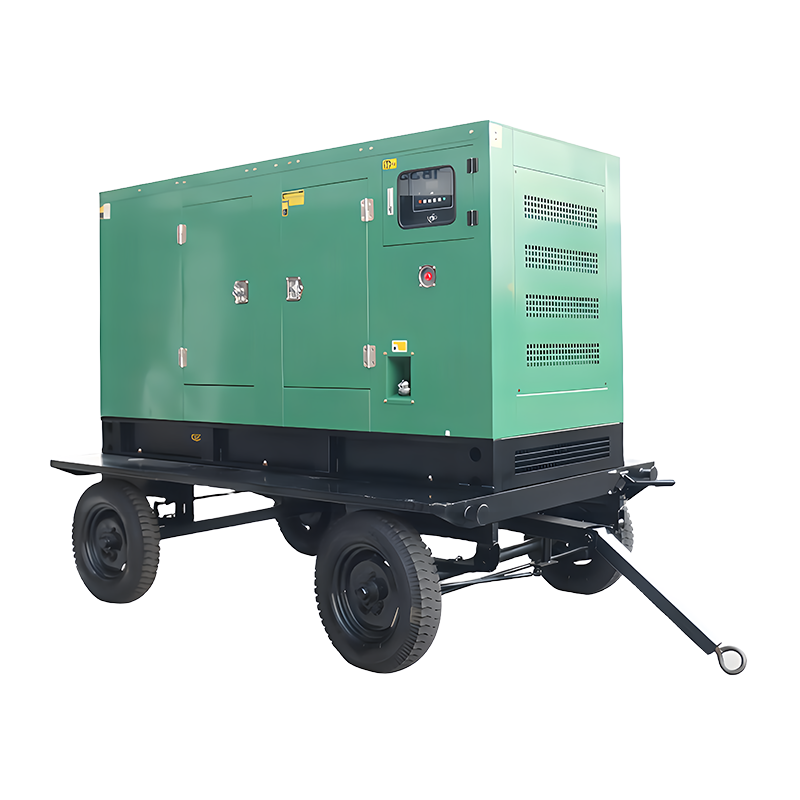
- Trailer mounting: Single- or tandem-axle trailers with DOT-compliant lighting, brakes, and towing hitches for road transport up to highway speeds
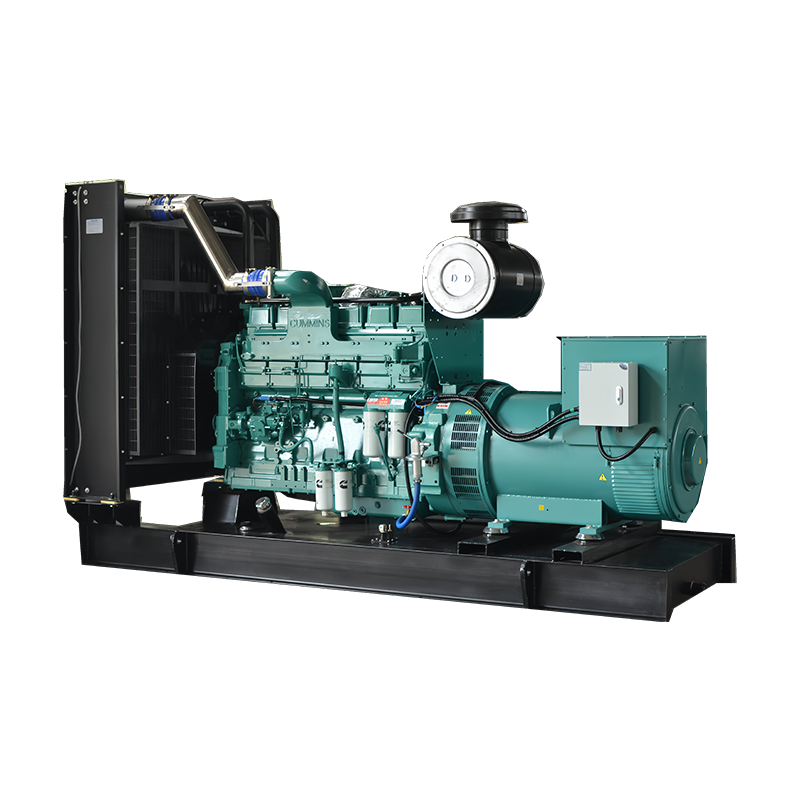
- Skid-base frame: Heavy steel skid that allows forklift or crane handling, often with integral fuel tank of 200–2,000 liters beneath the generator set
- Weatherproof canopy: Steel or aluminum acoustic enclosure protecting the engine and alternator from rain, dust, and physical impact during transport
- Self-contained fuel supply: Integral base tank providing 8–24 hours of full-load runtime without external fuel connections
- Quick-connect electrical outputs: CEE industrial sockets, Camlock connectors, or bus bar systems for fast site hookup
Power ratings for movable diesel generators span a broad range — from 10 kVA compact trailer units to 3,000+ kVA heavy mobile power stations transported on low-bed trailers.
Primary Applications of Movable Diesel Generators
Understanding where and why movable diesel generators are deployed helps clarify what specifications matter most for each use case.
Construction and Civil Engineering
Construction sites require power for concrete mixers, welding equipment, lighting towers, pumps, and power tools — all before grid connection is available. A typical medium-scale construction project uses a 100–500 kVA movable diesel generator for 6–24 months. The generator moves with the project as the build progresses, reducing the cost of multiple fixed power setups.
Mining and Resource Extraction
Remote mining operations are among the largest users of movable diesel generators globally. Sites in Africa, Australia, and South America routinely deploy generator sets of 500–2,000 kVA running in parallel configurations to power drills, ventilation systems, ore processing equipment, and camp facilities. Movability is critical since extraction zones shift as deposits are exhausted.
Emergency Power and Disaster Response
Utilities, military organizations, and humanitarian agencies pre-position fleets of movable diesel generators for rapid disaster response. FEMA, the UN, and national grid operators typically maintain trailer-mounted generator inventories that can be dispatched within hours of a grid failure. Response-grade units are typically 250–1,000 kVA, with automatic transfer switch capability and satellite-enabled remote monitoring.
Events, Film Production, and Temporary Venues
Outdoor concerts, sports events, film sets, and temporary exhibition venues rely heavily on movable diesel generators. A large music festival may deploy 5–15 generator sets totaling 2–5 MW of capacity across stage, hospitality, and infrastructure zones. Sound-attenuated "super-silent" canopy enclosures (noise levels as low as 55–65 dB(A) at 7 meters) are standard requirements for these applications.
Telecommunications and Data Infrastructure
Telecom tower operators and data center operators use movable diesel generators as temporary primary power during grid maintenance, or as emergency backup during extended outages. Units in this sector prioritize fast start capability (10 seconds to full load), low harmonic distortion (THD below 5%), and compatibility with sensitive electronic loads.
Key Technical Specifications Explained
When evaluating movable diesel generators, the following specifications determine real-world performance and suitability:
| Specification | What It Means | Typical Range |
|---|---|---|
| Prime Power (kVA/kW) | Rated output for continuous variable load use | 20–3,000+ kVA |
| Standby Power (kVA/kW) | Maximum output for emergency use (up to 200 hrs/year) | ~110% of prime rating |
| Power Factor (PF) | Ratio of real power to apparent power | 0.8 lagging (standard) |
| Fuel Consumption | Liters per hour at 75% load (reference point) | 4–450 L/hr |
| Voltage Output | Standard output voltage configurations | 110V, 230V, 400V, 11kV |
| Frequency | Output frequency (region-dependent) | 50 Hz or 60 Hz |
| Noise Level | Sound pressure at 7 meters, full load | 65–85 dB(A) |
| Tank Capacity / Runtime | Hours of operation without refueling at full load | 8–24+ hours |
| Emission Standard | Regulatory certification for exhaust emissions | EU Stage V, EPA Tier 4 |
One commonly misunderstood metric: kVA vs. kW. The relationship is kW = kVA × Power Factor. At a standard 0.8 PF, a 500 kVA generator delivers 400 kW of real (usable) power. Always size your generator to kW demand, not kVA rating alone.
How to Size a Movable Diesel Generator Correctly
Undersizing causes overload trips and engine wear; oversizing wastes fuel and accelerates wet stacking (unburned fuel accumulation in exhaust). Correct sizing follows a structured process:
- List all loads to be connected. Include every piece of equipment: motors, lighting, HVAC, computers, welders. Record the rated wattage or kVA of each.
- Account for motor starting surge. Electric motors draw 3–7× their running current at startup. A 10 kW motor may require 30–70 kW momentarily during starting. Use a demand factor table or motor starting calculator for accuracy.
- Calculate total running load. Sum the running kW of all simultaneously operating loads. Apply a diversity factor (typically 0.7–0.9) if not all loads run at once.
- Add a 20–25% safety margin. This buffer accommodates load growth, future equipment additions, and derating at high altitude or ambient temperatures above 40°C.
- Select the nearest standard generator size above your calculated requirement. Standard sizes typically follow the sequence: 20, 30, 50, 75, 100, 125, 150, 200, 250, 300, 400, 500, 600, 750, 1000 kVA.
Example: A construction site with 180 kW of running loads, including two 15 kW motors, calculates to approximately 230–250 kVA prime-rated generator after motor starting and safety margin considerations.
Fuel Efficiency: What to Expect from a Movable Diesel Generator
Diesel generators are most fuel-efficient between 75% and 85% of their rated prime load. Operating below 40% load for extended periods causes inefficiency and engine damage. The following table gives reference fuel consumption figures for common generator sizes:
| Generator Size | Fuel Use at 50% Load | Fuel Use at 75% Load | Fuel Use at 100% Load |
|---|---|---|---|
| 50 kVA | ~5.5 L/hr | ~8 L/hr | ~11 L/hr |
| 100 kVA | ~10 L/hr | ~15 L/hr | ~21 L/hr |
| 250 kVA | ~24 L/hr | ~36 L/hr | ~50 L/hr |
| 500 kVA | ~47 L/hr | ~70 L/hr | ~98 L/hr |
| 1000 kVA | ~90 L/hr | ~135 L/hr | ~190 L/hr |
Modern Stage V / Tier 4 engines consume approximately 5–10% less fuel than equivalent Tier 2 or Tier 3 engines due to improved combustion efficiency and electronic fuel management systems.
Emission Standards and Regulatory Compliance
Emission regulations govern which movable diesel generators can legally operate in specific regions. Non-compliant units can be banned from worksites, subject to fines, or denied import clearance. The two dominant regulatory frameworks are:
- EU Stage V (2019–present): The strictest global standard for non-road mobile machinery (NRMM). Requires a diesel particulate filter (DPF) and selective catalytic reduction (SCR) system on engines above 56 kW. Applies throughout the European Union and is increasingly adopted by Middle Eastern and Asian markets.
- EPA Tier 4 Final (USA, 2015–present): Equivalent strictness to EU Stage V. Required for generators sold or operated in the United States. Tier 4 Final reduces particulate matter (PM) emissions by over 90% compared to pre-Tier standards.
- China National Standard (GB): China IV and China V standards apply to domestically manufactured and sold generators, now approaching EU Stage V stringency for larger engines.
- IMO Tier II/III: Applies specifically to marine generator sets used on ships and offshore platforms.
When purchasing for international project use, always confirm which emission standard the destination country enforces. A generator certified to EU Stage IIIA may be legally barred from worksites in Germany, the UK, or France even though it was manufactured legitimately.
Maintenance Schedule for Movable Diesel Generators
Mobile generators operate in harsher, more variable conditions than stationary units. A structured preventive maintenance program is essential for reliability and warranty compliance.
Daily Checks (Before Each Operational Period)
- Check engine oil level — maintain between MIN and MAX on dipstick
- Check coolant level in overflow reservoir
- Inspect fuel level; check for water in fuel separator bowl
- Check battery voltage (should read 12.5–12.8V on a fully charged 12V battery)
- Inspect trailer tires, wheel nuts, and lights before road movement
Every 250 Hours (or Monthly)
- Change engine oil and oil filter
- Replace fuel filter
- Clean or replace air filter element (more frequently in dusty environments)
- Test automatic transfer switch (ATS) if fitted
Every 500–1,000 Hours (or Annually)
- Replace coolant and flush cooling system
- Check and re-torque alternator connections and terminal blocks
- Inspect and test exhaust aftertreatment system (DPF regeneration status, SCR fluid level)
- Load bank test at 100% rated capacity for minimum 2 hours to detect derating and wet stacking
Well-maintained movable diesel generators achieve service lives of 20,000–30,000+ operating hours before major overhaul, equivalent to 10–15 years in typical rental or project use.
Buy vs. Rent: Making the Right Decision for Your Project
Whether to purchase or rent a movable diesel generator depends on usage duration, frequency, and capital availability. Use this framework to decide:
- Rent if: The project is under 12 months, power needs are uncertain, regulatory compliance is the supplier's responsibility, or capital is better deployed elsewhere. Rental rates for a 200 kVA unit typically range from $800–$2,500 per month depending on region and specification.
- Buy if: The generator will be used across multiple projects over 3+ years, you have in-house maintenance capability, or long-term fuel cost control is a priority. A new 200 kVA Stage V mobile generator set costs approximately $35,000–$70,000 USD depending on brand and specification.
- Consider used/refurbished: Well-maintained 3–7-year-old Cummins or Perkins-powered units at 40–60% of new price offer strong value if service history is documented and emissions compliance is verified for your operating region.
The break-even point between renting and owning typically falls between 18 and 30 months of continuous use, varying with local rental rates and fuel costs.
Related Products
Related News

-
Xiaoji Town, Jiangdu District, Yangzhou City, Jiangsu Province, China
-
8618944498005
-
+86-18652407919
-
+86-0514-86593686
Copyright © Jiangsu Ford Generator Co., Ltd.
