




 English
 Español
 عربى
عربىDiesel vs Petrol Generator: Which One Should You Choose?
May 20, 2026
Content
- 1 Core Differences Between Diesel and Petrol Generators
- 2 Fuel Efficiency: Where Diesel Pulls Ahead Decisively
- 3 Engine Lifespan and Total Cost of Ownership
- 4 Maintenance Requirements: What Each Engine Type Demands
- 5 Industrial Diesel Generators: Built for Continuous and Critical Power
- 6 When a Petrol Generator Is the Right Choice
- 7 Noise and Emissions: Environmental and Regulatory Considerations
- 8 Choosing the Right Generator: A Decision Framework
- 9 Key Specifications to Check Before Buying Any Generator
For most heavy-duty and long-term applications, a diesel generator is the better choice — it delivers superior fuel efficiency, longer engine life, and lower running costs per kilowatt-hour. Petrol generators, by contrast, are better suited to light, occasional use where upfront cost and portability matter most. Understanding the differences in detail helps you match the right generator to your actual workload, whether that's a home backup unit, a construction site, or a full-scale industrial diesel generator installation.
Core Differences Between Diesel and Petrol Generators
Diesel and petrol generators both convert fuel into electricity through an internal combustion engine, but the underlying mechanics differ significantly. A diesel engine uses compression ignition — fuel ignites under high pressure alone, with no spark plug required. A petrol engine uses spark ignition, which introduces more moving parts and maintenance points.
These engineering differences cascade into real-world performance gaps across fuel consumption, maintenance cycles, durability, and noise levels. Here is a side-by-side comparison:
| Feature | Diesel Generator | Petrol Generator |
|---|---|---|
| Fuel efficiency | High (up to 30–40% more efficient) | Lower |
| Engine lifespan | 15,000–30,000+ hours | 1,000–2,000 hours |
| Upfront cost | Higher | Lower |
| Fuel cost per litre | Generally lower than petrol | Generally higher than diesel |
| Maintenance complexity | Lower (no spark plugs, carburettor) | Higher |
| Noise level | Louder (85–95 dB typical) | Quieter at small sizes |
| Portability | Heavier, less portable | Lighter, more portable |
| Cold weather starting | More difficult below −10°C | Easier in cold conditions |
| Fire/explosion risk | Lower (diesel less volatile) | Higher (petrol highly flammable) |
| Best use case | Continuous / heavy-duty / industrial | Occasional / portable / light loads |
Fuel Efficiency: Where Diesel Pulls Ahead Decisively
Diesel fuel contains approximately 15% more energy per litre than petrol (roughly 38.6 MJ/L vs 34.2 MJ/L), and diesel engines convert that energy into electricity more efficiently due to their higher compression ratios. In practical terms, a diesel generator running at 75% load typically consumes 0.25–0.35 litres per kilowatt-hour (L/kWh), while an equivalent petrol generator consumes 0.40–0.55 L/kWh.
For a business running a 20 kW generator 8 hours per day, this efficiency gap translates to a fuel saving of approximately 200–300 litres per month — a significant operational cost difference that compounds over years of use. This is one of the primary reasons industrial diesel generators dominate in commercial and infrastructure applications worldwide.
Engine Lifespan and Total Cost of Ownership
The lifespan difference between diesel and petrol generator engines is dramatic. A well-maintained diesel generator engine can run for 15,000 to 30,000 hours or more before requiring a major overhaul. Petrol engines, by comparison, typically reach the end of their service life at 1,000 to 2,000 hours — roughly 10 to 15 times shorter.
This lifespan gap is why total cost of ownership (TCO) almost always favors diesel for continuous or semi-continuous operation, even when the upfront purchase price of a diesel generator is 20–50% higher than an equivalent petrol model. Consider this simplified TCO comparison for a 10 kW generator used 1,500 hours per year:
| Cost Factor | Diesel Generator (10 kW) | Petrol Generator (10 kW) |
|---|---|---|
| Purchase price (approx.) | €4,000–€7,000 | €1,500–€3,500 |
| Annual fuel cost (est.) | €3,000–€4,500 | €5,000–€7,500 |
| Engine replacement cycle | Every 15–20 years | Every 1–2 years |
| 5-year total cost (est.) | €20,000–€29,500 | €33,000–€48,000 |
Maintenance Requirements: What Each Engine Type Demands
Diesel generators have fewer ignition components — no spark plugs, no carburettor, no ignition coils — which reduces the number of parts that can fail. Routine maintenance for a diesel generator typically involves oil and filter changes every 250–500 operating hours, fuel filter replacement, and periodic inspection of injectors and cooling systems.
Petrol generators require all the same fluid and filter maintenance, plus regular attention to spark plugs, carburettor jetting, and fuel system cleaning — especially if stored between uses, since petrol degrades and leaves varnish deposits within 30–60 days of sitting in the tank. This makes petrol generators more prone to starting failures after storage periods, a common complaint among seasonal users.
- Diesel fuel is more stable in storage — it remains usable for 12–24 months with a fuel stabilizer additive, versus 3–6 months for untreated petrol.
- Diesel engines require more robust oil — typically 15W-40 or 10W-30 diesel-rated — but oil change intervals are similar to or longer than petrol equivalents.
- Industrial diesel generators used in standby applications often have automated self-test run cycles to prevent fuel gelling and keep seals lubricated between deployments.
Industrial Diesel Generators: Built for Continuous and Critical Power
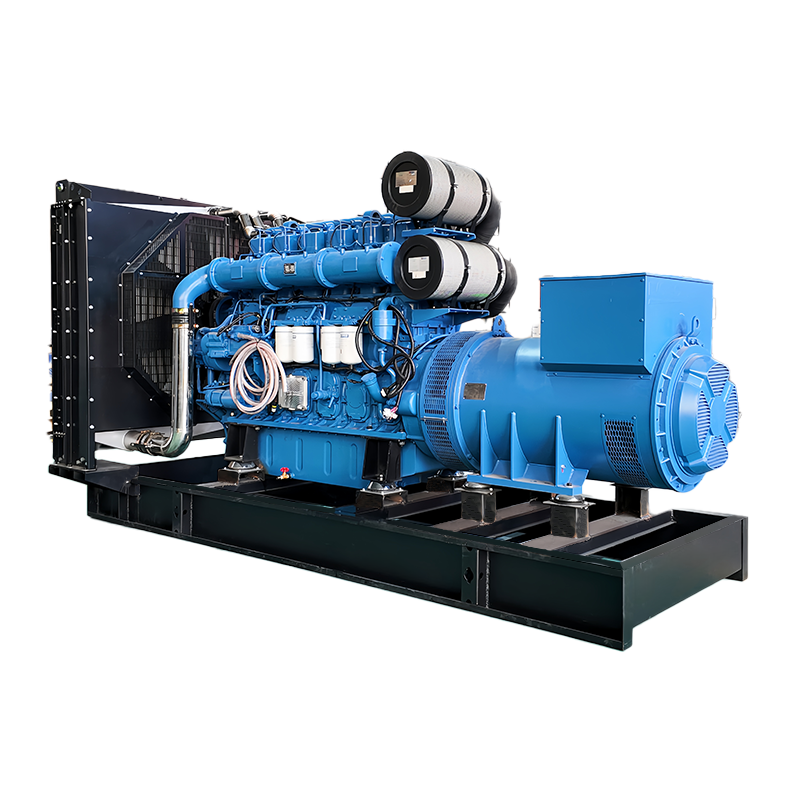
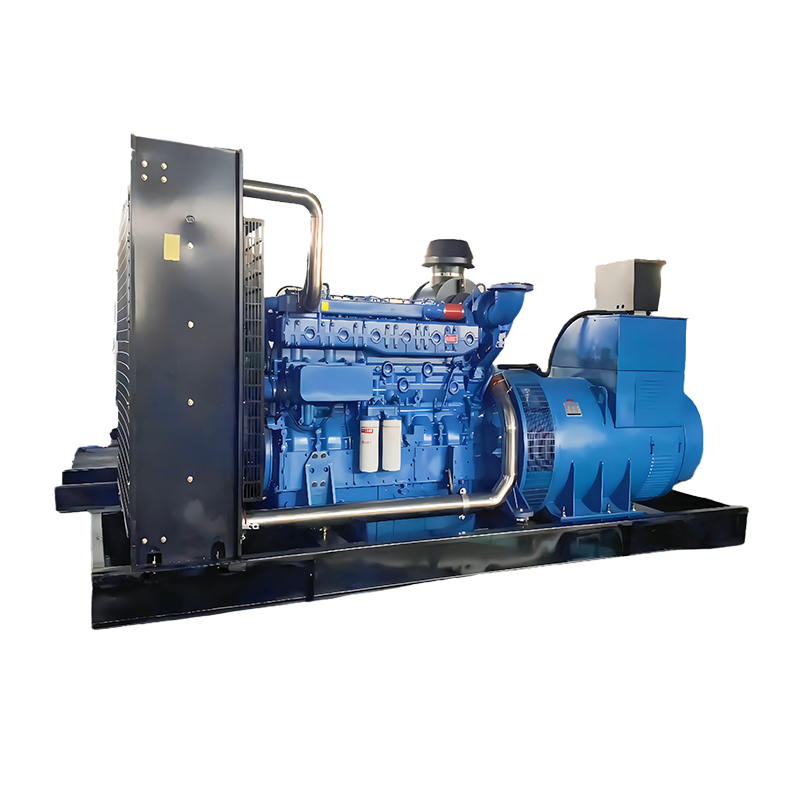
Industrial diesel generators represent a distinct category above standard portable or home-use models. These units are engineered for prime power or standby power applications in settings like hospitals, data centres, manufacturing plants, construction sites, and telecommunications infrastructure — environments where power interruption carries operational or safety consequences.
Power Output Range
Industrial diesel generators typically range from 20 kW to over 3,000 kW (3 MW). Units above 500 kW are commonly used in utility-scale backup or remote off-grid power installations. Petrol generators, by contrast, rarely exceed 20–25 kW in commercially available configurations — making diesel the only practical choice for industrial-scale electricity generation.
Automatic Transfer Switch (ATS) Integration
Most industrial diesel generators are equipped with or designed to integrate with an Automatic Transfer Switch, which detects a mains power failure and starts the generator within 10–30 seconds, automatically transferring the electrical load. This capability is essential in hospitals, server farms, and emergency services facilities. It is rarely available on petrol generator platforms of comparable reliability.
Fuel Storage and Supply Infrastructure
Industrial sites running diesel generators often install bulk fuel storage tanks of 1,000–20,000 litres with day tanks feeding the generator directly. Diesel's lower fire hazard classification (flash point above 52°C vs. −43°C for petrol) makes this large-scale on-site fuel storage significantly safer and easier to permit under fire safety regulations.
When a Petrol Generator Is the Right Choice
Despite diesel's advantages in sustained operation, petrol generators are the better tool in specific scenarios. Choosing petrol is rational when:
- Usage is infrequent — fewer than 100–200 hours per year. At low annual hours, the fuel savings of diesel never offset its higher purchase price.
- Portability is critical — a 2–5 kW petrol generator weighs 30–60 kg, while a diesel equivalent may weigh 80–150 kg. For camping, outdoor events, or jobsites with no vehicle access, weight matters.
- Operating in very cold climates — petrol starts reliably at temperatures where diesel can struggle without pre-heating aids (glow plugs or block heaters).
- Budget is the primary constraint — for homeowners needing emergency backup power a few times a year, a €800–€1,500 petrol generator is a practical and economical solution.
- Petrol is the only fuel locally available — in remote regions or developing markets, diesel supply chains may be unreliable, making petrol the more accessible choice.
Noise and Emissions: Environmental and Regulatory Considerations
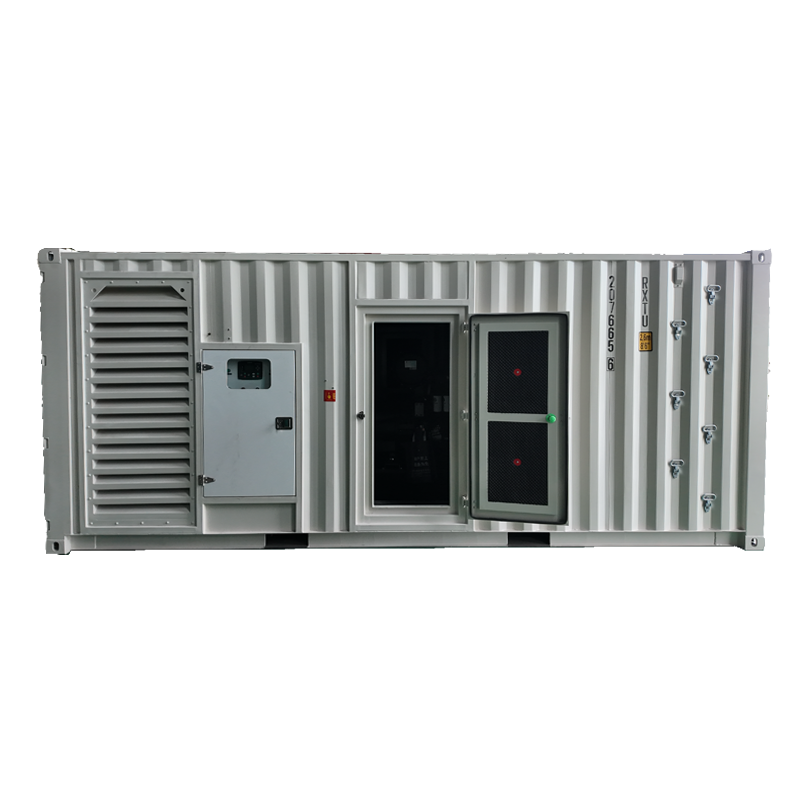
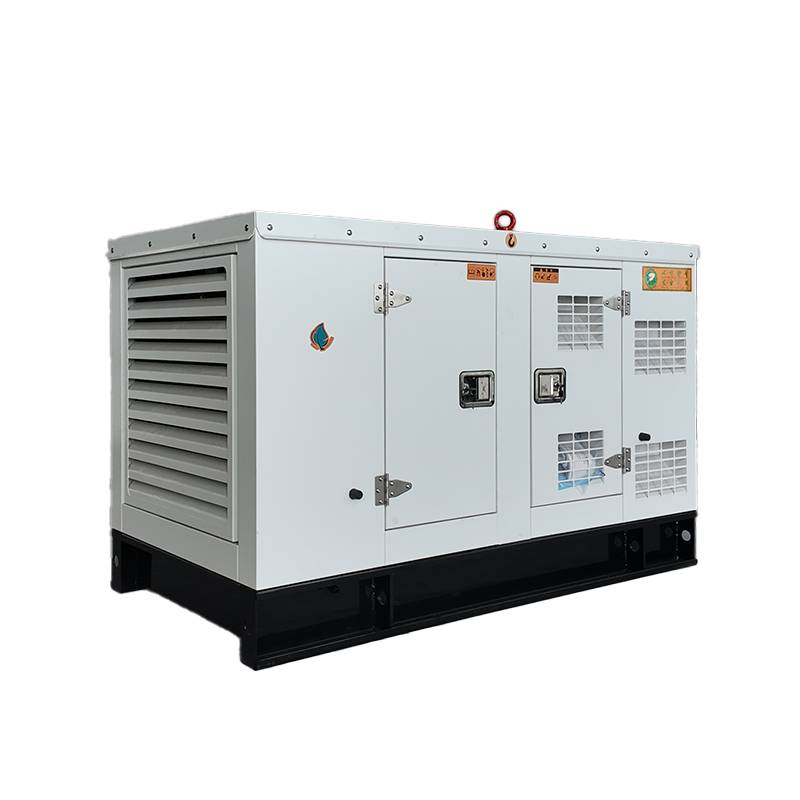
Diesel generators are generally noisier than petrol generators at comparable small power ratings, typically producing 85–95 dB at 7 metres without sound attenuation enclosures. Many industrial diesel generators are supplied in acoustic canopies that reduce noise to 65–75 dB — roughly the level of a normal conversation — making them suitable for urban or semi-urban deployment.
On emissions, diesel generators produce higher levels of nitrogen oxides (NOx) and particulate matter (PM) than petrol equivalents. In the European Union, Stage V emissions regulations (effective from 2019–2020) impose strict limits on NOx and PM output from non-road mobile machinery, including diesel generators above certain power thresholds. Buyers of new industrial diesel generators in the EU should confirm Stage V compliance, as non-compliant units face operational restrictions in many jurisdictions.
Both fuel types produce CO₂ emissions, with diesel generating approximately 2.68 kg CO₂ per litre and petrol generating approximately 2.31 kg CO₂ per litre — though diesel's superior fuel efficiency means total CO₂ output per kWh generated is often lower for diesel than petrol in practice.
Choosing the Right Generator: A Decision Framework
Use the following criteria to guide your selection between diesel and petrol:
| Your Situation | Recommended Choice | Reason |
|---|---|---|
| Construction site, 8+ hrs/day | Diesel | Fuel economy, engine durability |
| Hospital / data centre standby power | Industrial Diesel Generator | Reliability, ATS compatibility, long service life |
| Home emergency backup (occasional) | Petrol | Lower cost, sufficient for low hours |
| Outdoor event / camping | Petrol (inverter type) | Portability, quieter operation |
| Remote telecoms tower or off-grid site | Diesel | Fuel storage safety, long service intervals |
| Arctic or sub-zero environment | Petrol or arctic-spec diesel | Cold-start reliability; diesel needs winterisation |
Key Specifications to Check Before Buying Any Generator
Regardless of fuel type, evaluating these specifications ensures you buy a generator that matches your actual load requirements:
- Rated (continuous) power vs. maximum (surge) power: always size against rated power. A generator rated at 10 kW continuous can handle brief surges to 12–13 kW for motor starting, but cannot sustain them.
- Single-phase vs. three-phase output: most industrial loads and large motors require three-phase supply. Confirm the output configuration matches your site's electrical infrastructure.
- Alternator quality: a Stamford, Leroy Somer, or Mecc Alte alternator is a strong indicator of industrial-grade build quality in diesel generators.
- Engine brand and parts availability: Perkins, Cummins, Volvo Penta, and Mitsubishi diesel engines have extensive global service networks — important for long-term maintenance and parts sourcing.
- IP rating for the enclosure: outdoor installations require at minimum IP23 (splash-proof); exposed coastal or construction environments may need IP44 or higher.
- Fuel tank capacity and runtime: calculate expected runtime at 75% load. A 100-litre diesel tank on a 20 kW generator typically delivers 10–14 hours of continuous operation — enough for overnight standby without manual refuelling.
Related Products
Related News

-
Xiaoji Town, Jiangdu District, Yangzhou City, Jiangsu Province, China
-
8618944498005
-
+86-18652407919
-
+86-0514-86593686
Copyright © Jiangsu Ford Generator Co., Ltd.
