




 English
 Español
 عربى
عربىHow Much Does a Diesel Generator Weigh? Full Guide
May 13, 2026
Content
- 1 Diesel Generator Weight by Power Output: A Complete Reference
- 2 What Makes a Diesel Generator Heavy? The Five Major Weight Contributors
- 3 Open-Frame vs Enclosed Diesel Generator: Weight Difference Explained
- 4 How Diesel Generator Weight Affects Foundation and Structural Requirements
- 5 Transporting Industrial Diesel Generators: Weight Limits and Requirements
- 6 Factors That Cause Two Same-kW Generators to Weigh Differently
- 7 Dry Weight vs. Wet Weight vs. Operating Weight: Understanding the Terminology
- 8 Weight Considerations for Specific Industrial Diesel Generator Applications
- 9 How to Find the Exact Weight of Your Diesel Generator
A diesel generator's weight ranges enormously depending on its power output and design: portable diesel generators (1–10 kW) typically weigh 60–200 lbs (27–91 kg), mid-range standby units (10–100 kW) weigh 500–3,000 lbs (227–1,361 kg), and large industrial diesel generators (100 kW–3 MW+) commonly weigh 3,000–50,000 lbs (1,361–22,680 kg) or more. Understanding exactly why generators weigh what they do — and what that means for transport, foundation design, and installation — is essential for buyers, engineers, and facility managers making real procurement decisions.
Diesel Generator Weight by Power Output: A Complete Reference
The most reliable way to estimate a diesel generator's weight is by its rated power output (kW). The table below compiles typical weight ranges across the full spectrum of diesel generator sizes, from portable units to utility-scale industrial machines.
| Power Output | Typical Weight (lbs) | Typical Weight (kg) | Common Application |
|---|---|---|---|
| 1–5 kW | 60–130 lbs | 27–59 kg | Camping, small backup |
| 5–10 kW | 130–250 lbs | 59–113 kg | Home standby, small farm |
| 10–30 kW | 500–1,200 lbs | 227–544 kg | Small commercial, clinic |
| 30–80 kW | 1,200–2,500 lbs | 544–1,134 kg | Office buildings, retail |
| 80–150 kW | 2,500–5,000 lbs | 1,134–2,268 kg | Hospital, hotel, data center |
| 150–300 kW | 5,000–10,000 lbs | 2,268–4,536 kg | Industrial plant, municipality |
| 300–600 kW | 10,000–20,000 lbs | 4,536–9,072 kg | Manufacturing, telecom hub |
| 600 kW–1 MW | 20,000–35,000 lbs | 9,072–15,876 kg | Large industrial, mining |
| 1 MW–3 MW+ | 35,000–100,000+ lbs | 15,876–45,000+ kg | Utility, offshore, military |
These are dry weights (no fuel, no coolant). Add 8–15% for operating weight once fluids are filled. Enclosured (soundproofed) models add a further 10–30% over open-frame equivalents due to the steel canopy and sound-attenuation lining.
What Makes a Diesel Generator Heavy? The Five Major Weight Contributors
A diesel generator set is composed of several distinct assemblies, each contributing significantly to overall weight. Understanding these components helps explain why two generators with similar kW ratings from different manufacturers can differ by hundreds or even thousands of pounds.
1. The Diesel Engine
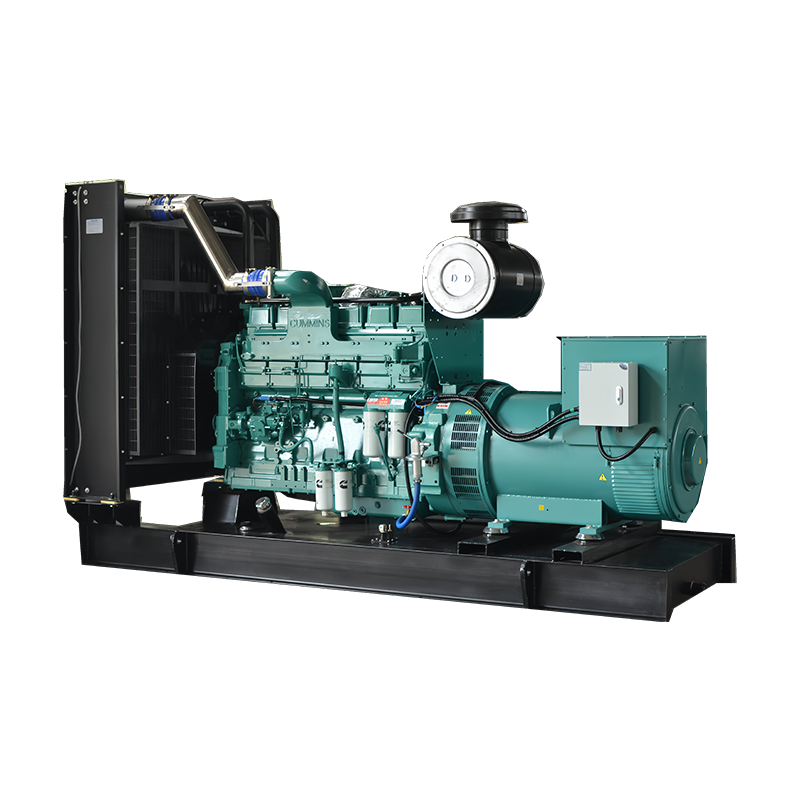
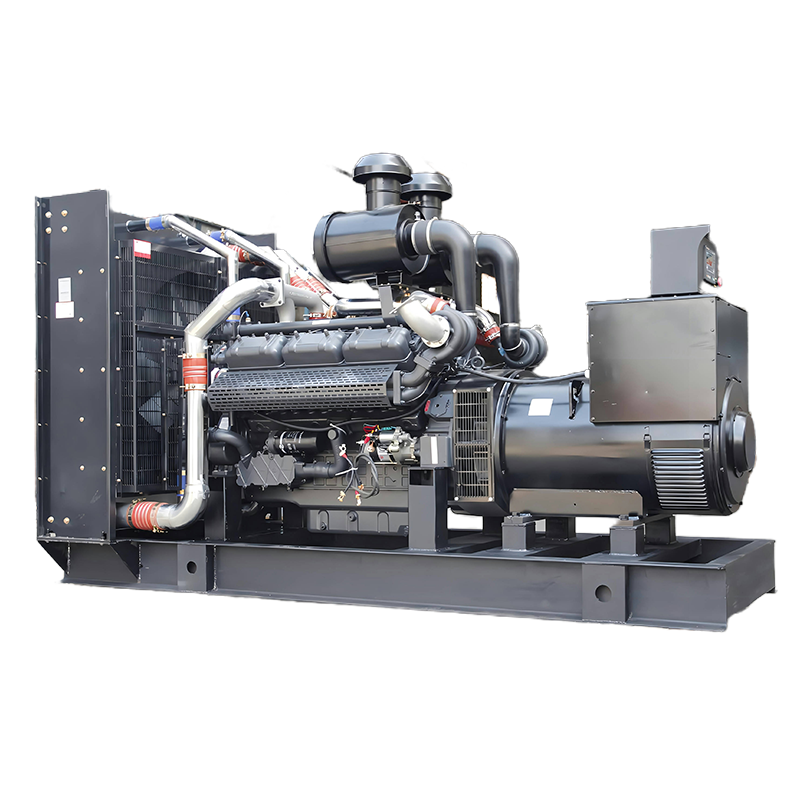
The diesel engine is typically the heaviest single component, accounting for 35–50% of total genset weight. Diesel engines use heavy cast-iron or ductile-iron blocks because these materials withstand the high compression ratios (16:1 to 23:1) that diesel combustion requires. A 6-cylinder inline diesel engine for a 150 kW generator typically weighs 1,500–2,200 lbs (680–998 kg) on its own. Larger V-12 or V-16 engines for 1 MW+ units can exceed 15,000 lbs (6,804 kg).
2. The Alternator (Generator Head)
The alternator converts mechanical energy to electrical output and contributes 20–35% of total genset weight. Industrial-grade alternators use copper windings (copper is dense at 8.96 g/cm³) wound around laminated silicon-steel stator cores. A 200 kW alternator typically weighs 800–1,400 lbs (363–635 kg). Higher-efficiency, lower-harmonic distortion (THD) alternators use more copper and thus weigh more than economy-grade units of the same kW rating.
3. The Steel Base Frame and Sub-Base Fuel Tank
The structural base frame holds the engine and alternator in alignment and absorbs vibration. Heavy-duty welded steel frames for industrial generators weigh 300–2,000 lbs (136–907 kg) depending on size. Units with integrated sub-base fuel tanks — which store 100 to 1,000+ gallons of diesel — add substantial weight: diesel fuel weighs approximately 7.1 lbs per gallon (0.85 kg/L), so a 500-gallon sub-base tank adds 3,550 lbs (1,610 kg) when full.
4. The Acoustic Enclosure (Canopy)
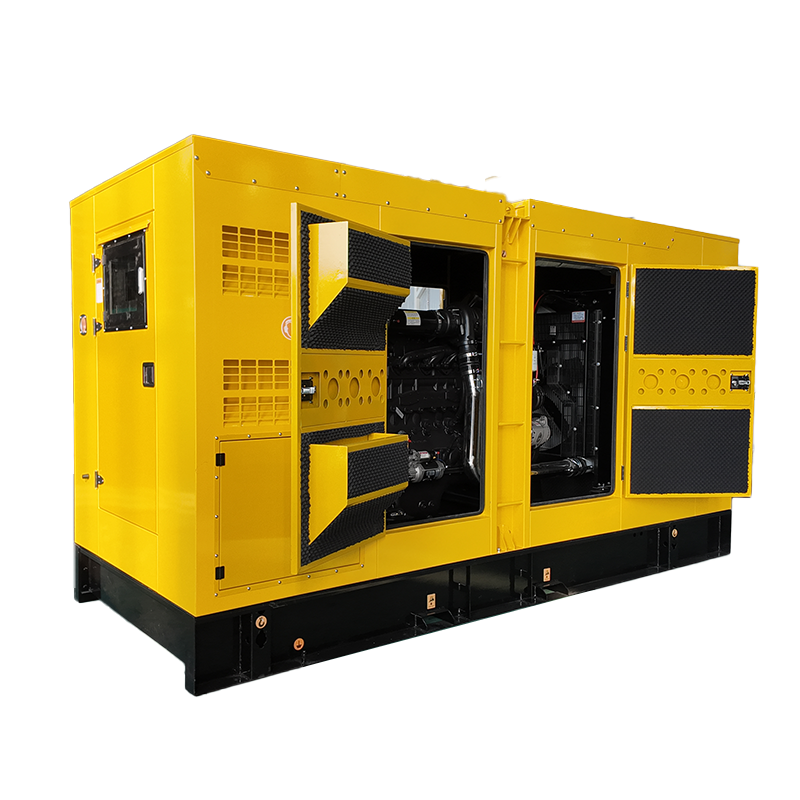
Weatherproof, sound-attenuated enclosures are standard on most commercial and industrial diesel generators. A heavy-gauge steel canopy with acoustic foam lining for a 100 kW unit typically adds 800–1,500 lbs (363–680 kg) over the open-frame base unit. Premium low-dB enclosures achieving 75 dBA at 7 meters use thicker steel and denser foam panels, which can add 20–25% more weight than standard canopies.
5. Cooling System, Radiator, and Exhaust
The radiator, coolant lines, exhaust manifold, and muffler contribute the remaining weight. Industrial radiators are copper-brass or aluminum-alloy assemblies; for a 500 kW unit the cooling assembly alone may weigh 400–900 lbs (181–408 kg). Exhaust silencers rated for residential use (critical silencing) can weigh 200–600 lbs (91–272 kg) depending on attenuation grade.
Open-Frame vs Enclosed Diesel Generator: Weight Difference Explained
The same diesel engine and alternator combination is sold in both open-frame and enclosed configurations. The weight difference is substantial and matters for transport and foundation planning.
| Power Rating | Open-Frame Weight | Enclosed Weight | Enclosure Weight Added |
|---|---|---|---|
| 30 kW | ~1,100 lbs (499 kg) | ~1,700 lbs (771 kg) | ~600 lbs (+55%) |
| 100 kW | ~3,300 lbs (1,497 kg) | ~4,800 lbs (2,177 kg) | ~1,500 lbs (+45%) |
| 250 kW | ~7,200 lbs (3,266 kg) | ~9,500 lbs (4,309 kg) | ~2,300 lbs (+32%) |
| 500 kW | ~13,000 lbs (5,897 kg) | ~17,500 lbs (7,938 kg) | ~4,500 lbs (+35%) |
The enclosure weight premium decreases as a percentage at higher power ratings because the engine and alternator dominate at scale. For smaller units under 50 kW, the canopy can represent more than half the total unit weight.
How Diesel Generator Weight Affects Foundation and Structural Requirements
For industrial diesel generators, weight directly determines the foundation specification. Getting the foundation wrong is one of the most costly installation mistakes — a cracked or settling foundation can misalign the engine-alternator coupling, causing catastrophic bearing and crankshaft failure within months.
Concrete Pad Sizing Rules
The standard rule for diesel generator foundations is that the concrete pad should weigh 1.5 to 3 times the total operating weight of the genset (including fuel). Concrete weighs approximately 150 lbs/ft³ (2,400 kg/m³).
Example for a 250 kW enclosed diesel generator:
- Operating weight (with 200-gallon sub-base fuel tank full): ~11,000 lbs (4,990 kg)
- Target pad weight (2× rule): ~22,000 lbs (9,979 kg)
- Required concrete volume: ~147 ft³ (4.16 m³) at 150 lbs/ft³
- Typical pad dimensions: 14 ft × 8 ft × 10 in thick (4.3 m × 2.4 m × 25 cm)
Rooftop and Upper-Floor Installations
Rooftop diesel generator installations require a structural engineering assessment of floor load capacity. Most commercial buildings support 150–300 lbs/ft² (732–1,464 kg/m²) of live load; a 500 kW enclosed genset at 17,500 lbs spread over a 10 ft × 5 ft footprint creates a point load density of 350 lbs/ft² — exceeding standard floor ratings. Steel dunnage (load-spreading beams) or reinforced pads are mandatory in such cases.
Transporting Industrial Diesel Generators: Weight Limits and Requirements
Diesel generator weight directly determines what transport equipment and permits are required. This is a critical logistics consideration for rental companies, EPC contractors, and end-users taking delivery of new units.
Standard Truck and Trailer Capacity
- Flatbed trailer (standard): 48,000 lbs (21,772 kg) payload — covers most generators up to ~600 kW enclosed
- Step-deck trailer: 48,000 lbs capacity with lower deck height — preferred for tall enclosures exceeding 13'6" clearance
- RGN (removable gooseneck) trailer: 42,000–80,000 lbs capacity — required for large industrial generators above 700 kW
- Heavy haul / multi-axle: Up to 200,000+ lbs — used for 1 MW+ generators; requires oversize load permits in most U.S. states and international jurisdictions
Rigging and Lifting Requirements
All industrial diesel generators include certified lifting points (lugs or spreader bar provisions) rated to the unit's full operating weight with a 4:1 safety factor per ASME B30.20 standards. Crane capacity must be selected based on operating weight, not dry weight — never lift a generator with full fuel and coolant using equipment rated for dry weight only.
- Generators under 5,000 lbs: forklift with certified forks (8,000 lb capacity minimum)
- 5,000–20,000 lbs: rough-terrain forklift or hydraulic crane
- 20,000–100,000+ lbs: mobile or crawler crane with certified rigging crew
Factors That Cause Two Same-kW Generators to Weigh Differently
Buyers frequently discover that two 200 kW diesel generators from different manufacturers can differ by 1,000–3,000 lbs (454–1,361 kg). The following factors explain this variation:
- Engine type: Naturally aspirated engines are heavier than turbocharged engines of the same output because turbocharging achieves higher power density. A turbocharged 200 kW engine may weigh 15–25% less than an equivalent naturally aspirated block.
- Alternator efficiency class: IE3 (premium efficiency) alternators use more copper than IE1 units, adding 10–20% alternator weight for the same kW rating.
- Integrated vs. external fuel tank: A 24-hour sub-base tank on a 150 kW unit typically holds 150–250 gallons, adding 1,065–1,775 lbs (483–805 kg) when full — a substantial portion of the base unit weight.
- Enclosure material: Standard-gauge (14-gauge) steel vs. heavy-gauge (11-gauge) steel or stainless steel enclosures differ by 15–30% in canopy weight for the same physical dimensions.
- Acoustic treatment level: "Super silent" (65 dBA at 7m) enclosures require denser insulation and thicker walls than standard (75 dBA) designs, adding 5–15% total weight.
- Control panel and switchgear: Generators with integrated automatic transfer switches (ATS), paralleling switchgear, or advanced SCADA panels can add 200–800 lbs (91–363 kg) depending on voltage class and current rating.
Dry Weight vs. Wet Weight vs. Operating Weight: Understanding the Terminology
Diesel generator datasheets use multiple weight definitions that are not interchangeable. Using the wrong figure for foundation or transport planning is a common and costly error.
| Weight Term | What It Includes | Used For | Typical Multiplier |
|---|---|---|---|
| Dry Weight | Unit only, no fluids | Shipping, initial placement | Baseline (1.0×) |
| Wet Weight | Unit + coolant + engine oil | Rigging at installation | ~1.04–1.08× dry |
| Operating Weight | Unit + all fluids + full fuel tank | Foundation design, floor loading | ~1.15–1.60× dry |
| Shipping Weight | Dry weight + packaging/skid | Freight cost calculation | ~1.05–1.15× dry |
Always use operating weight for foundation and structural engineering calculations. Using dry weight understates the real load by 15–60%, a margin that can be structurally significant in rooftop or elevated installations.
Weight Considerations for Specific Industrial Diesel Generator Applications
Different industries deploy diesel generators in environments where weight constraints are as important as power output. Here is how weight factors into key industrial use cases:
Data Centers
Hyperscale data centers typically deploy 1–2 MW diesel generators weighing 35,000–70,000 lbs (15,876–31,752 kg) each. Multiple units are installed in parallel for N+1 or 2N redundancy. The cumulative weight of 4–6 units (140,000–420,000 lbs) requires specially engineered reinforced concrete pads and, for rooftop placements, structural steel frames spanning multiple building columns.
Mining and Remote Sites
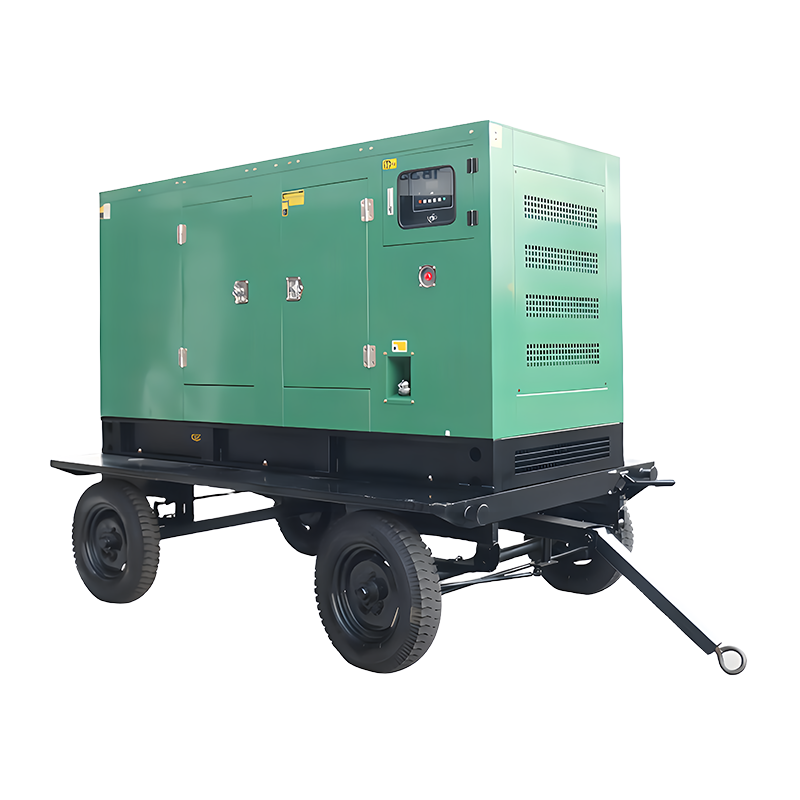
Open-pit and underground mining operations favor trailer-mounted diesel generators (200–750 kW) that can be relocated as the mine footprint evolves. Trailer-mounted units add 3,000–8,000 lbs (1,361–3,629 kg) to the base genset weight for the road-legal trailer structure, but eliminate the need for a permanent foundation and reduce mobilization time from weeks to hours.
Construction Sites
Temporary construction power commonly uses towable diesel generators (20–125 kW) on single-axle or tandem-axle trailers. These units must remain within road-legal weight limits of 10,000–14,000 lbs (4,536–6,350 kg) gross trailer weight in most U.S. states to avoid CDL (Commercial Driver's License) requirements and oversize permits — a practical constraint that limits towable gensets to approximately 100 kW maximum.
Offshore and Marine
Offshore platform and vessel diesel generators are specified in weight-per-kW terms because every kilogram affects vessel stability and structural load capacity. Marine-grade compact gensets achieve 15–25 kg/kW, compared to 25–40 kg/kW for equivalent land-based industrial units, through the use of high-speed engines, lightweight alloy enclosures, and integrated heat exchangers that eliminate external radiators.
How to Find the Exact Weight of Your Diesel Generator
Generic weight estimates are useful for planning, but for engineering, permitting, and transport, you need the precise figure for your specific unit. Here is how to find it reliably:
- Manufacturer's datasheet: Every major brand publishes model-specific datasheets with dry weight, wet weight, and dimensions. Search the model number + "datasheet PDF" on the manufacturer's website.
- Serial number plate: For existing installed units, the nameplate on the control panel or base frame typically lists rated kW and model designation, which you can cross-reference to the datasheet.
- Bill of lading (BOL): The freight documentation from delivery will include the shipping weight, which approximates dry weight plus packaging (subtract 5–10% to estimate dry weight).
- Dealer or distributor: Authorized dealers have access to full engineering datasheets including dimensional drawings, weight breakdowns by component, and center-of-gravity data for rigging.
- Direct weighing: For critical structural calculations, weigh the unit on calibrated platform scales before installation. This accounts for any field modifications (additional fuel tank, custom enclosure) not reflected in the standard datasheet.
Never rely on weight estimates from sales brochures or product listing pages for engineering applications — these are marketing documents and frequently omit sub-base fuel tanks, paralleling gear, or enclosure weights that can add 30–60% to the base unit figure.
Related Products

-
Xiaoji Town, Jiangdu District, Yangzhou City, Jiangsu Province, China
-
8618944498005
-
+86-18652407919
-
+86-0514-86593686
Copyright © Jiangsu Ford Generator Co., Ltd.
