




 English
 Español
 عربى
How to Operate a Diesel Generator: A Practical Start-to-Stop Guide for Safe Runs
Nov 19, 2026
Content
- 1 Before You Start: A Calm, Systematic Walk-Around
- 2 Starting the Engine Without Load
- 3 Bringing the Load On Safely
- 4 Staying in Control During the Run
- 5 Shutting Down and Cooling Off
- 6 Common Operating Mistakes to Avoid
- 7 A Simple Maintenance Habit That Protects Every Start
- 8 A Final Word on Safe Operation
Operating a diesel generator is not difficult, but it rewards patience. The best operators do not rush to the start button. They walk around the set, check the basics, start the engine off load, let it warm up, and bring power on gradually. That rhythm protects the engine, the alternator, and the people working nearby. It also turns something that can feel intimidating on a dark, wet morning into a familiar routine. The exact steps vary by controller and set design, so always read the manufacturer's manual for your unit. The principles below are the ones our team uses when commissioning and checking diesel generator sets in the field.
Before You Start: A Calm, Systematic Walk-Around
Start with the area, not the control panel. The set needs clean, dry footing, good ventilation, and enough space for hot air and exhaust to leave safely. Check that nothing is blocking the radiator, that the exhaust outlet is clear, and that no flammable material is stored near the set. If the set is indoors, confirm that the exhaust is piped outside and that ventilation fans or louvers are working. Never run a diesel generator in an enclosed space without proper exhaust extraction.
Then move to the set itself. With the engine stopped and the controller off, check fuel level, engine oil, coolant, battery connections, belts, hoses, and the condition of the wiring. Look for leaks, loose terminals, cracked belts, or anything that smells hot or looks disturbed. If the set has a drip tray, inspect it. If it has a battery isolator, make sure it is in the correct position for the start procedure. The aim is simple: catch small problems while they are still small.
| Check | What to look for | Why it matters |
|---|---|---|
| Fuel level | Enough fuel for the expected run; no water or contamination | Fuel starvation and injector damage |
| Engine oil | Between the marks, clean, correct grade | Poor lubrication and overheating |
| Coolant | Correct level, hoses sound, no leaks | Overheating and coolant loss |
| Battery | Terminals tight and clean, charge healthy | Slow crank or failed start |
| Belts and hoses | Correct tension, no cracks or soft spots | Charging, cooling, and drive failures |
| Air intake and exhaust | Clear, secure, no blockage | Poor combustion and dangerous fumes |
| Area and ventilation | Dry, clean, clear exhaust path | Fire, fumes, and overheating |
| Grounding and connections | Intact, tight, no exposed conductors | Electric shock and loose connections |
One more point before starting: know where the emergency stop is, and make sure anyone helping you knows too. It sounds obvious, but in a noisy plant room or on a busy site, a few seconds of shared understanding matter.
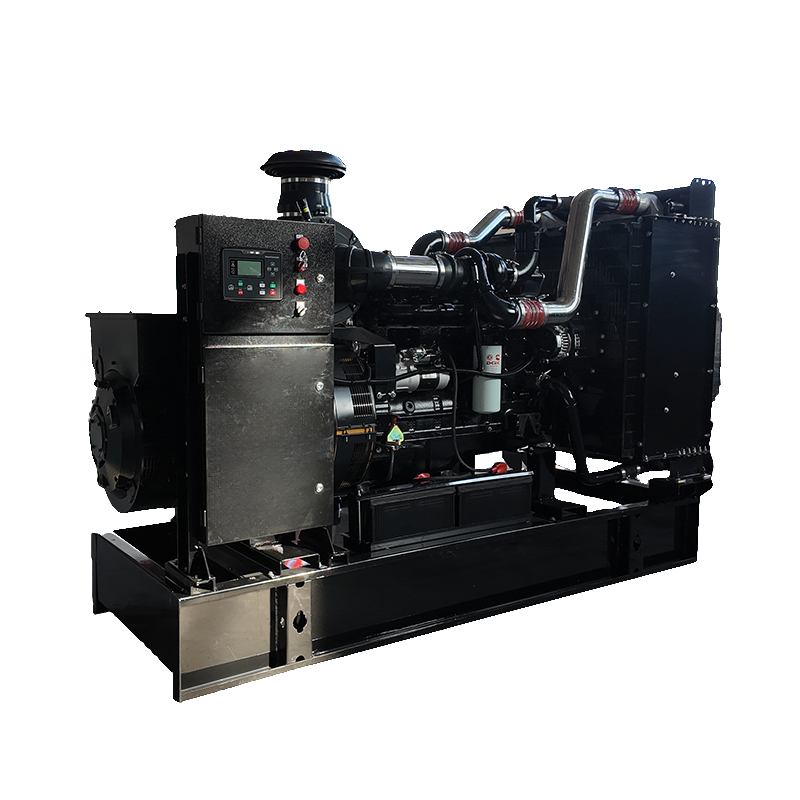
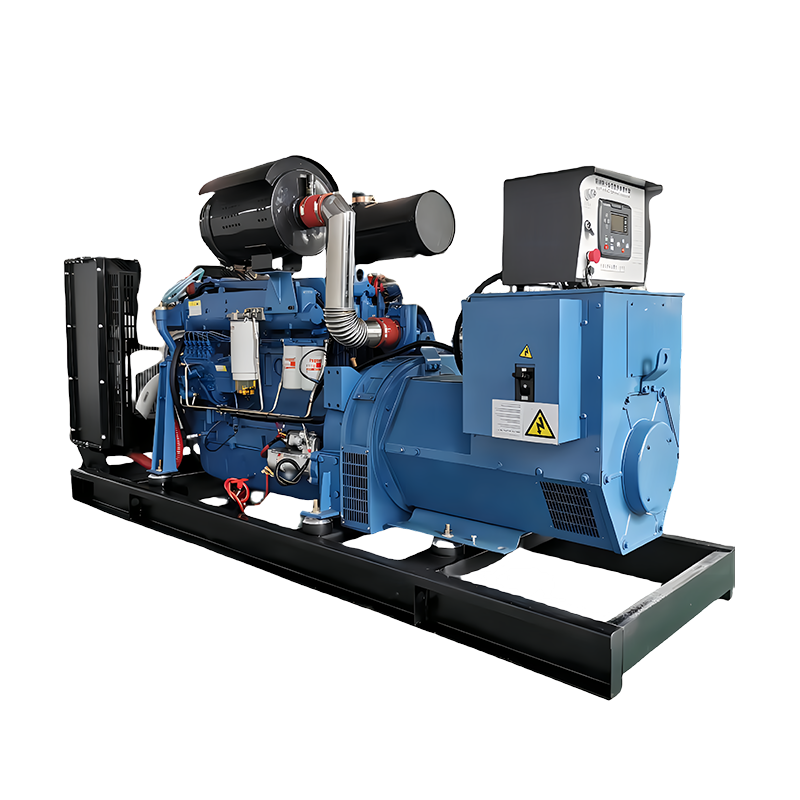
Open-frame sets make this walk-around easier because the engine, belts, and terminals are visible.
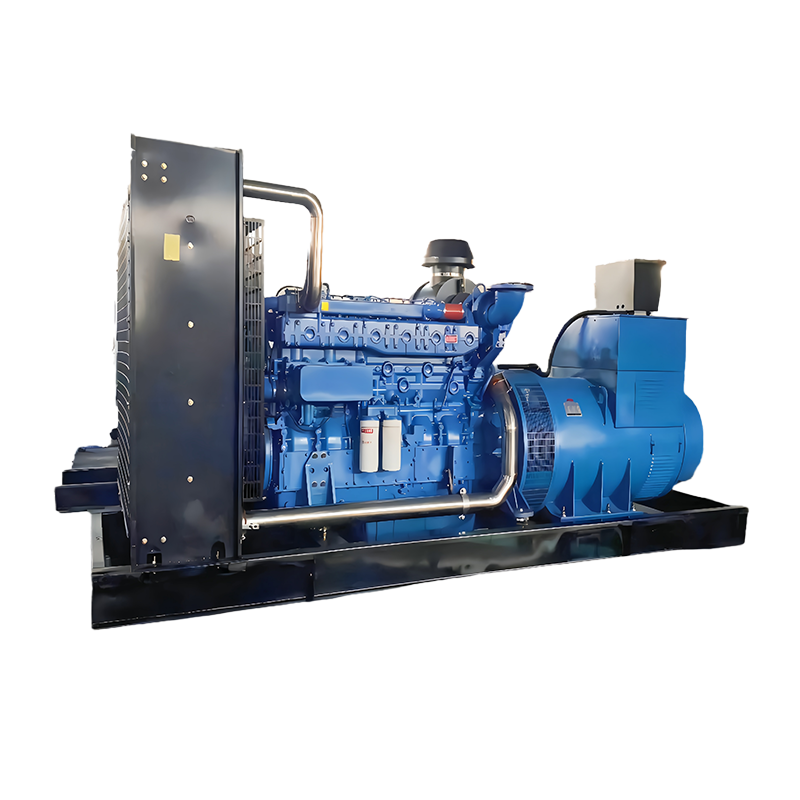 Open-Frame Diesel Generator Sets for Easier InspectionOpen-frame sets keep engine, belts, and terminals visible for walk-around checks; the category covers customizable power ranges and multiple engine brands.View Product →
On enclosed sets, open the access doors long enough to inspect properly, then close and latch them before start-up. Good access is part of safe operation, not an inconvenience.
Starting the Engine Without Load
Before you crank, put the controller in the correct mode. For a manual start, that usually means the set is off load and the main breaker is open. For an automatic standby set, make sure the controller is in Auto only when the site is ready for automatic transfer. Do not start a set with a load already connected unless the manual specifically allows it. A diesel engine should reach stable speed and voltage before it takes load.
Press start and listen. The engine should crank promptly and catch without excessive smoke or unusual noise. If it does not start, do not keep grinding the starter. Wait for the recommended interval, check fuel supply and battery condition, and try again. Once it fires, watch the oil pressure gauge immediately. If oil pressure does not rise within a few seconds, stop the engine and investigate. Low oil pressure at start-up is not a problem to watch; it is a problem to stop.
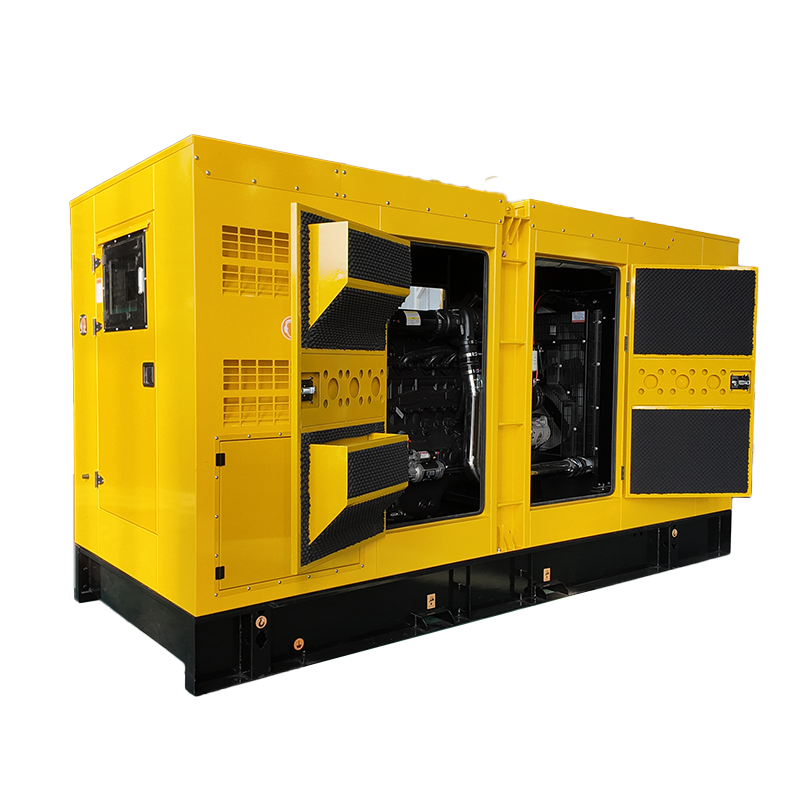
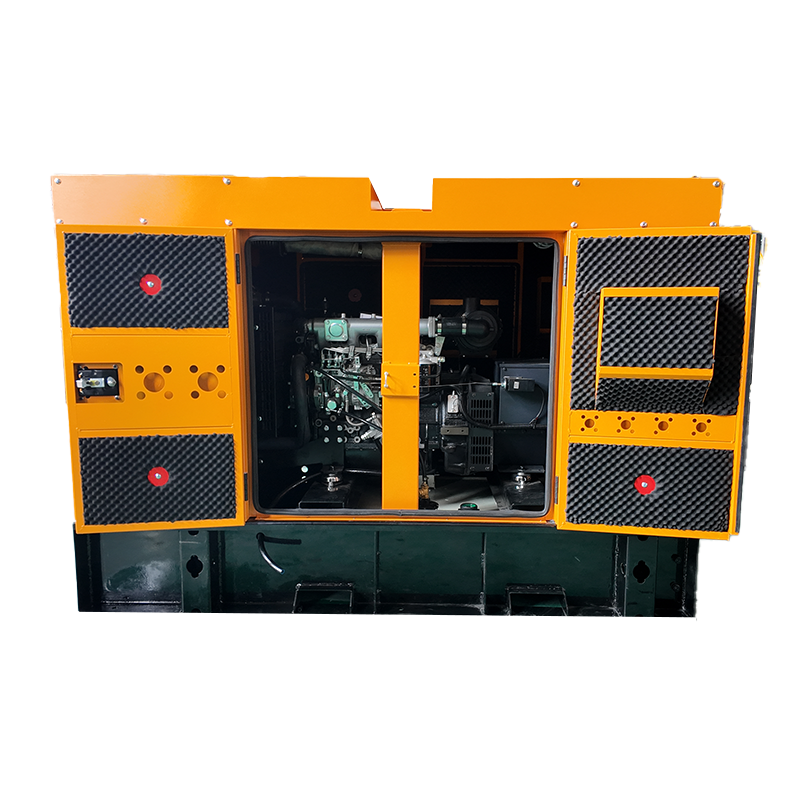
Let the engine idle or run at no load for the warm-up period recommended in the manual. Check that voltage and frequency are steady, that the alternator is charging, and that there are no abnormal vibrations or smells. On enclosed silent-type sets, confirm that doors and vents are secure and that the exhaust route is clear.
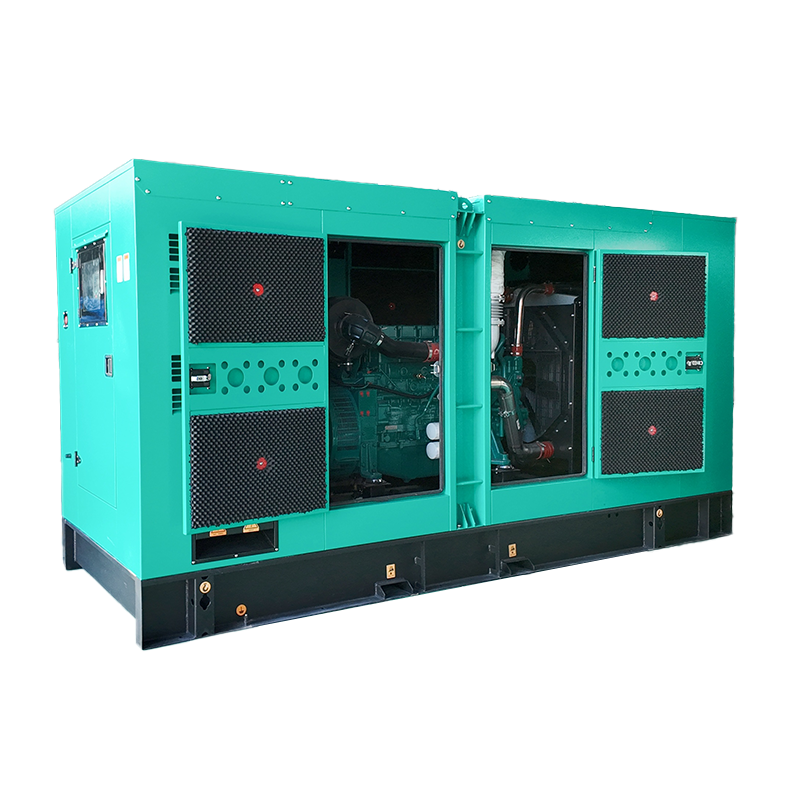 Silent Diesel Generator Sets for Noise-Sensitive Backup PowerSoundproof, rainproof enclosures suit hospitals, hotels, and malls; before closing the breaker, confirm doors and vents are secure and output is steady.View Product →
Only after the set is warm and steady should you think about closing the breaker.
Bringing the Load On Safely
Load pickup is where many operating problems begin. Add load in steps rather than switching on everything at once. Large motors, compressors, and welders can draw several times their running current at start-up, so give the set time to recover between steps. Watch the ammeter, voltmeter, frequency, oil pressure, and coolant temperature as load increases. If the set struggles, reduce load and find out why before trying again.
Keep the load balanced on three-phase sets. A single phase carrying much more than the others can cause overheating and voltage imbalance. Stay within the set's rated power and pay attention to power factor if the load includes motors or electronic equipment. A generator can supply a surprising amount of power, but it cannot ignore its rating.
For longer runs, record fuel consumption and check the fuel supply before it gets low. Air in the fuel system or a tank running dry can turn a simple refuelling stop into a lengthy restart. Keep the area around the set clean and never store fuel near a hot exhaust.
Larger container-type sets add access doors, ventilation paths, and sometimes fire detection to the routine.
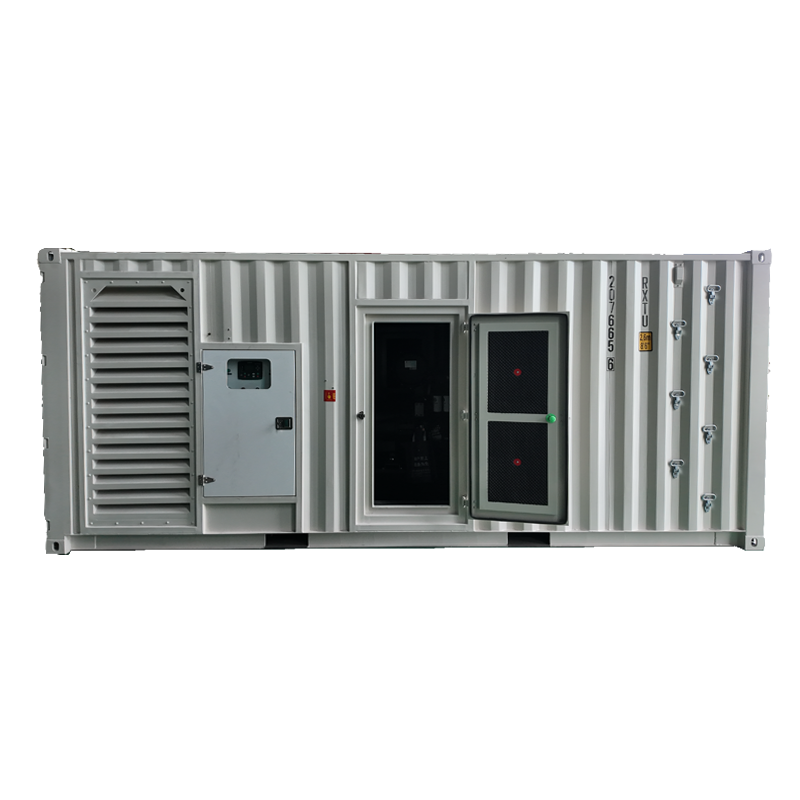 Container Diesel Generator Sets for Larger and Harsh-Site PowerIntegrated containerized sets support larger power needs and harsh environments; for standby, check transfer switch, battery charge, and active alarms.View Product →
If the set is on automatic standby, do not assume it is ready just because the controller says Auto. Check that the transfer switch is healthy, that the starting battery is charged, and that no alarms are active. A standby generator is only useful if it starts when the mains fails, not after someone arrives to reset it.
Staying in Control During the Run
During operation, your job is to notice change. A gauge that moves slowly is easier to correct than an alarm that arrives suddenly. Check oil pressure, coolant temperature, fuel level, battery charging, and exhaust condition at regular intervals. Listen for knocking, hissing, or a change in engine note. Look for leaks, loose guards, or excessive vibration. If something feels wrong, reduce load and investigate; do not wait for the set to decide for you.
Short runs under light load can be as hard on a diesel as long runs under heavy load. If the set regularly runs for only a few minutes, it may never reach a healthy operating temperature. Follow the manual's guidance on minimum run time and loading. If the set is used for standby duty, exercise it under load at the recommended interval, not just at idle.
Never bypass a safety shutdown. High coolant temperature, low oil pressure, over-speed, and over-crank protections are there to stop a small fault from becoming an expensive failure. If a shutdown occurs, find the cause before resetting the alarm. Repeated resetting without diagnosis is not operation; it is guesswork.
Shutting Down and Cooling Off
Shutdown is the reverse of start-up, with one important difference: the engine needs a cool-down period. Remove the load first by opening the main breaker or transferring load away from the set. Let the engine run at no load for a few minutes so that the turbocharger, if fitted, and the engine surfaces can shed heat gradually. Then follow the controller's stop sequence and let the set come to a complete stop.
After shutdown, isolate the set if the procedure requires it, close fuel valves where appropriate, and complete your log. Note the run time, load pattern, fuel added, any alarms, and anything that looked or sounded unusual. A short note now can save a long diagnosis later. If the set is on automatic standby, return the controller to Auto only after all checks are complete and the area is safe.
Do not use the emergency stop as a normal shutdown button. It is there for danger, not convenience. Frequent emergency stops can leave the engine hot, the turbocharger uncoiled, and the next start harder than it needs to be.
Common Operating Mistakes to Avoid
- Starting with the main breaker closed or a heavy load already connected.
- Skipping the walk-around because the set started yesterday.
- Running an enclosed set with doors open or vents blocked.
- Letting fuel run low during a long run.
- Ignoring low oil pressure or high temperature alarms.
- Running for short periods without ever reaching operating temperature.
- Using the emergency stop for routine shutdown.
- Refuelling while the engine is hot or running.
These are simple mistakes, but they cause a large share of avoidable downtime.
A Simple Maintenance Habit That Protects Every Start
Operation and maintenance are not separate jobs. The operator who checks oil, coolant, belts, and battery condition every day is also the person who notices a problem before it becomes a breakdown. Keep a simple log, follow the manufacturer's service intervals, and treat every alarm as information rather than an annoyance. If you want a practical starting point for service planning, our guide to how often a diesel generator should be serviced explains the usual intervals and the checks that matter most.
A Final Word on Safe Operation
After 26 years of building generator sets in Yangzhou, our team has learned that good operation is mostly good habit. Check the set before you need it, start it off load, bring load on gradually, watch the gauges, and shut down with the same care you used at start-up. The manual for your specific set always comes first, but these principles will keep you on the right path. If you are planning a new installation or need a set matched to your load profile, our team is glad to talk through the options without pressure or guesswork.
Related Products

-
Xiaoji Town, Jiangdu District, Yangzhou City, Jiangsu Province, China
-
8618944498005
-
+86-18652407919
-
+86-0514-86593686
Copyright © Jiangsu Ford Generator Co., Ltd.
