




 English
 Español
 عربى
عربىHow to Prepare for a Long-Term Power Outage: Full Guide
Apr 22, 2026
Content
- 1 Why Long-Term Outages Demand More Than a Basic Plan
- 2 Emergency Supply Checklist for Extended Power Outages
- 3 Why Diesel Generators Are the Best Long-Term Backup Power Source
- 4 Open Frame Diesel Generator: Maximum Power at Minimum Cost
- 5 Silent Type Diesel Generator: Quiet Operation for Residential and Commercial Use
- 6 Rainproof Type Diesel Generator: Outdoor Durability Without Full Enclosure Cost
- 7 Movable Type Diesel Generator: Portable Power for Flexible Deployment
- 8 Mobile Silent Diesel Generator: Quiet Power You Can Take Anywhere
- 9 Container Type Diesel Generator: Maximum Capacity for Industrial and Grid-Scale Preparedness
- 10 Diesel Generator Type Comparison: Choosing the Right Option for Your Situation
- 11 Fuel Storage and Management for Long-Term Generator Operation
- 12 Critical Steps to Complete Before a Long-Term Outage Hits
Preparing for a long-term power outage means securing a reliable backup power source, storing at least 72 hours of essential supplies, and having a clear plan before the grid goes down — not after. Short outages of a few hours are an inconvenience; outages lasting days, weeks, or longer are a genuine safety and survival challenge. According to the U.S. Department of Energy, the average American experiences approximately 8 hours of power interruption per year, but major weather events, grid failures, and infrastructure attacks can extend outages to weeks in affected regions. For households, businesses, and critical facilities, a diesel generator is the single most dependable long-duration backup power solution available — provided you choose the right type for your situation. This guide covers everything from emergency supply checklists to a detailed breakdown of every major diesel generator category.
Why Long-Term Outages Demand More Than a Basic Plan
A power outage lasting more than 72 hours triggers a cascade of compounding problems that most households are unprepared for. Food refrigeration fails within 4 hours without power. Water systems dependent on electric pumps fail. Heating and cooling systems stop. Medical equipment loses power. Communications infrastructure degrades. The longer the outage, the more critical each of these failures becomes.
The 2021 Texas winter storm left 4.5 million homes without power for up to 10 days in subfreezing temperatures. Hurricane Maria caused a power outage in Puerto Rico that lasted 11 months in some areas — the longest blackout in U.S. history. These events illustrate that long-term outage preparation cannot rely on the assumption that the grid will recover quickly.
Effective preparation requires action across five domains:
- Power generation: A primary backup power source capable of sustained operation
- Fuel supply: Sufficient stored fuel to run the generator for the expected outage duration
- Water: A minimum of 1 gallon per person per day for at least 14 days
- Food: Non-perishable supplies for at least 2 weeks per household member
- Communications and safety: Battery-powered or hand-crank radios, first aid, and a clear evacuation or shelter plan
Emergency Supply Checklist for Extended Power Outages
Before addressing power generation, ensure fundamental survival supplies are in place. Power alone does not solve every problem created by a long-term outage.
Water and Food
- Store 1 gallon of water per person per day — for a family of four over 14 days, that's 56 gallons minimum
- Include water purification tablets or a gravity filter (e.g., Berkey) as a backup water source
- Stock canned goods, dried beans, rice, oats, freeze-dried meals, and peanut butter — all with shelf lives of 2–25 years
- Include a manual can opener, camp stove with fuel, and cookware that doesn't require electricity
Medical and Safety
- Maintain a 30-day supply of all prescription medications — request extended supplies from your physician before an emergency
- Stock a comprehensive first aid kit including wound care, antibiotics, and OTC pain relievers
- Battery-powered or hand-crank NOAA weather radio for emergency communications
- Headlamps and flashlights with extra batteries; LED candles for interior lighting
- Carbon monoxide detector (battery-powered) — critical if running any generator or combustion heating indoors
Heating and Cooling
- In cold climates: wool blankets, sleeping bags rated to 0°F, and a wood stove or propane heater with adequate fuel
- In hot climates: battery-powered fans, cooling towels, and a plan for accessing cooling centers if temperatures exceed 95°F for extended periods
- Identify which heating/cooling systems in your home can run on your backup generator
Why Diesel Generators Are the Best Long-Term Backup Power Source
When it comes to sustained power generation over days, weeks, or months, diesel generators outperform gasoline generators, propane systems, and battery storage in nearly every critical metric. Understanding why helps you make the right investment for your situation.
| Power Source | Fuel Shelf Life | Fuel Efficiency | Runtime Capability | Maintenance Complexity | Best Suited For |
|---|---|---|---|---|---|
| Diesel Generator | 12–24 months (treated) | Excellent | Days to months | Low–Moderate | All long-term scenarios |
| Gasoline Generator | 3–6 months | Fair | Hours to days | Moderate–High | Short outages |
| Propane Generator | Indefinite (sealed tank) | Fair | Days (tank-limited) | Low | Residential standby |
| Battery Storage | N/A (charge-dependent) | High | Hours | Low | Short outages / solar pairing |
| Solar + Battery | N/A | Excellent (free fuel) | Weather-dependent | Low | Supplement to diesel |
Diesel fuel contains approximately 15% more energy per gallon than gasoline, which translates directly into longer run times per tank. Diesel engines also run cooler under sustained load, extending engine life significantly — commercial diesel generators routinely last 20,000–30,000 hours before requiring major overhaul, compared to 1,000–2,000 hours for consumer gasoline generators. For long-term outage preparedness, this durability is a decisive advantage.
Open Frame Diesel Generator: Maximum Power at Minimum Cost
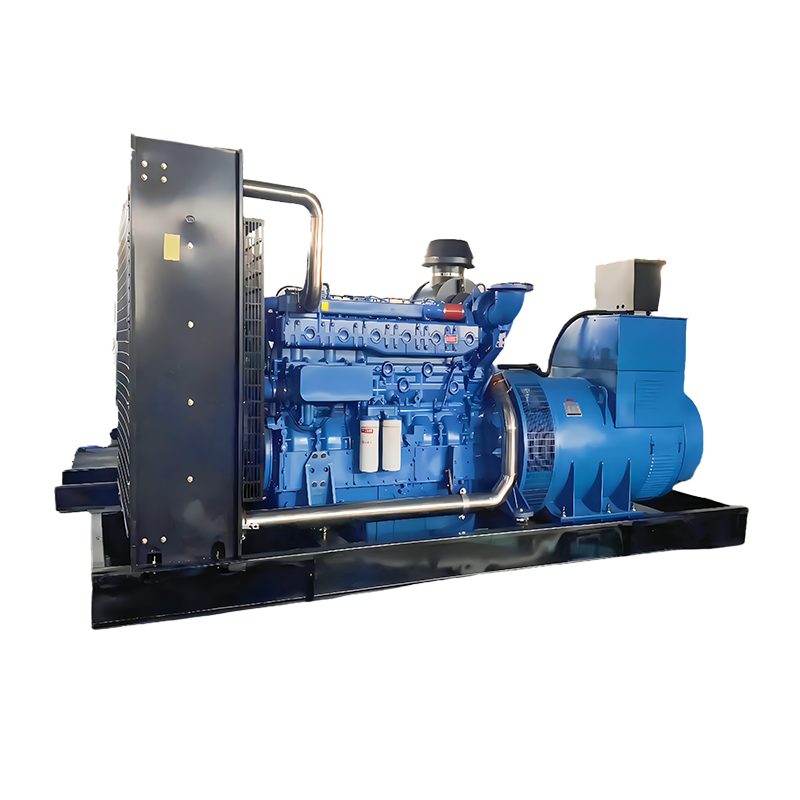
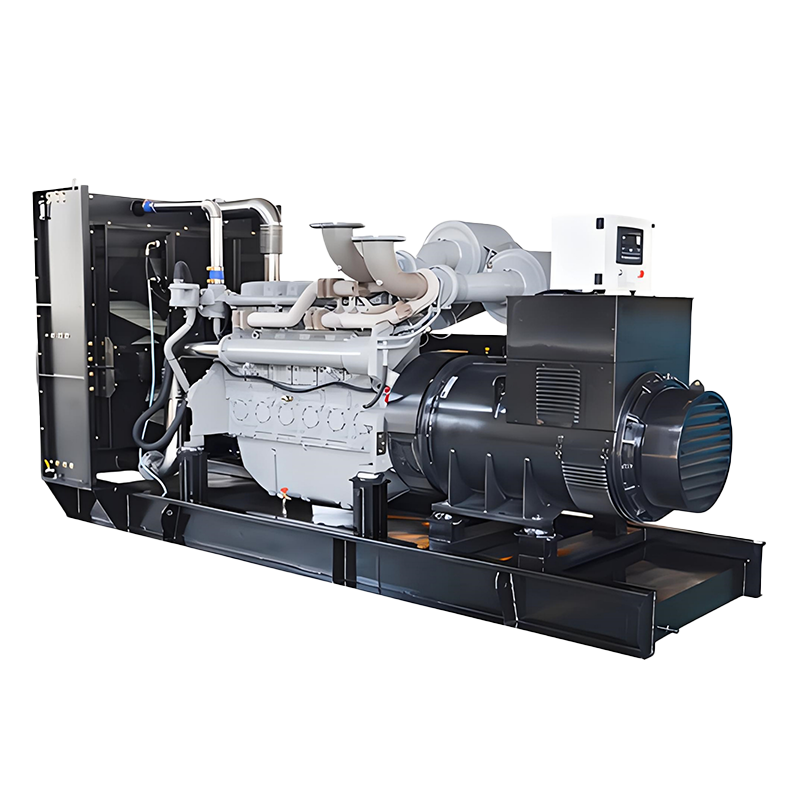
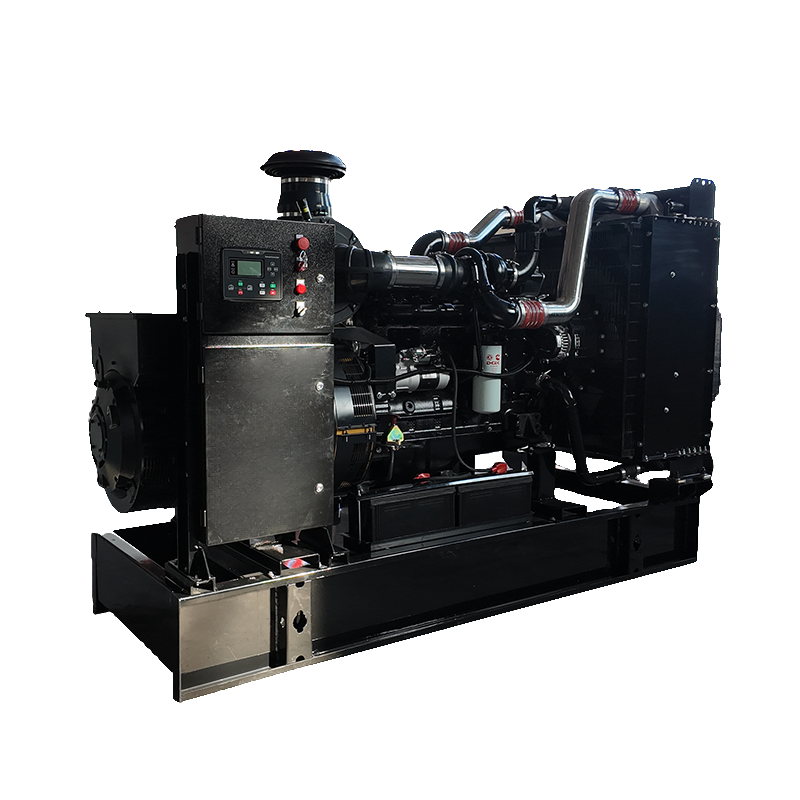
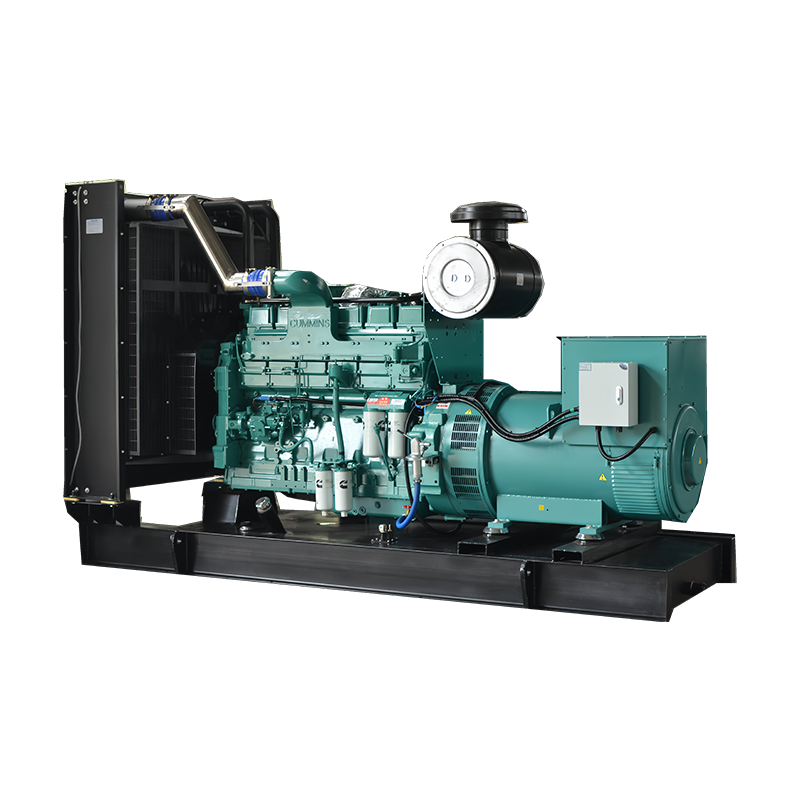
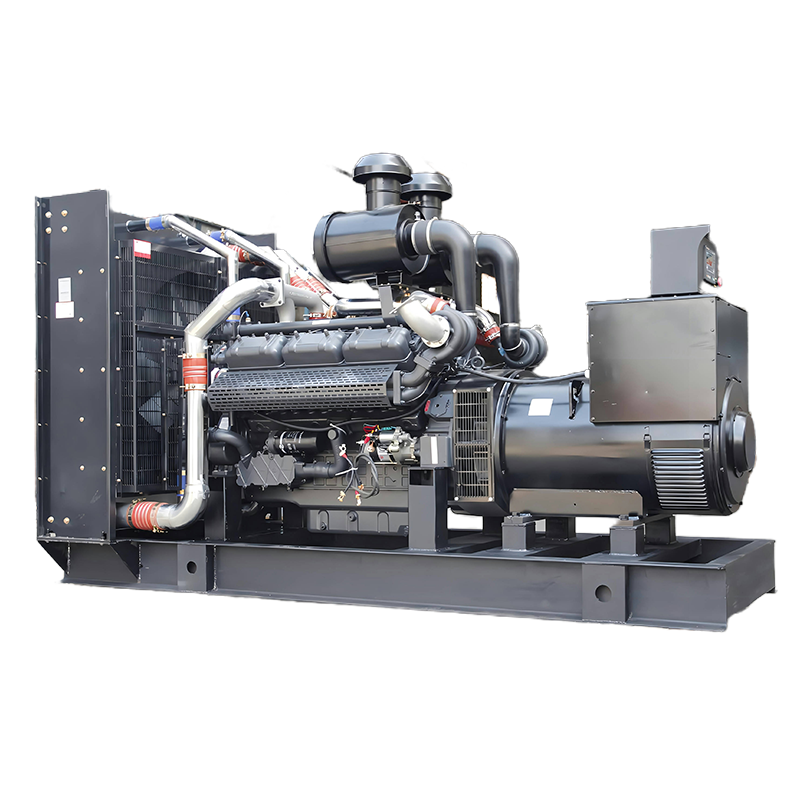
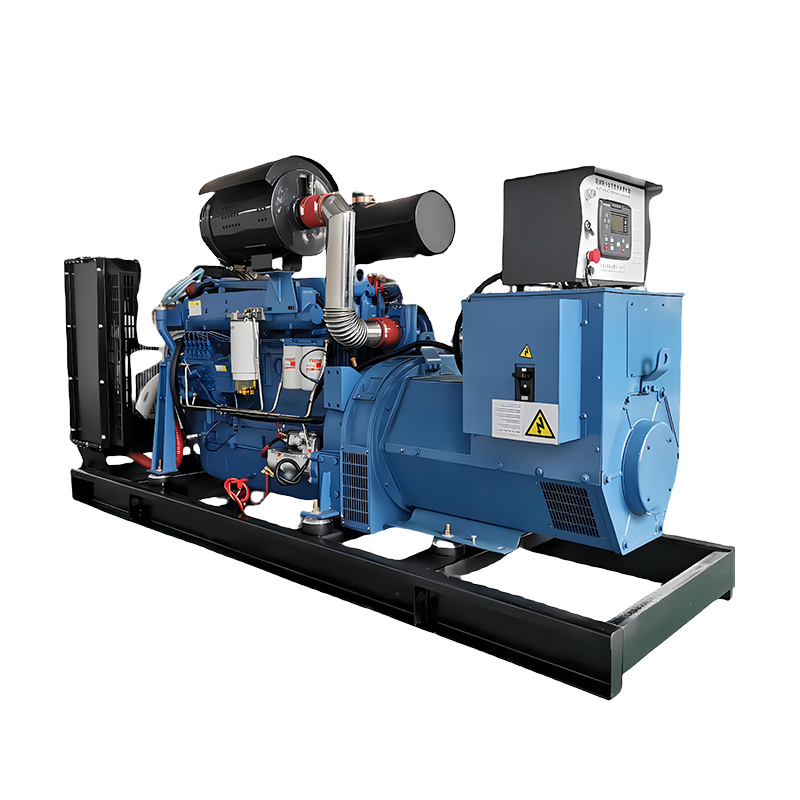
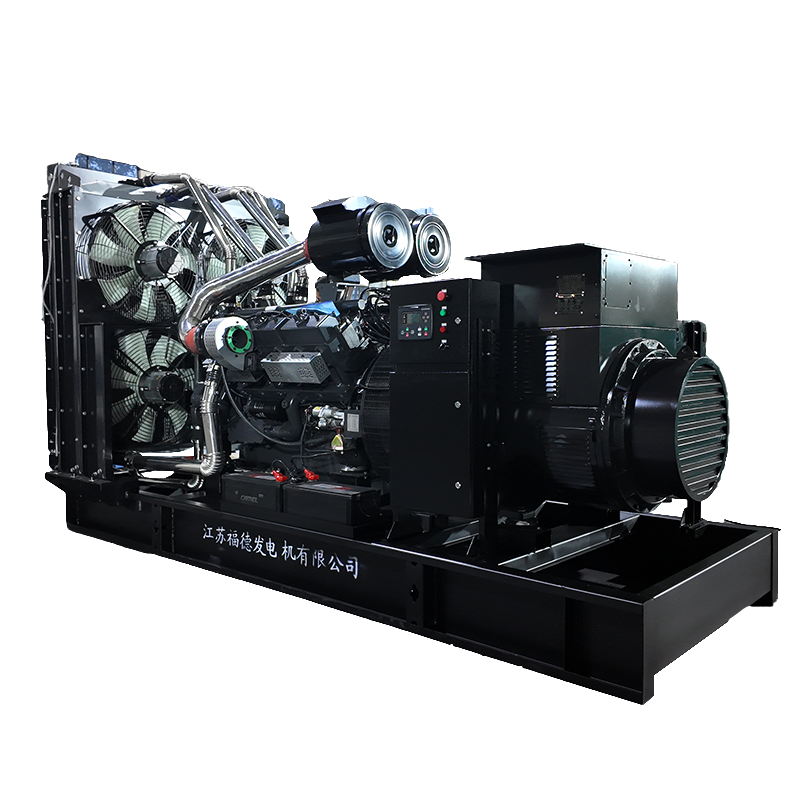
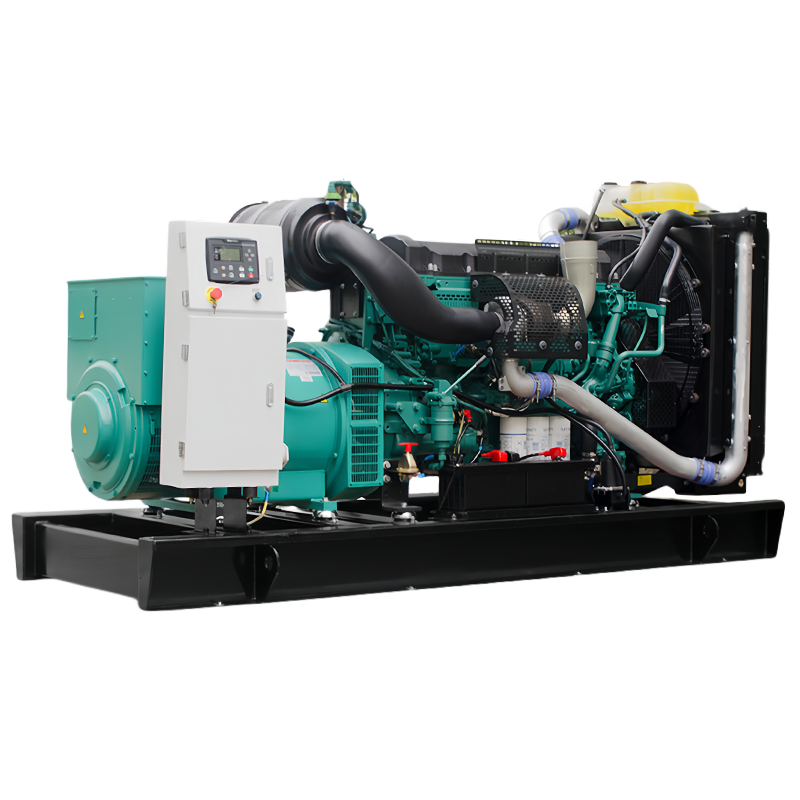
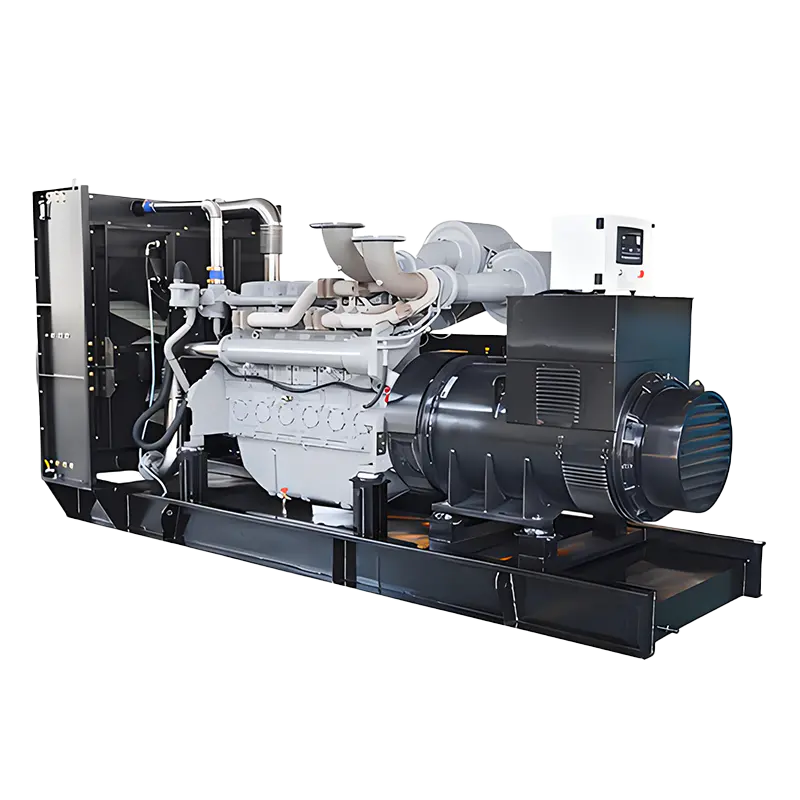
An open frame diesel generator is the most basic and widely used diesel generator configuration. The engine and alternator are mounted on a welded steel frame with no enclosure — all components are fully exposed and accessible. This design prioritizes cost-effectiveness, cooling, and ease of maintenance over noise control or weather protection.
Key Characteristics
- Noise level: Typically 72–85 dB(A) at 7 meters — comparable to a lawnmower or busy roadway. Unsuitable for noise-sensitive environments without supplemental enclosure.
- Power output range: Available from 3 kVA for residential use up to 2,500 kVA for industrial applications
- Cost advantage: Typically 30–50% less expensive than equivalent silent type models due to the absence of an acoustic enclosure
- Maintenance access: All components are immediately visible and accessible — ideal for operators who perform their own servicing
- Cooling: Unrestricted airflow around the engine provides excellent thermal management, even under sustained heavy load
Best Use Cases
- Agricultural operations and rural properties where noise is not a concern
- Construction sites, mining operations, and remote industrial facilities
- Temporary power for events held in open outdoor spaces
- Budget-constrained emergency preparedness where the generator can be housed in a separate outbuilding
For long-term outage scenarios, an open frame diesel generator offers the best power-per-dollar value — provided it can be operated at a safe distance from living areas and protected from precipitation by a simple canopy or outbuilding.
Silent Type Diesel Generator: Quiet Operation for Residential and Commercial Use
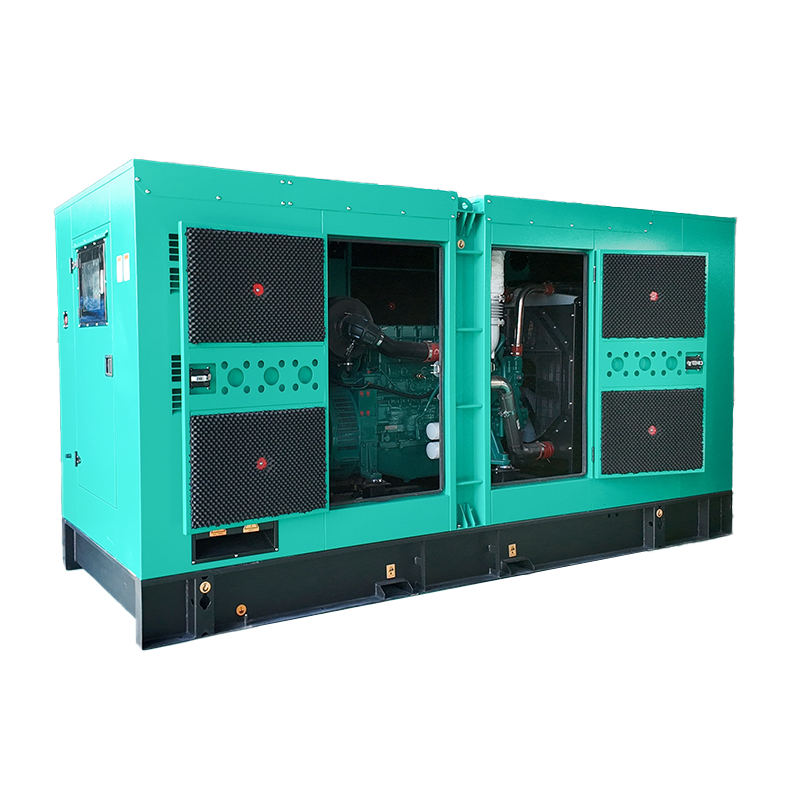
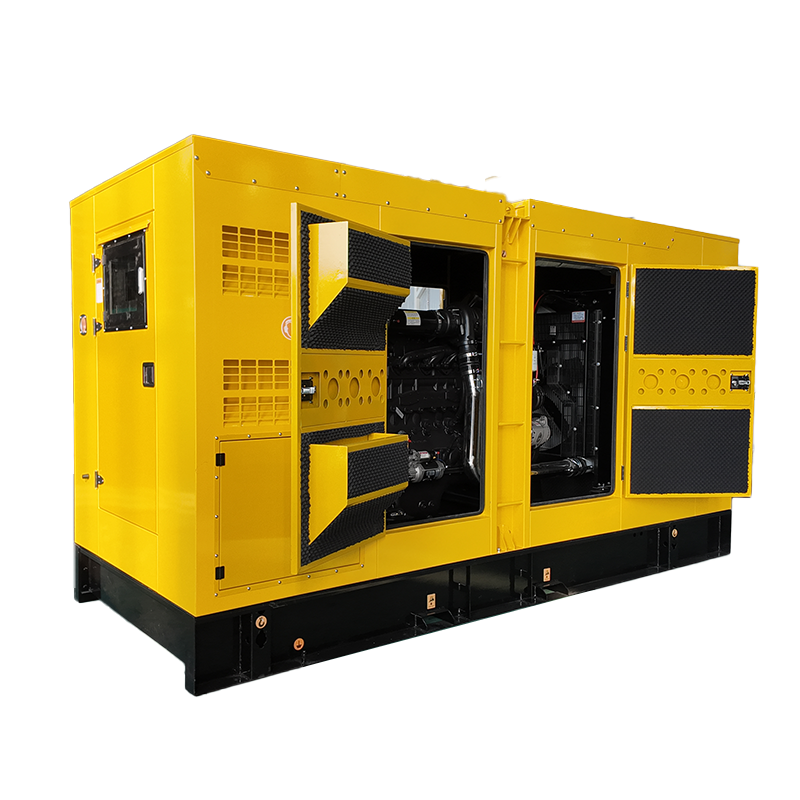
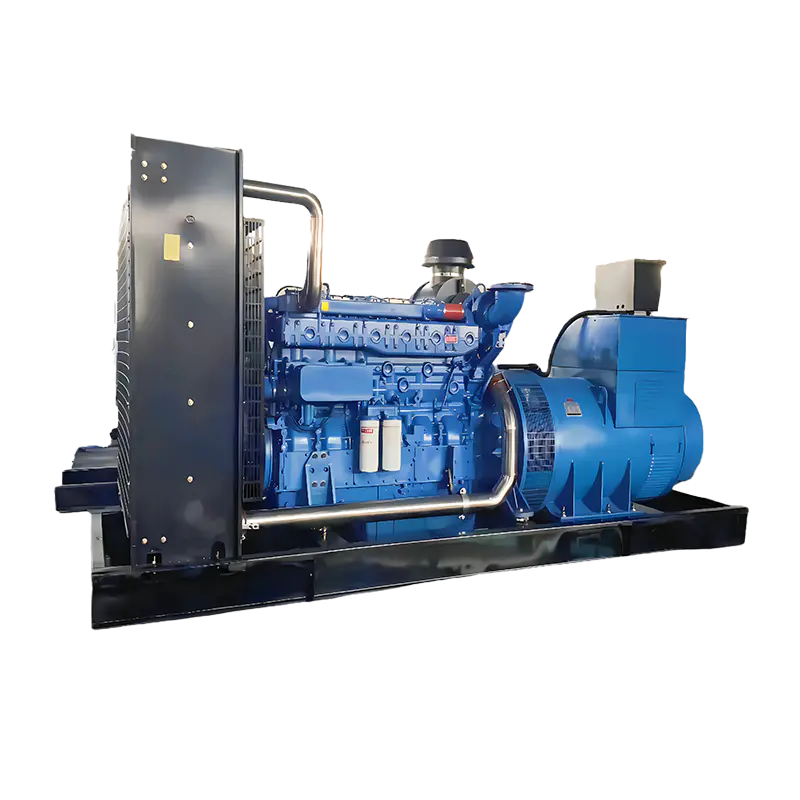
A silent type diesel generator encloses the engine and alternator in a sound-attenuating canopy — typically steel or aluminum with internal acoustic foam lining. This enclosure reduces operational noise to 65–75 dB(A) at 7 meters, which is comparable to normal conversation or a standard air conditioner. The difference between open frame and silent type becomes immediately apparent in any environment where people are living or working near the generator.
Key Characteristics
- Noise reduction: The acoustic canopy reduces noise by 10–20 dB compared to open frame equivalents — a 10 dB reduction represents a perceived halving of loudness to the human ear
- Built-in weather protection: The canopy provides substantial protection from rain, dust, and debris — most silent type units are rated IP23 or higher
- Fuel tank integration: Most silent type models include a base-mounted fuel tank, typically offering 8–12 hours of runtime at 75% load before refueling
- Security: The lockable canopy deters tampering and theft — important during extended community-wide outages
- Power range: 5 kVA to 3,000 kVA depending on manufacturer and configuration
Best Use Cases
- Residential neighborhoods and suburban homes where noise ordinances apply
- Hotels, hospitals, schools, and office buildings requiring 24/7 quiet backup power
- Telecom towers, data centers, and critical infrastructure installations
- Any setting where the generator must operate close to occupied spaces
For most homeowners and small businesses preparing for long-term outages, a silent type diesel generator in the 10–30 kVA range provides sufficient capacity for essential loads — refrigeration, lighting, HVAC, medical equipment, and communications — while remaining compliant with residential noise standards.
Rainproof Type Diesel Generator: Outdoor Durability Without Full Enclosure Cost
A rainproof type diesel generator occupies the middle ground between an open frame unit and a fully enclosed silent type. It features a protective housing designed specifically to withstand direct rain exposure and moisture ingress, while maintaining better ventilation and lower cost than a full acoustic canopy. These units typically carry an IP44 or IP54 rating, meaning they are protected against solid particles larger than 1mm and water splashing from any direction.
Key Characteristics
- Weather sealing: Sealed electrical components, protected exhaust outlets, and covered control panels prevent water damage during rain, snow, and humid conditions
- Ventilation design: Louvered vents allow airflow for cooling while directing water away from internal components — a critical design challenge that full enclosures solve differently
- Noise level: Typically 70–80 dB(A) — quieter than open frame but louder than silent type
- Cost positioning: Generally 15–25% more expensive than equivalent open frame models, but 20–35% less expensive than silent type
- Outdoor deployment: Designed for permanent or semi-permanent outdoor installation without an additional shelter structure
Best Use Cases
- Outdoor events, festivals, and temporary installations in variable weather climates
- Rural properties, farms, and remote cabins where the generator is kept outdoors year-round
- Emergency preparedness in high-rainfall regions where open frame units risk water damage during extended outages
- Construction and infrastructure projects in tropical or coastal environments
Movable Type Diesel Generator: Portable Power for Flexible Deployment
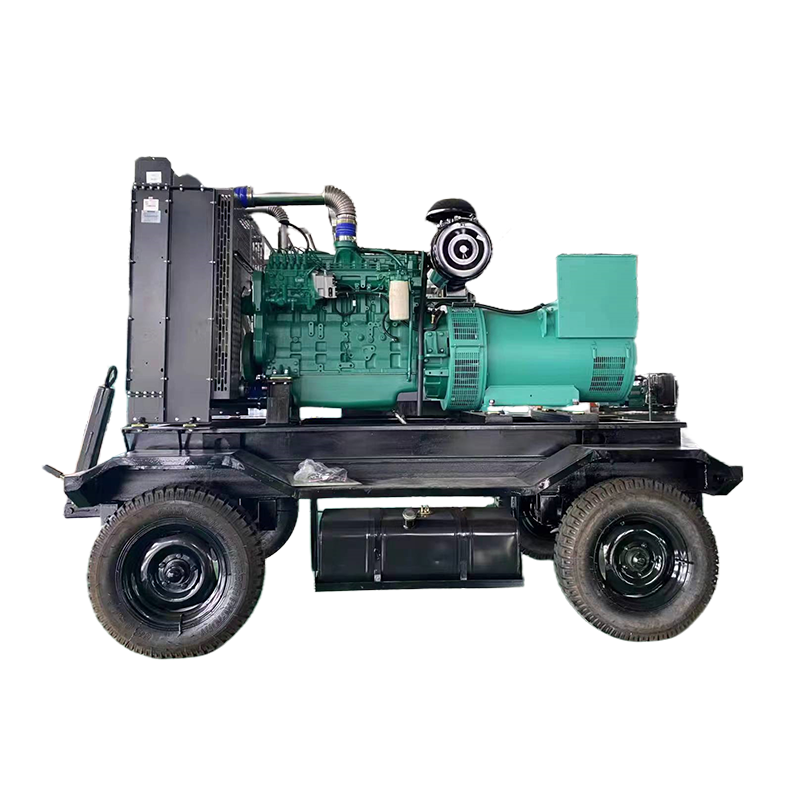
A movable type diesel generator — also referred to as a trailer-mounted or wheeled diesel generator — is designed for rapid repositioning between locations without requiring a crane, forklift, or vehicle modification. These units are mounted on heavy-duty wheels or a towable trailer frame, enabling a single person or small crew to relocate the generator as power needs shift.
Key Characteristics
- Mobility system: Smaller units (up to 20 kVA) use integrated wheel kits; larger units (20–500 kVA) mount on towable single-axle or tandem-axle trailers with standard hitch connections
- Setup time: Typically under 30 minutes from arrival to operation — critical in emergency response scenarios
- Regulatory compliance: Trailer-mounted units must comply with road transport regulations including lighting, braking, and load limits — verify local requirements before purchasing
- Stabilization: Outrigger legs or leveling jacks prevent movement during operation — essential for safe and consistent electrical output
- Available configurations: Movable types are available as open frame, rainproof, or silent type enclosures — mobility is an add-on feature, not a separate category in terms of enclosure
Best Use Cases
- Emergency response organizations and disaster relief operations that need to deploy power rapidly across multiple locations
- Municipalities and utilities managing rolling outages or serving multiple affected communities from a single generator fleet
- Rental companies serving construction, events, and emergency markets
- Businesses with multiple facilities that rotate a shared backup power asset between locations
Mobile Silent Diesel Generator: Quiet Power You Can Take Anywhere
A mobile silent diesel generator combines the acoustic enclosure of a silent type unit with the trailer or wheeled chassis of a movable type — delivering low-noise operation in a deployable package. This configuration is the most versatile option for organizations that need quiet, professional-grade power in varied locations, from residential neighborhoods to event venues to remote infrastructure sites.
Key Characteristics
- Noise performance: 60–72 dB(A) at 7 meters — comparable to silent type stationary units despite the mobility configuration
- Advanced enclosure features: Premium models include soundproofed access doors on multiple sides, integrated fuel gauges, and remote monitoring panels accessible from the exterior
- Extended fuel tanks: Many mobile silent units include sub-base or trailer-integrated tanks providing 24–72 hours of runtime at rated load without refueling
- ATS (Automatic Transfer Switch) compatibility: High-end mobile silent units include integrated ATS panels that can be connected to building electrical systems for seamless automatic failover
- Power range: 20 kVA to 1,000 kVA in towable configurations
Best Use Cases
- Hospitals and medical facilities requiring temporary power during planned maintenance or emergency outages
- Film and television production requiring quiet, mobile power on location
- Large outdoor events (concerts, festivals, sports) in areas with noise restrictions
- Government and military emergency response requiring rapid, low-profile power deployment in populated areas
- Critical infrastructure operators (water treatment, telecommunications) needing mobile backup that meets noise standards
Container Type Diesel Generator: Maximum Capacity for Industrial and Grid-Scale Preparedness
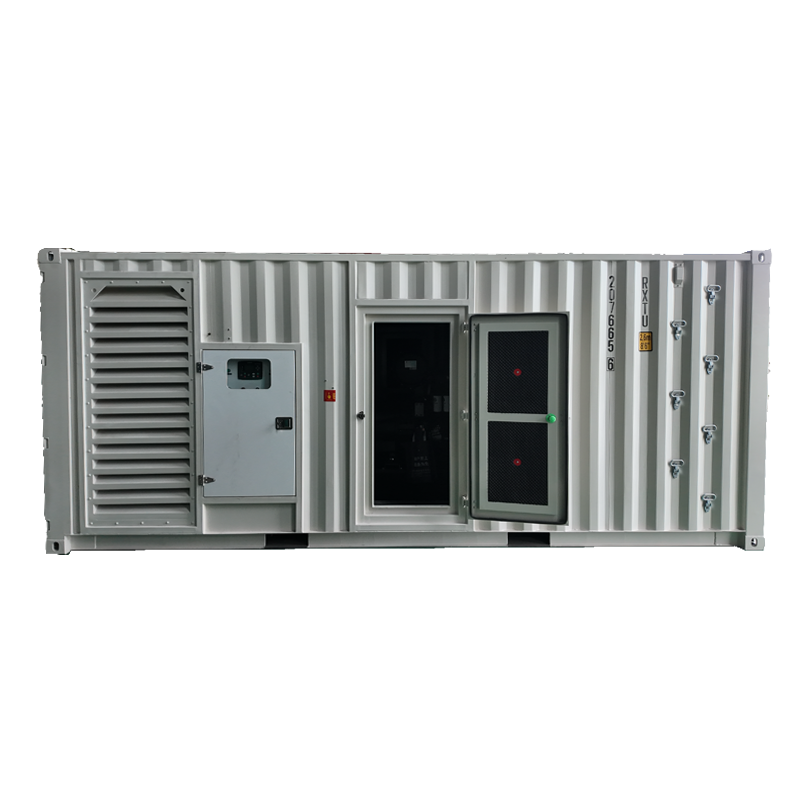
A container type diesel generator houses one or more large diesel generator sets inside a standard ISO shipping container — typically a 20-foot (6m) or 40-foot (12m) unit. The container itself serves as the structural enclosure, providing weatherproofing, acoustic attenuation, security, and a ready-to-transport format that can be loaded onto trucks, ships, or trains without additional packaging or handling equipment.
Key Characteristics
- Power output: Container generators typically range from 500 kVA to 4,000 kVA, with parallel configurations capable of providing utility-scale power output for entire facilities or communities
- Transportability: ISO container dimensions are universally compatible with standard shipping infrastructure — a major advantage for deploying emergency power internationally or across long distances
- Complete self-containment: Premium container generators include integrated fuel tanks (often 1,000–5,000 liters), control room space, fire suppression systems, lighting, HVAC for the control area, and all electrical distribution panels within the container
- Noise attenuation: Container walls with acoustic lining reduce operational noise to 65–75 dB(A) at 7 meters despite the massive power output
- Security: Steel container construction with industrial locksets provides substantially higher physical security than any other generator housing type
- Parallel operation: Multiple container units can be paralleled together to achieve combined output exceeding 10 MW for large-scale emergency power or temporary grid support
Best Use Cases
- Data centers, manufacturing plants, and large commercial facilities requiring megawatt-scale backup power
- Military forward operating bases and government emergency operations centers
- Disaster relief operations requiring rapid, large-scale power restoration for entire communities
- Mining, oil and gas, and remote industrial operations where grid connection is unavailable and power demand is high
- Utility companies and grid operators maintaining strategic power reserves for major infrastructure failures
Diesel Generator Type Comparison: Choosing the Right Option for Your Situation
Use this comparison to match the generator type to your specific long-term outage preparedness needs, scale, and deployment environment.
| Generator Type | Noise Level | Weather Protection | Mobility | Typical Capacity | Relative Cost |
|---|---|---|---|---|---|
| Open Frame | 72–85 dB(A) | None | Limited | 3–2,500 kVA | Lowest |
| Silent Type | 65–75 dB(A) | Good (IP23+) | Stationary | 5–3,000 kVA | Moderate |
| Rainproof Type | 70–80 dB(A) | Excellent (IP44–IP54) | Stationary | 5–2,000 kVA | Low–Moderate |
| Movable Type | Varies by enclosure | Varies by enclosure | High (wheeled/trailer) | 3–500 kVA | Moderate |
| Mobile Silent | 60–72 dB(A) | Excellent | High (trailer) | 20–1,000 kVA | High |
| Container Type | 65–75 dB(A) | Maximum | High (ISO transport) | 500–4,000+ kVA | Highest |
Fuel Storage and Management for Long-Term Generator Operation
Owning a diesel generator without adequate fuel storage is the single most common long-term outage preparedness failure. During a major regional outage, fuel stations lose power, run dry within 24–48 hours, and may remain inaccessible for days or weeks. Your fuel supply must be pre-positioned before the outage begins.
Calculating Your Fuel Requirements
A typical diesel generator consumes approximately 0.4 liters of diesel per kVA per hour at 75% load. For a 20 kVA residential generator running 12 hours per day (not continuously — cycling on and off to conserve fuel), that equates to approximately 96 liters per day. For a 14-day supply at this usage rate, you need approximately 1,344 liters (355 gallons) on-site before the outage begins.
Diesel Fuel Storage Best Practices
- Use UN-rated steel or HDPE fuel storage tanks — not standard plastic containers, which degrade under diesel over time
- Add a diesel fuel stabilizer (such as Sta-Bil Diesel or PRI-D) to stored fuel — untreated diesel degrades in as little as 6 months, while treated fuel remains stable for 24 months or longer
- Store tanks in a cool, shaded location away from direct sunlight — heat accelerates oxidation and microbial growth in diesel
- Rotate fuel stock: use and replace stored diesel every 12 months to ensure you always have fresh supply
- Check local regulations on above-ground fuel storage quantities — many jurisdictions require permits for quantities exceeding 450 liters (120 gallons)
Critical Steps to Complete Before a Long-Term Outage Hits
Preparation completed before an outage is worth ten times the same effort attempted during one. These action items should be completed well in advance:
- Calculate your total power load: list every essential appliance with its wattage, determine daily runtime hours, and size your generator to handle at least 125% of peak load to avoid overload and extend engine life.
- Install a transfer switch (manual or automatic) between your generator and your home or facility's electrical panel. Running a generator without a transfer switch creates backfeed risk — a lethal hazard for utility workers restoring power on the line.
- Conduct a full load test of your generator under actual operating conditions at least twice per year. Identify maintenance needs, confirm runtime hours, and verify that all connected systems operate correctly.
- Stock generator consumables: oil filters, air filters, fuel filters, and engine oil in quantities sufficient for at least 500 hours of operation. During a regional outage, these parts may be unavailable for weeks.
- Establish a generator operating schedule that conserves fuel: run for 6–8 hours in the morning for refrigeration, cooking, and device charging; rest mid-day; run again in the evening for lighting and heating or cooling as needed.
- Register electrically dependent household members (those relying on medical equipment) with your local utility's medical baseline or critical needs program — many utilities prioritize restoration for registered households.
- Test all carbon monoxide detectors in the home and install additional units near any area where generator exhaust could potentially accumulate. Never operate any generator indoors, in a garage, or within 6 meters of any window or door.
Related Products

-
Xiaoji Town, Jiangdu District, Yangzhou City, Jiangsu Province, China
-
8618944498005
-
+86-18652407919
-
+86-0514-86593686
Copyright © Jiangsu Ford Generator Co., Ltd.
