




 English
 Español
 عربى
عربىHow Long Will a Diesel Generator Last? All Types Explained
Apr 15, 2026
Content
- 1 How Many Hours Will a Diesel Generator Last? The Direct Answer
- 2 Factors That Determine How Long a Generator Will Last Per Run
- 3 Open Frame Diesel Generator: Maximum Runtime Visibility, Minimal Protection
- 4 Silent Type Diesel Generator: Reduced Noise, Efficient Long-Duration Operation
- 5 Rainproof Type Diesel Generator: Outdoor Durability Without Full Soundproofing
- 6 Movable Type Diesel Generator: Portability With Consistent Runtime
- 7 Mobile Silent Diesel Generator: Quiet Power That Goes Where You Need It
- 8 Container Type Diesel Generator: The Longest Runtime of Any Format
- 9 Side-by-Side Comparison: All Six Diesel Generator Types
- 10 How to Maximize the Runtime and Lifespan of Any Diesel Generator
How Many Hours Will a Diesel Generator Last? The Direct Answer
A diesel generator typically lasts between 10,000 and 30,000 operating hours over its service life, depending on build quality, maintenance frequency, load level, and generator type. In practical terms, a well-maintained diesel generator running 8 hours per day can serve reliably for 3 to 10 years before a major overhaul is required.
Per-tank runtime is a separate but equally important question. A 20 kW diesel generator at 75% load consumes approximately 5–6 liters of fuel per hour, so a 200-liter tank provides roughly 33–40 hours of continuous operation. Larger industrial units with 500-liter base tanks can run 60–80 hours without refueling.
The generator's enclosure type—open frame, silent, rainproof, movable, mobile silent, or container—directly affects runtime efficiency, cooling performance, and long-term durability. Each type is designed for a different operating environment, and understanding the differences helps you choose the right unit and set realistic runtime expectations.
Factors That Determine How Long a Generator Will Last Per Run
Before diving into generator types, it helps to understand the core variables that control runtime and overall lifespan:
- Load percentage: Running a generator at 50% load vs. 100% load can nearly double the hours of fuel per tank. Most manufacturers rate fuel consumption at 75% load.
- Tank capacity: Standard open-frame units carry 15–50 liters; container-type generators may have sub-base tanks of 1,000 liters or more.
- Engine quality: Tier-1 engines from brands like Perkins, Cummins, or Yanmar routinely reach 20,000–30,000 hours; budget engines may require overhaul at 5,000–8,000 hours.
- Cooling and ventilation: Generators running in poorly ventilated enclosures overheat faster, shortening engine life and forcing automatic shutdowns.
- Maintenance schedule: Oil changes every 250–500 hours, air filter replacement every 500 hours, and coolant checks every 1,000 hours are standard benchmarks for diesel engines.
- Ambient conditions: High humidity, dust, and extreme temperatures all accelerate component wear and affect fuel efficiency.
| Generator Size (kW) | Fuel Consumption (L/hr) | Typical Tank Size (L) | Est. Runtime (hrs) |
|---|---|---|---|
| 10 kW | 2.5–3.0 | 25–40 | 8–16 |
| 20 kW | 5.0–6.0 | 50–100 | 8–20 |
| 50 kW | 12–14 | 200–300 | 14–25 |
| 100 kW | 24–28 | 500–800 | 18–33 |
| 250 kW | 60–70 | 1,000–2,000 | 14–33 |
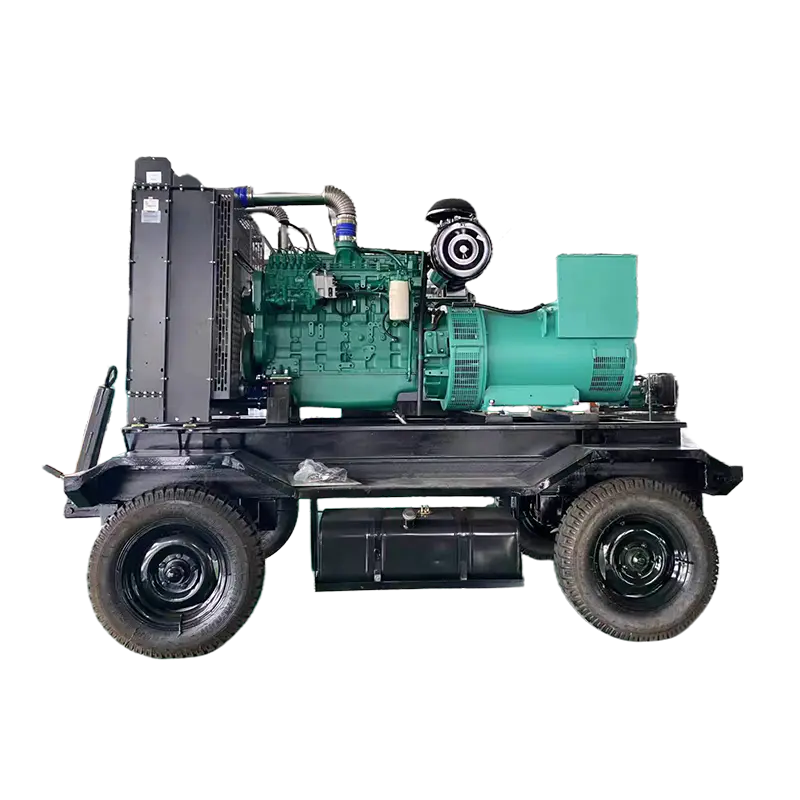
Open Frame Diesel Generator: Maximum Runtime Visibility, Minimal Protection
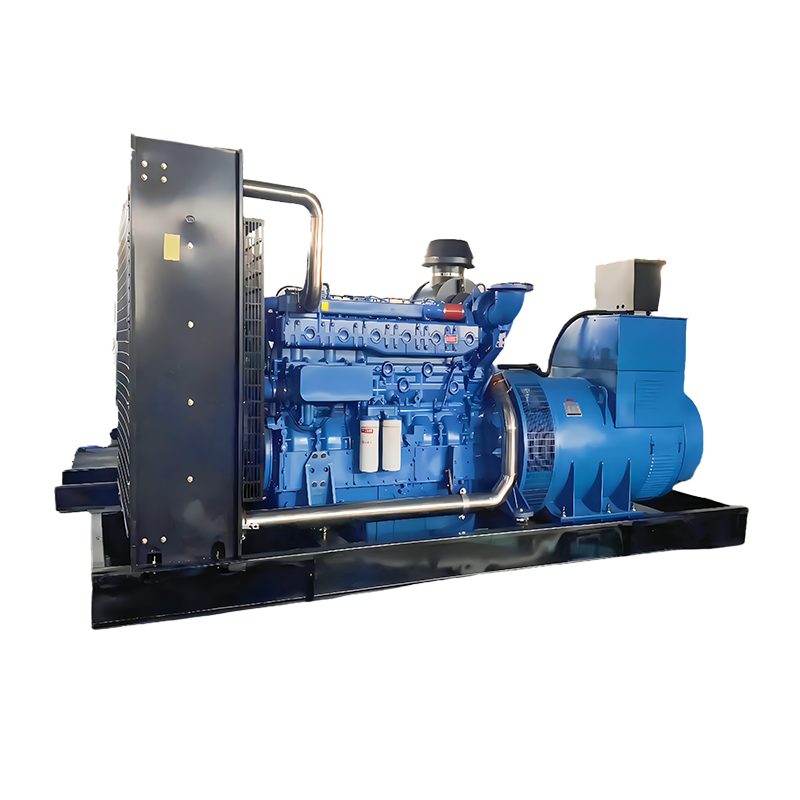
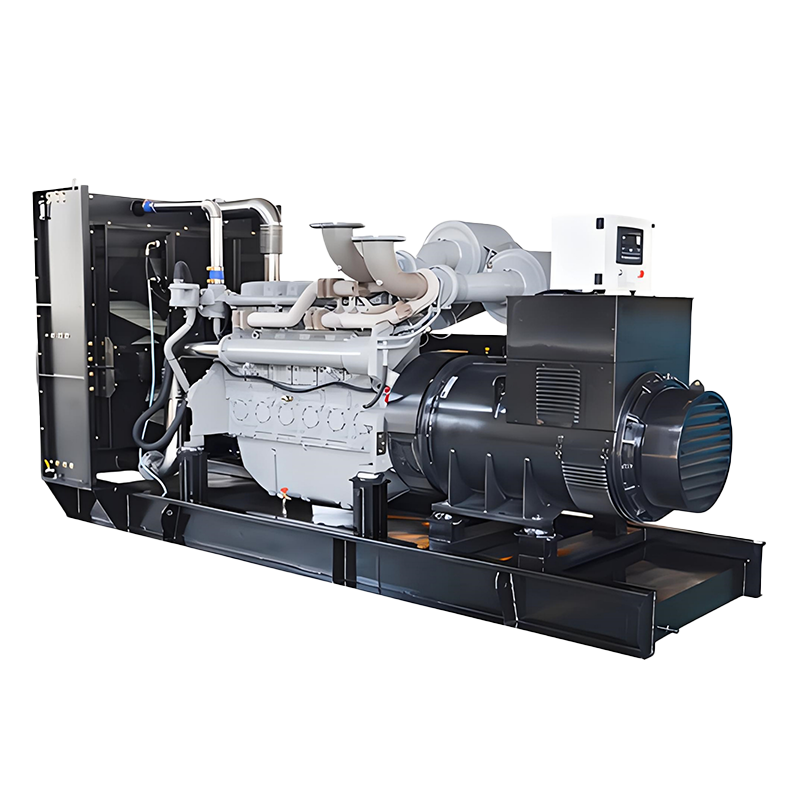
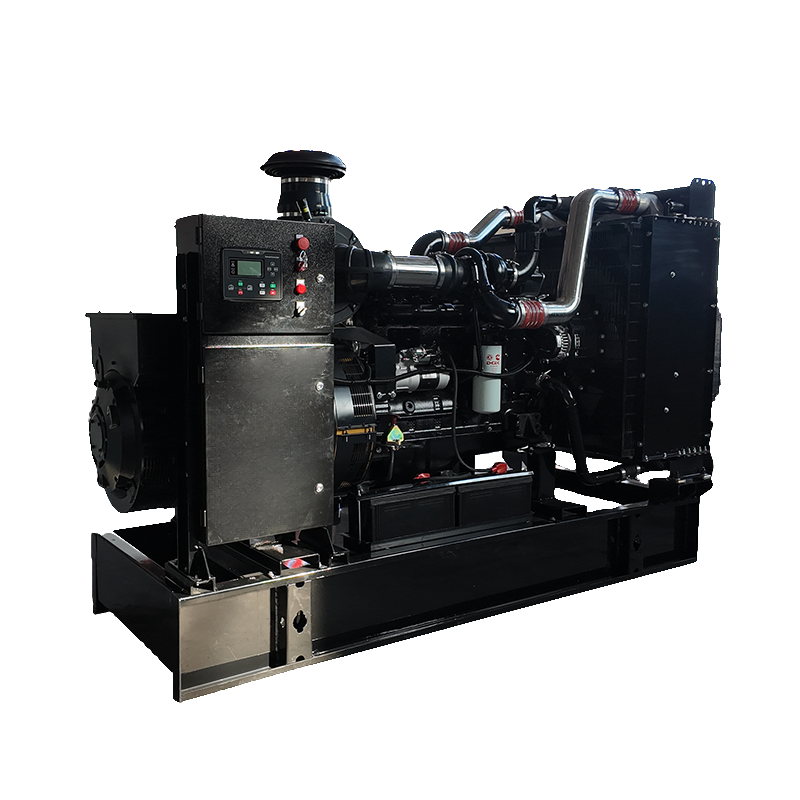
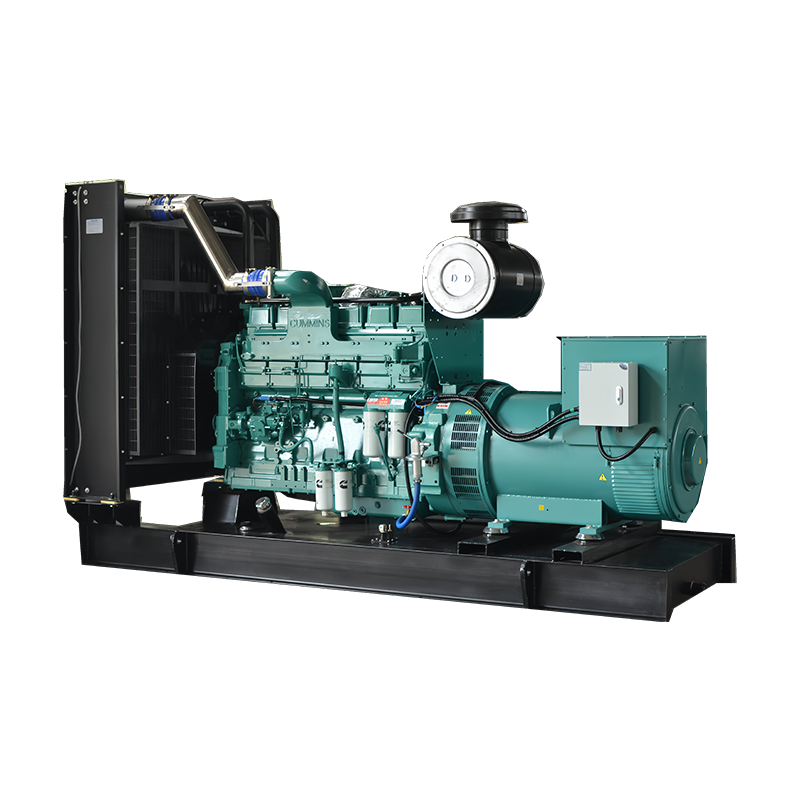
An open frame diesel generator is the most basic configuration: the engine and alternator are mounted on a steel frame with no enclosure. This design offers unrestricted airflow, which is excellent for cooling and allows the engine to run at its thermal optimum under sustained heavy loads.
Open frame units typically achieve the longest continuous runtime per maintenance interval because heat buildup—one of the primary causes of unexpected shutdowns—is minimized. A well-maintained open frame generator with a Cummins or Perkins engine can realistically reach 20,000+ operating hours before needing an engine overhaul.
The trade-off is noise and weather vulnerability. Open frame generators typically produce 75–95 dB(A) at 1 meter, making them unsuitable for residential areas or noise-sensitive worksites. They must be housed in a shed or sheltered structure when used outdoors. They are best suited for industrial sites, construction projects, and agricultural operations where noise and weather exposure are managed separately.
Typical Runtime Specs
- Continuous run rating: 8–24 hours per tank depending on size
- Service life: 15,000–25,000 hours with regular maintenance
- Recommended oil change interval: every 250–500 operating hours
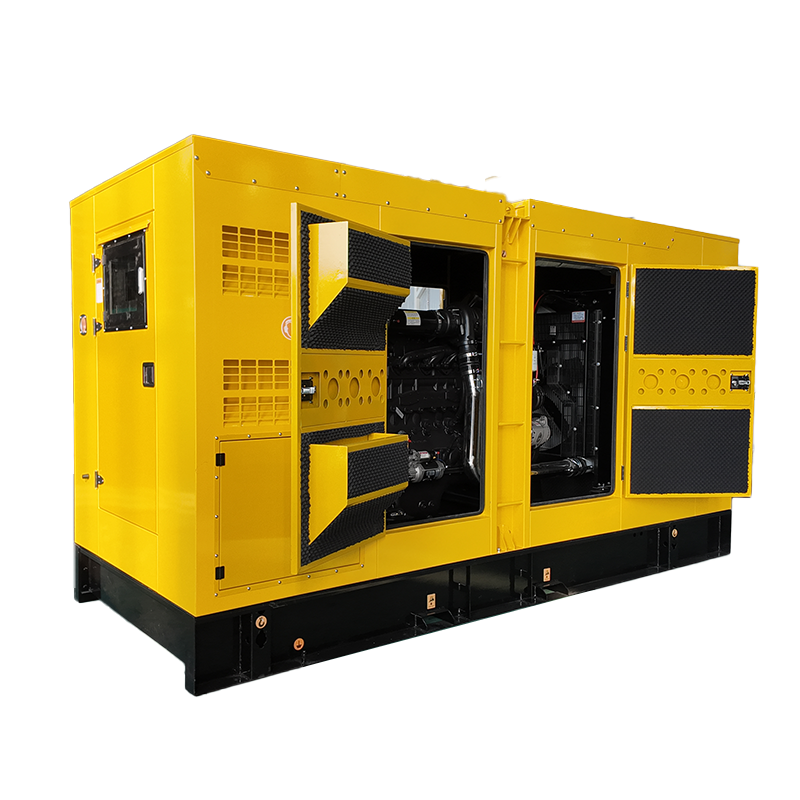
Silent Type Diesel Generator: Reduced Noise, Efficient Long-Duration Operation
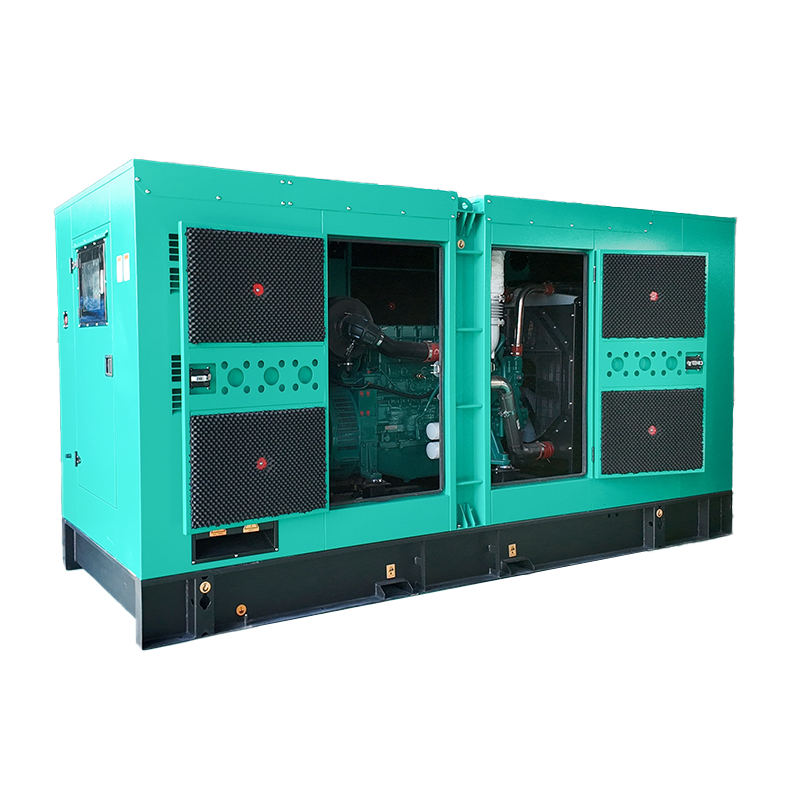
A silent type diesel generator (also called a soundproof or canopy generator) encloses the engine and alternator in an acoustic steel canopy lined with sound-absorbing foam. The result is a noise level of 65–75 dB(A) at 1 meter—roughly equivalent to a normal conversation—compared to the 85–95 dB(A) of an open frame unit.
Silent generators are widely used in hospitals, data centers, hotels, schools, and residential backup applications where operational noise must be minimized. The canopy does restrict airflow compared to an open frame unit, so thermal management is handled through engineered ventilation channels and, in larger models, radiator fans with external ducting.
Most silent diesel generators are rated for continuous duty cycles of 24 hours, with automatic shutdown protection for low oil pressure, high coolant temperature, and overspeed. Units from 10 kW to 2,000 kW are available in this format. A 100 kW silent generator with a 500-liter base tank delivers approximately 18–21 hours of runtime at 75% load before refueling.
Key Advantages for Runtime
- Weatherproof canopy protects the engine from rain and dust, reducing maintenance needs in outdoor deployments
- Integrated base frame fuel tanks (100–500 L) extend single-fill runtime significantly
- Service life of 20,000–30,000 hours achievable with premium engines and consistent servicing
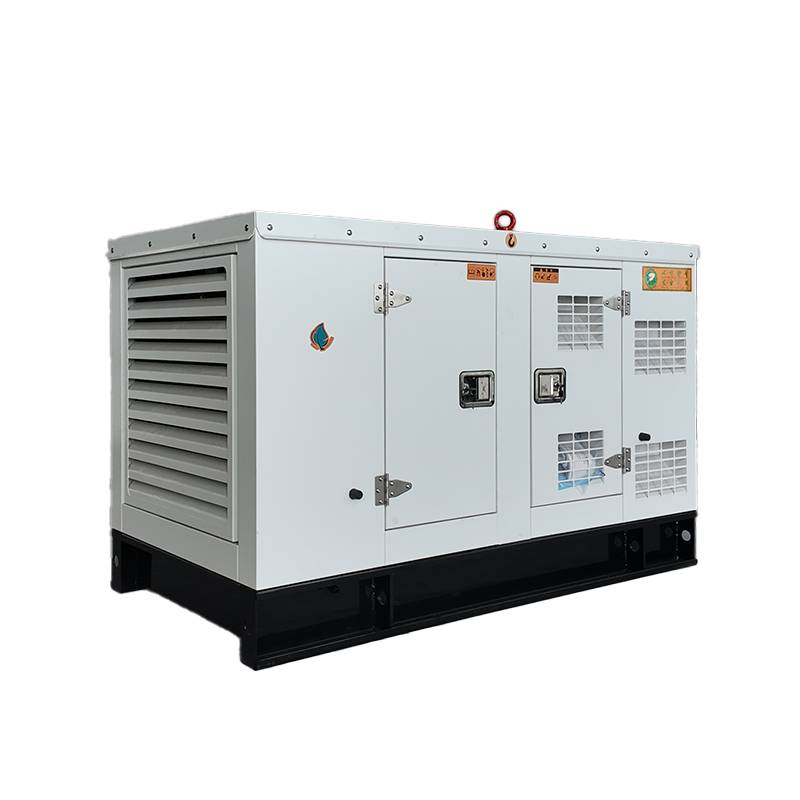
Rainproof Type Diesel Generator: Outdoor Durability Without Full Soundproofing
A rainproof type diesel generator sits between an open frame and a full silent canopy unit. It features a weather-resistant metal housing with ventilation louvers that protect against rain, dust, and UV exposure, but without the heavy acoustic insulation of a silent generator. Noise output is typically 78–88 dB(A) at 1 meter.
This type is purpose-built for permanent or semi-permanent outdoor installation in telecom towers, remote pump stations, outdoor events, and rural infrastructure projects. Because the enclosure is lighter and less thermally restrictive than a full canopy, the engine runs cooler under sustained load, which contributes to longer intervals between overheating-related shutdowns.
Rainproof enclosures are typically rated to IP23 or IP44 ingress protection standards. IP44 models can withstand water splashing from any direction, making them suitable for tropical climates with heavy seasonal rainfall. With a standard 200-liter tank and a 50 kW engine, runtime reaches approximately 14–17 hours at 75% load.
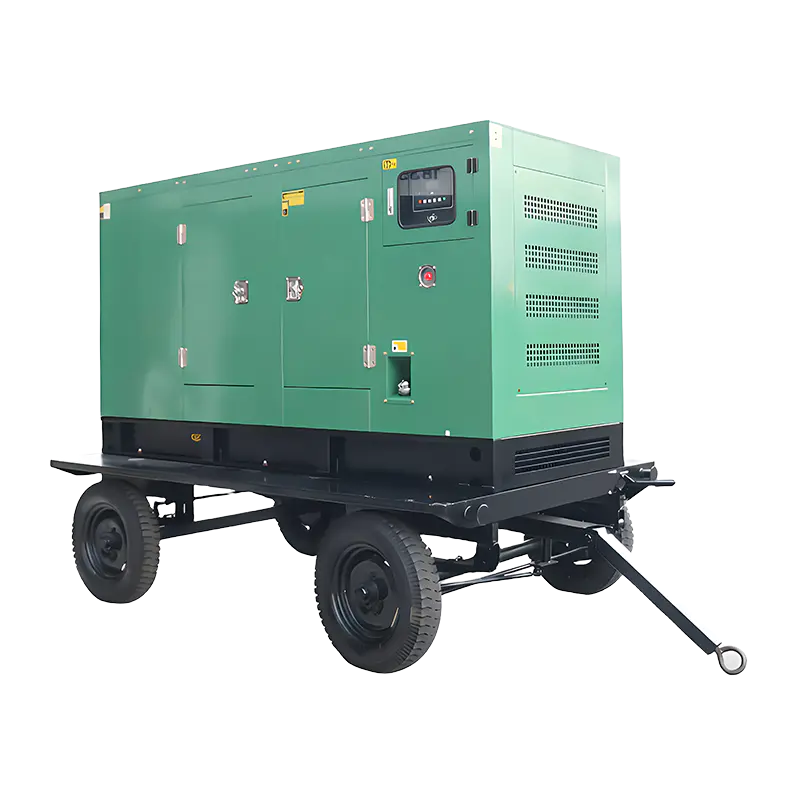
Movable Type Diesel Generator: Portability With Consistent Runtime
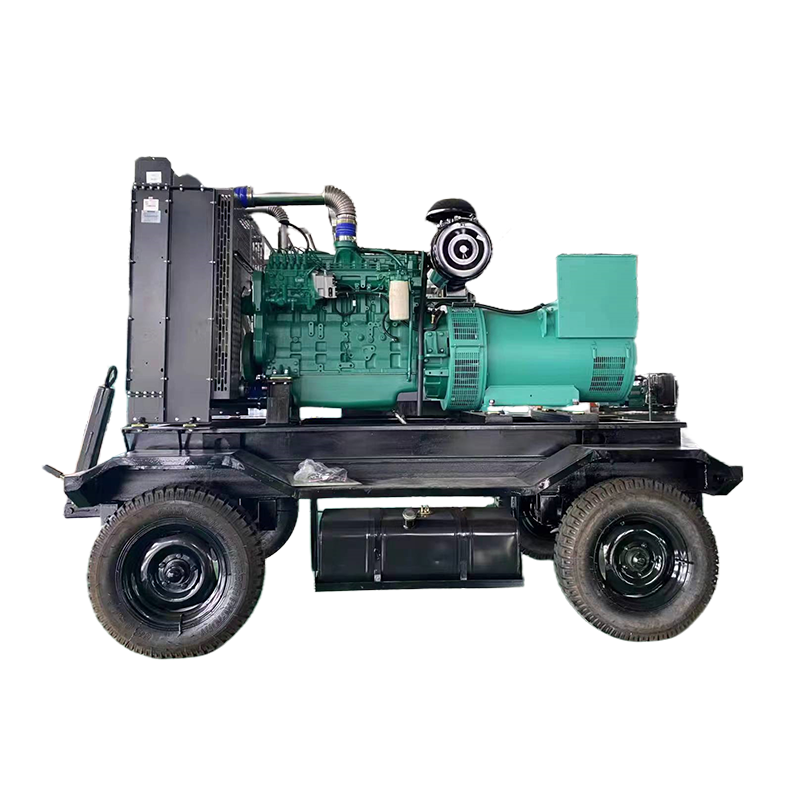
A movable type diesel generator is mounted on a wheeled trailer or skid frame, allowing it to be repositioned across a worksite or towed between locations. These units range from compact 10 kW trailer-mounted sets to large 500 kW skid generators moved by forklift.
Because movable generators are frequently used in construction, mining, and event power applications—where they may run continuously for days—fuel tank size is a critical spec. Many trailer-mounted models include 300–1,000 liter sub-base tanks that deliver 20–50+ hours of continuous operation without a fuel stop.
The movable format does not inherently affect engine lifespan, but road vibration during transport can loosen fittings and accelerate wear on mounting hardware. A proper maintenance check after every transport cycle—including bolt torque verification and fuel line inspection—is essential to maintain the rated 15,000–20,000 hour service life.
Movable Generator Runtime by Configuration
- Small wheeled unit (10–30 kW, 50 L tank): 8–18 hours per fill
- Mid-size trailer unit (50–100 kW, 300 L tank): 20–25 hours per fill
- Large skid unit (200–500 kW, 1,000 L tank): 14–30 hours per fill
Mobile Silent Diesel Generator: Quiet Power That Goes Where You Need It
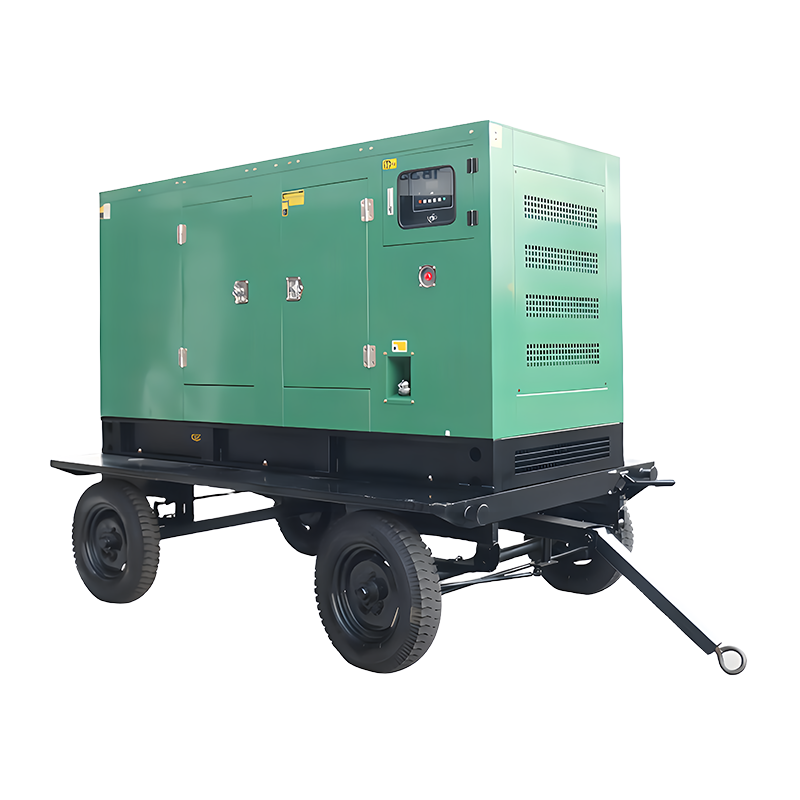
A mobile silent diesel generator combines the acoustic canopy of a silent-type unit with the wheeled trailer or tow-hitch configuration of a movable generator. This hybrid format is increasingly popular for outdoor film productions, outdoor concerts, emergency medical services, military field operations, and urban construction sites governed by noise ordinances.
Noise levels on high-end mobile silent units drop to 60–68 dB(A) at 7 meters—comparable to a quiet office—while still being road-towable at highway speeds. Some premium models from manufacturers such as Himoinsa, Atlas Copco, and Aggreko achieve 58 dB(A) at 7 meters using double-wall acoustic panels and anti-vibration engine mounts.
The enclosed canopy on a mobile silent unit also protects the engine from transport dust and road debris, which meaningfully extends engine life compared to open-frame movable units. With integrated fuel tanks of 200–600 liters, mobile silent generators in the 60–150 kW range typically provide 16–24 hours of runtime per tank at 75% load.
Ideal Use Cases for Mobile Silent Generators
- Urban construction sites with nighttime noise restrictions
- Outdoor events and festivals requiring frequent relocation
- Disaster relief and emergency response operations
- Film and TV production requiring quiet on-set power
- Military forward operating bases needing portable, low-acoustic-signature power
Container Type Diesel Generator: The Longest Runtime of Any Format
A container type diesel generator houses one or more generator sets inside a standard 20-foot or 40-foot ISO shipping container. This is the most robust and highest-capacity format available, designed for permanent or long-term deployment in demanding environments such as offshore oil platforms, remote mining camps, data center backup systems, and utility-scale power plants.
Container generators can run continuously for 48–72 hours or longer without refueling, thanks to integrated day tanks of 1,000–5,000 liters and optional external bulk fuel connections. Some configurations include automatic fuel transfer pumps that draw from a separate bulk storage tank, enabling theoretically unlimited runtime as long as the bulk supply is maintained.
The container enclosure provides IP54 or higher weather protection, acoustic insulation to 65–72 dB(A) at 1 meter, and a controlled internal environment with HVAC for extreme climates. Engine service life in container configurations typically reaches 25,000–40,000 hours, as the stable, controlled environment reduces thermal cycling and contamination stress on the engine.
Parallel Operation for Extended Runtime and Redundancy
Container generator systems are frequently deployed in parallel configurations—two or more units synchronized to share the load. This allows one unit to be taken offline for maintenance while the others continue running, effectively achieving continuous uninterrupted operation for years without a total system shutdown. This N+1 redundancy model is standard practice in data centers and critical infrastructure applications.
Side-by-Side Comparison: All Six Diesel Generator Types
The table below summarizes the key runtime, noise, and lifespan characteristics of each diesel generator type to help you make a direct comparison:
| Generator Type | Typical Runtime / Tank | Noise Level | Service Life (hrs) | Best Application |
|---|---|---|---|---|
| Open Frame | 8–24 hrs | 75–95 dB(A) | 15,000–25,000 | Industrial, agriculture, construction |
| Silent Type | 18–24 hrs | 65–75 dB(A) | 20,000–30,000 | Hospitals, hotels, data centers |
| Rainproof Type | 14–20 hrs | 78–88 dB(A) | 15,000–22,000 | Telecom, outdoor pumping, rural |
| Movable Type | 8–30 hrs | 75–90 dB(A) | 15,000–20,000 | Construction, mining, events |
| Mobile Silent | 16–24 hrs | 60–68 dB(A) @ 7m | 18,000–28,000 | Film, urban sites, emergency |
| Container Type | 48–72 hrs+ | 65–72 dB(A) | 25,000–40,000 | Offshore, mining, critical infra |
How to Maximize the Runtime and Lifespan of Any Diesel Generator
Regardless of which generator type you operate, the following maintenance and operational practices have the greatest impact on both per-fill runtime and total service life:
- Keep load between 50–80% of rated capacity. Operating consistently below 30% load causes wet stacking—unburned fuel accumulating in the exhaust—which damages the engine over time and reduces efficiency.
- Change engine oil every 250 hours under heavy-use conditions, or every 500 hours under normal conditions. Use the viscosity grade specified by the engine manufacturer for your ambient temperature range.
- Inspect and replace air filters every 500 hours or sooner in dusty environments. A clogged air filter increases fuel consumption by up to 15% and raises combustion temperatures.
- Test and replace coolant every 2 years or 2,000 hours. Degraded coolant loses its corrosion inhibitors, leading to internal engine damage that dramatically shortens engine life.
- Store and use fresh diesel fuel. Diesel degrades after 6–12 months in storage. Use fuel stabilizers for standby generators and schedule regular load tests to cycle fuel through the system.
- Log all operating hours and maintenance events. A detailed service log helps identify abnormal fuel consumption trends that indicate early engine wear before a failure occurs.
- Ensure adequate ventilation around the unit. Even silent canopy and container units require sufficient airflow for the cooling system. Blocked ventilation louvers are one of the most common causes of premature thermal shutdowns.
Generators that receive consistent scheduled maintenance regularly exceed their rated service life by 30–50%. A 20,000-hour rated unit maintained to the manufacturer's schedule commonly runs to 28,000–30,000 hours before a rebuild is necessary.
Related Products

-
Xiaoji Town, Jiangdu District, Yangzhou City, Jiangsu Province, China
-
8618944498005
-
+86-18652407919
-
+86-0514-86593686
Copyright © Jiangsu Ford Generator Co., Ltd.
