




 English
 Español
 عربى
عربىHow Does a Diesel Generator Work? The Ultimate Guide to Industrial Generator Mechanics
Jul 01, 2026
Content
- 1 The Four-Stroke Combustion Cycle, Step by Step
- 2 From Mechanical Motion to Electricity: How the Alternator Works
- 3 Core Systems That Support the Combustion Process
- 4 Why Diesel Is the Fuel of Choice for Industrial Generators
- 5 Industrial Generator Power Classes and What They Mean
- 6 Sizing an Industrial Generator: What Actually Determines Capacity
- 7 Open-Frame vs. Enclosed Industrial Generators
- 8 Maintenance Practices That Keep the Cycle Running Reliably
- 9 Frequently Asked Questions
A diesel generator works by burning diesel fuel inside an engine through compression ignition, using the resulting piston motion to spin a crankshaft, which drives an alternator that converts that mechanical energy into electrical power through electromagnetic induction. No spark plugs are involved — the diesel ignites purely from the heat generated by compressing air to a high pressure. This same core principle applies whether the unit is a small portable generator or a large industrial generator powering a factory or data center.
The sections below break down each stage of that process, the components that make it possible, and what distinguishes an industrial-grade diesel generator from smaller units.
The Four-Stroke Combustion Cycle, Step by Step
Most diesel generators, including nearly all industrial units, run on a four-stroke engine cycle that repeats thousands of times per minute. Each stroke has a distinct job in converting fuel into usable mechanical motion.
- Intake: The piston moves down, pulling fresh air into the cylinder through an open intake valve.
- Compression: The piston moves back up, sealing the cylinder and compressing that air into a fraction of its original volume, which generates intense heat.
- Power (Combustion): At peak compression, diesel fuel is injected as a fine mist into the superheated air and ignites instantly on contact — this is compression ignition. The expanding gases force the piston back down with significant force.
- Exhaust: The piston rises again, pushing spent combustion gases out through the exhaust valve, and the cycle restarts.
This process happens without spark plugs entirely, which is the defining difference between diesel and gasoline engines. Compression ignition also allows diesel engines to run at higher compression ratios, which is a major reason they achieve better fuel efficiency than gasoline-powered equivalents.
From Mechanical Motion to Electricity: How the Alternator Works
Combustion alone doesn't produce electricity — it produces rotation. The piston's linear movement turns the crankshaft, and that rotational energy is transferred through a coupling to the alternator, the component actually responsible for generating power.
Inside the alternator, a rotor spins within a surrounding stator. The rotor carries a magnetic field, and as it turns, that field sweeps past coils of wire wound into the stator. This motion induces an electrical current in the stator windings through electromagnetic induction — the same physical principle behind virtually all AC generators, first described by Faraday's law. The result is alternating current (AC) electricity, ready for distribution.
Two supporting components keep that output usable rather than erratic:
- Automatic Voltage Regulator (AVR): Continuously adjusts the rotor's magnetic field strength to keep voltage stable even as electrical load changes.
- Governor: Fine-tunes fuel delivery to hold the engine at a constant speed, which keeps output frequency stable (typically 50 Hz or 60 Hz depending on region).
Core Systems That Support the Combustion Process
The engine and alternator get most of the attention, but several supporting systems are what allow a diesel generator to run continuously and safely rather than for just a few cycles.
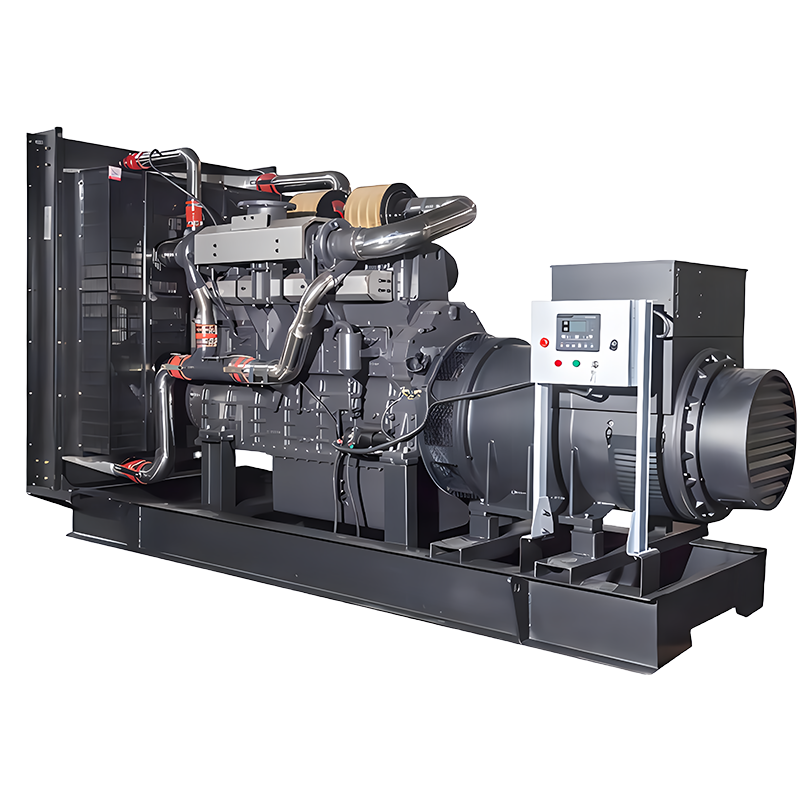
| System | Function |
|---|---|
| Fuel system | Stores diesel and delivers it through filters, pumps, and injectors at precise timing |
| Cooling system | Removes heat generated by combustion to prevent overheating |
| Lubrication system | Reduces friction and wear between moving engine parts |
| Exhaust system | Vents combustion gases and reduces emissions and noise |
| Control panel | Monitors voltage, load, and operating hours; manages automatic start/stop |
| Base frame and isolators | Supports the engine-alternator assembly and dampens vibration and noise |
A failure in any single system — a clogged fuel filter, a coolant leak, low oil pressure — will typically stop the whole unit, which is why routine maintenance across all of these systems matters as much as the core engine itself.
Why Diesel Is the Fuel of Choice for Industrial Generators
Diesel's dominance in industrial power generation isn't incidental — it comes down to energy density and combustion characteristics that translate directly into operating cost and reliability.
A modern diesel plant operating at its near-optimal 65-70% load typically generates at least 3 kWh of electricity per liter of fuel consumed, roughly a 30% fuel efficiency ratio. Diesel's higher energy density compared to gasoline, combined with the higher compression ratios diesel engines can sustain, means more of the fuel's stored energy converts into usable work rather than being lost as heat. Overall thermal efficiency for diesel generators typically ranges from 30% to 50%, with the best performance generally seen at 70-90% of rated capacity.
Diesel fuel is also more stable in storage than gasoline, which matters for standby and industrial units that may sit idle for extended periods between uses.
Industrial Generator Power Classes and What They Mean
Not every diesel generator is built for the same job, and manufacturers rate units differently depending on how continuously they're expected to run. Choosing the wrong class for an application is one of the most common and costly sizing mistakes.
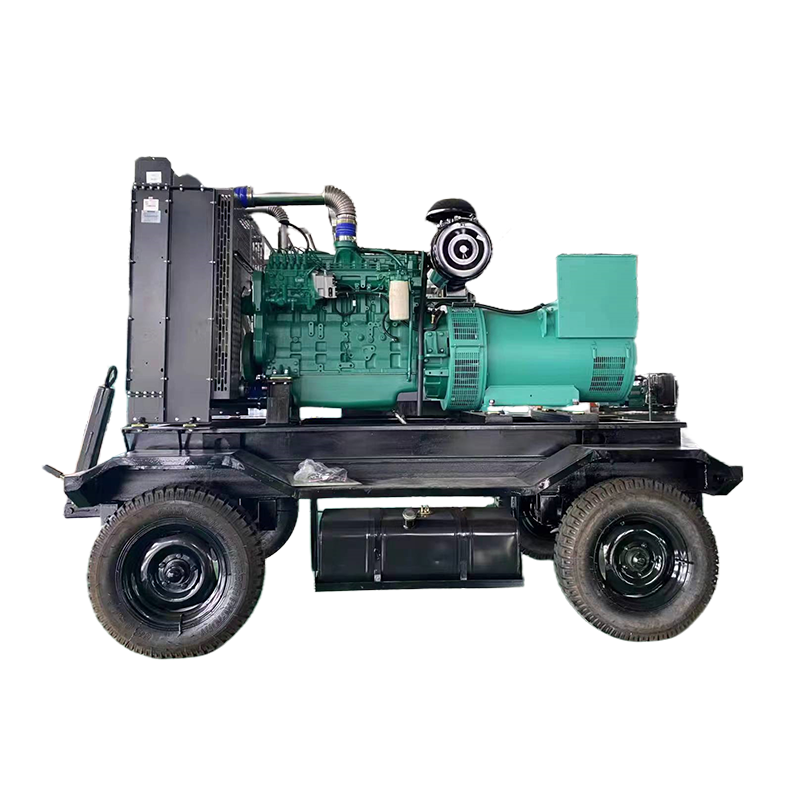
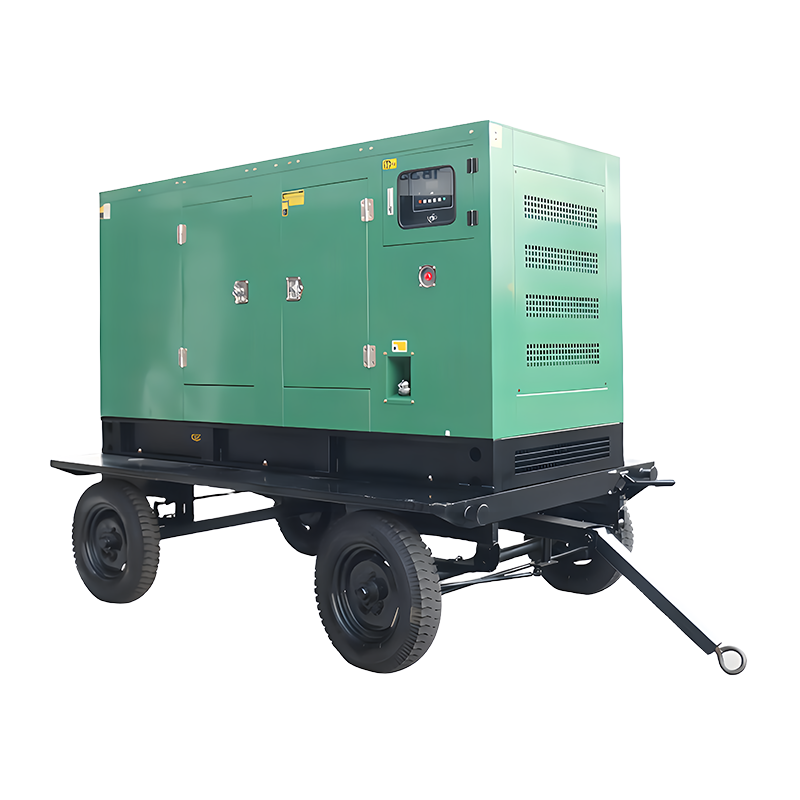
- Portable/mobile units (roughly 5-100 kW): Mounted on skids or trailers, typically run 6-12 hours on a full tank, suited to short-term or job-site power needs.
- Standby (ESP) units (roughly 50-1,000 kW): Permanently installed with larger base tanks, designed to run 24-72 hours during an outage, and typically operate only a few hours per year as an emergency backup.
- Prime and continuous-duty units (300 kW and above): Engineered for sustained operation, often running hundreds of hours at a stretch, and used where the generator is the primary or sole power source rather than a backup.
Industrial facilities, hospitals, data centers, and construction sites each tend to fall into a different one of these categories depending on whether the generator is meant as insurance against outages or as a genuine primary power supply.
Sizing an Industrial Generator: What Actually Determines Capacity
Correct sizing is arguably more important to long-term reliability than any single component inside the unit. Two failure modes sit on opposite ends of the sizing spectrum.
An undersized generator gets overloaded, leading to premature wear and a higher risk of failure exactly when power is needed most. An oversized generator, on the other hand, runs at a persistently low load relative to its capacity, which wastes fuel and can cause "wet stacking" — a condition where unburned fuel accumulates in the exhaust system because the engine never reaches the temperature needed for complete combustion.
Sizing calculations generally need to account for:
- Total connected load, measured in both kilowatts (kW) and kilovolt-amperes (kVA)
- The mix of resistive loads (lighting, heating) versus inductive loads (motors, compressors)
- Motor starting current, since a motor can draw three to six times its normal running current just to start up
- Whether the application calls for standby, prime, or continuous-duty operation
Because of the motor-starting factor, a set expected to start large motors typically needs to be sized at least three times larger than the largest motor it will start, which often means the generator ends up operating well below its stamped rating during normal use.
Open-Frame vs. Enclosed Industrial Generators
Industrial diesel generators are typically available in two physical configurations, and the choice usually comes down to noise sensitivity and installation environment rather than power output alone.
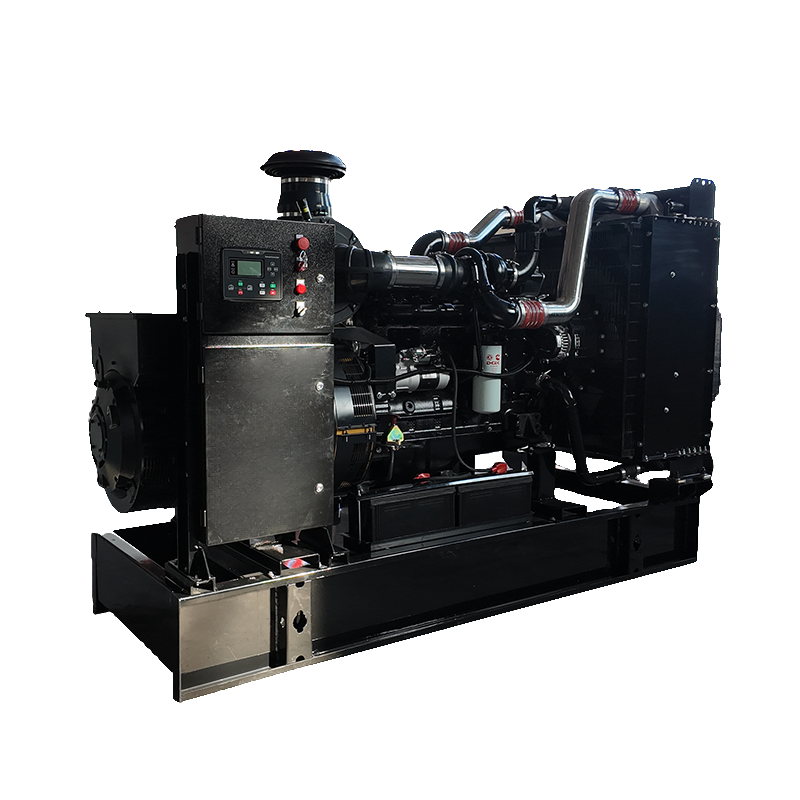
Open-Frame Generators
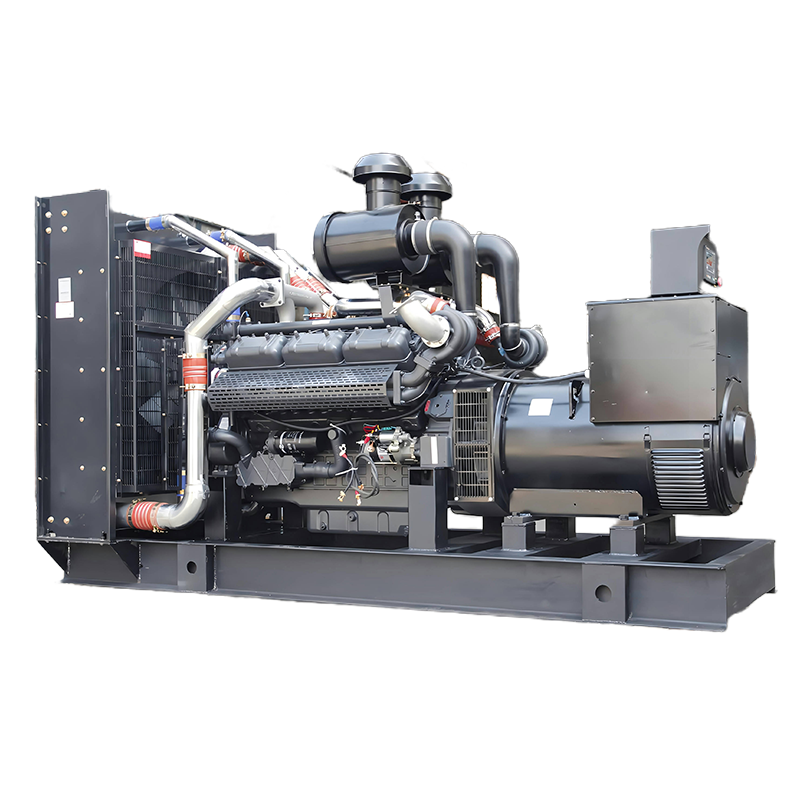
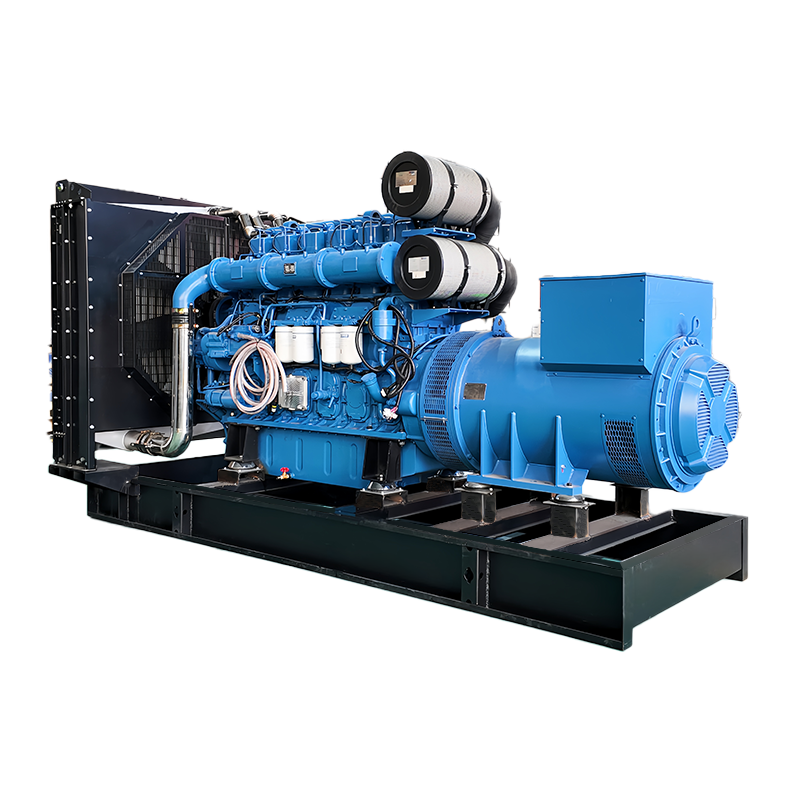
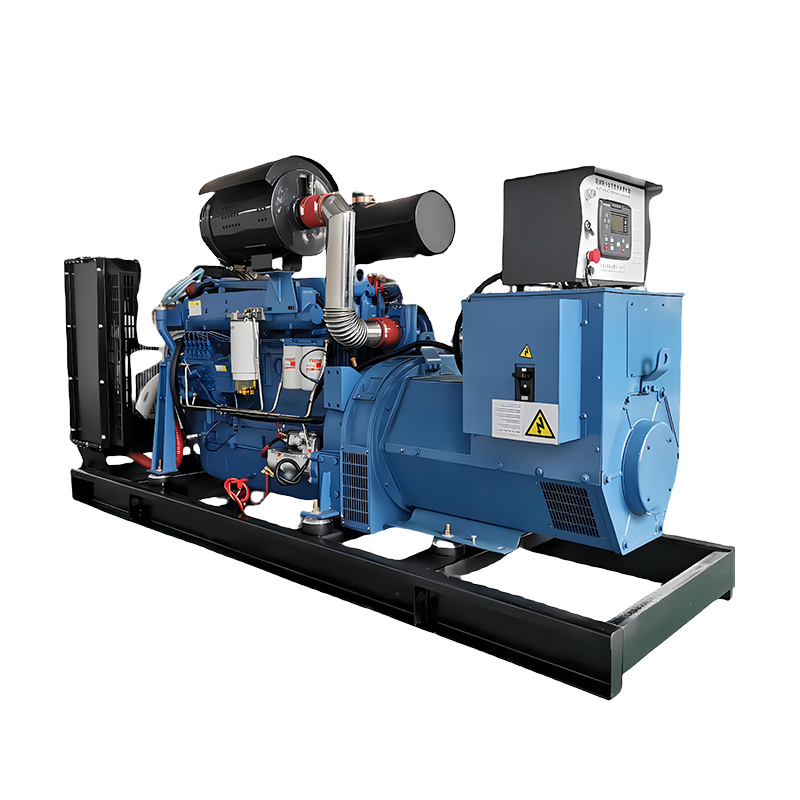
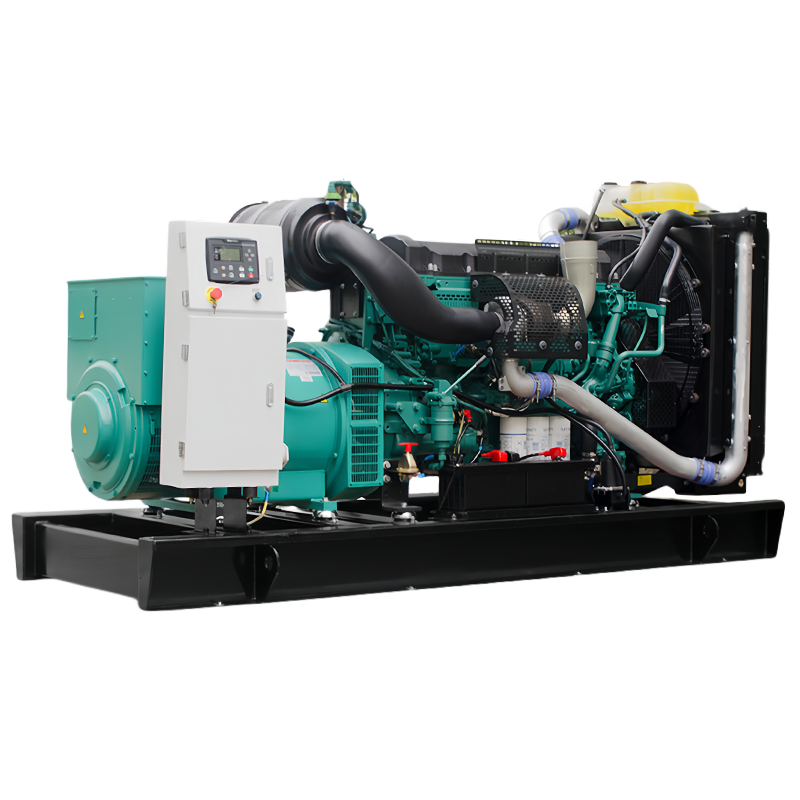
Used in dedicated industrial spaces where higher noise levels are acceptable. These units are generally more affordable and easier to access for maintenance since the components aren't enclosed in soundproofing.
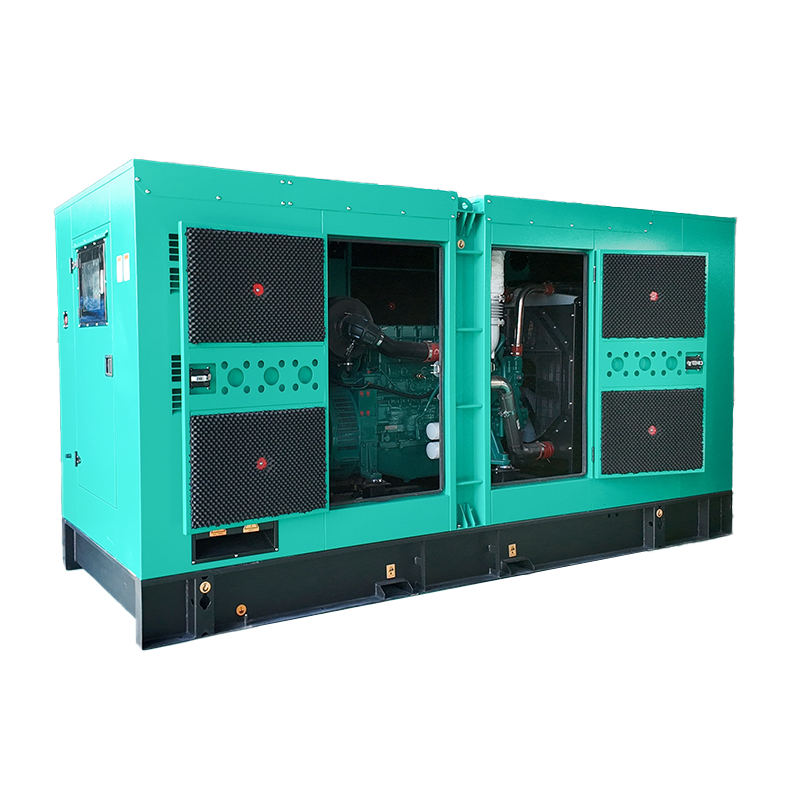
Enclosed (Silent) Generators
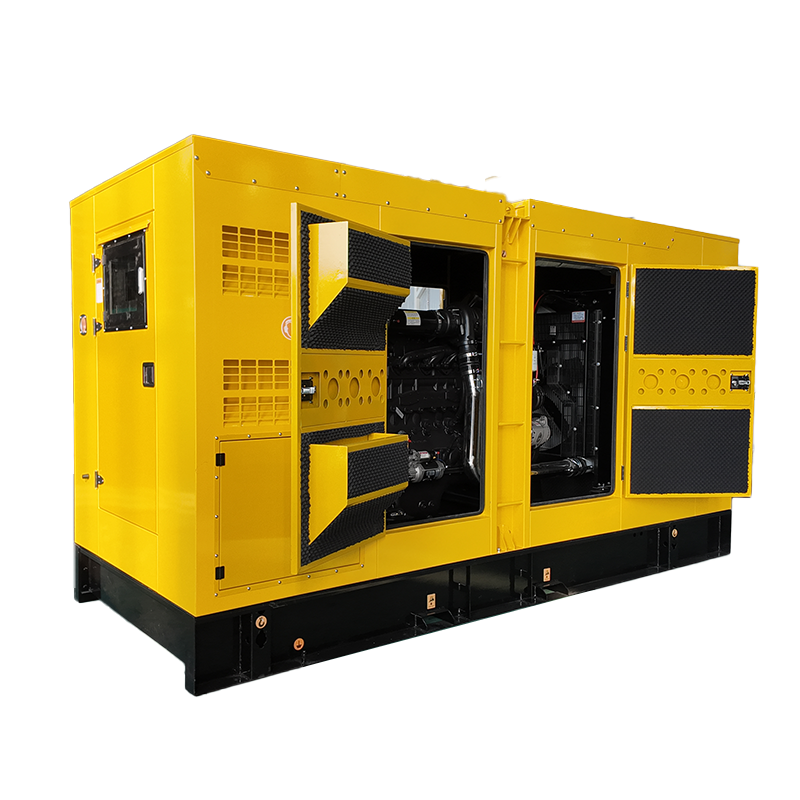
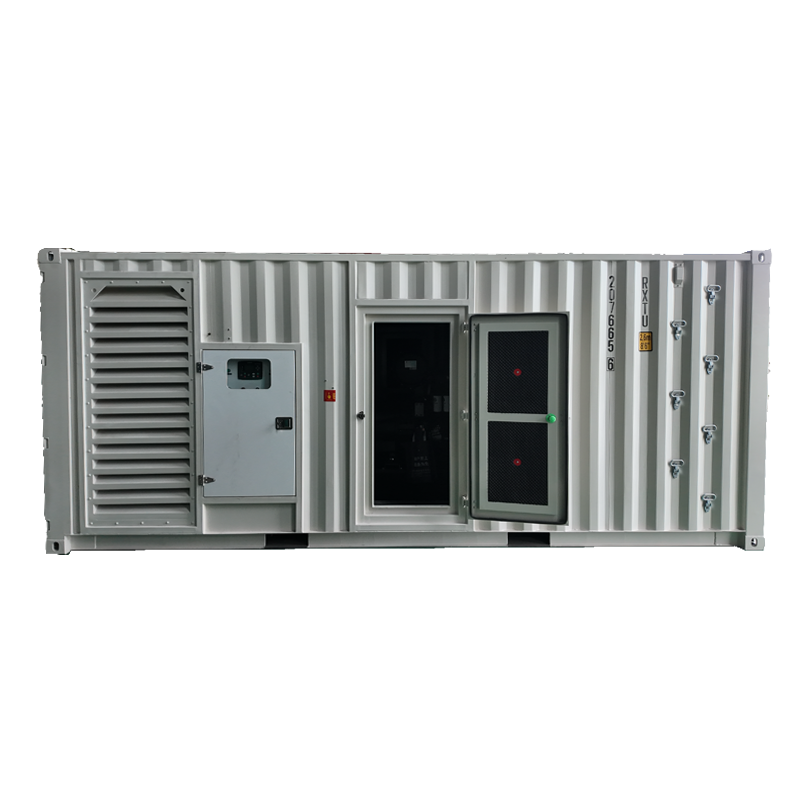
Housed in a sound-attenuated canopy, typically made of steel or aluminum. These are the standard choice for noise-sensitive environments such as hospitals, residential-adjacent facilities, and commercial buildings, since the enclosure also offers weather protection and corrosion resistance for outdoor installation.
Maintenance Practices That Keep the Cycle Running Reliably
Every stage described above depends on components staying clean, lubricated, and correctly calibrated. Neglecting maintenance doesn't just reduce efficiency — it directly threatens the combustion cycle and the electrical output it produces.
- Regular oil and filter changes to protect engine internals from wear
- Coolant system checks to prevent overheating during extended runtime
- Air and fuel filter inspection, since restricted airflow or contaminated fuel directly disrupts the compression and injection stages
- Battery maintenance to ensure reliable starting, particularly for standby units that sit idle most of the year
- Periodic load testing to confirm the unit performs correctly under real demand rather than only at idle
For standby units specifically, infrequent operation makes scheduled test runs especially important, since problems like stale fuel or a weak battery often go unnoticed until the generator is actually needed during an outage.
Frequently Asked Questions
Why don't diesel generators use spark plugs?
Diesel engines rely on compression ignition, where compressing air to a high enough pressure generates sufficient heat to ignite injected fuel on its own, eliminating the need for a spark source entirely.
How long can an industrial diesel generator run continuously?
Prime and continuous-duty units are engineered for sustained operation and, with proper maintenance and adequate fuel supply, can often run for hundreds of hours without shutting down.
What's the difference between kW and kVA when sizing a generator?
kW measures real, usable power, while kVA measures apparent power, which includes both real power and the reactive power drawn by inductive loads like motors. Both figures matter for accurate sizing.
Can a diesel generator run on fuels other than standard diesel?
Some units can run on biodiesel blends or be adapted for natural gas, but this depends entirely on the specific engine's configuration, so manufacturer recommendations should always be followed before switching fuels.
Related Products
Related News

-
Xiaoji Town, Jiangdu District, Yangzhou City, Jiangsu Province, China
-
8618944498005
-
+86-18652407919
-
+86-0514-86593686
Copyright © Jiangsu Ford Generator Co., Ltd.
